Uki Waza
0
Uki Waza·WINNING
Self Sacrifice "Floating" Throw
Translation: floating technique
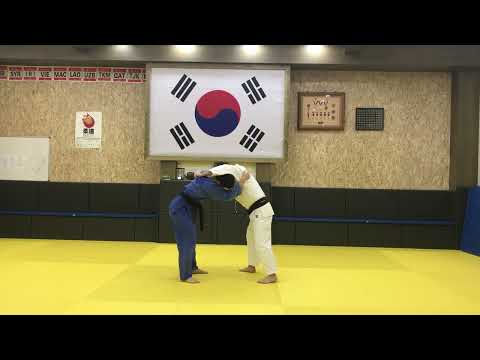
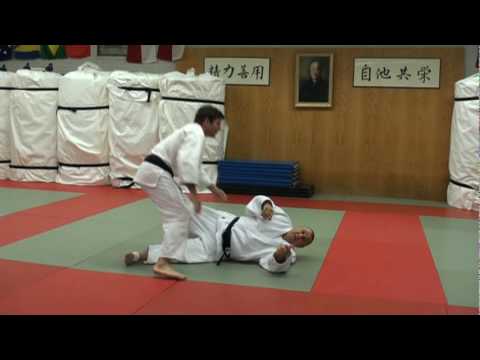
Uki Waza is a side sacrifice throw where the attacker drops to the side while pulling the opponent over their body in a floating motion. [1] The attacker falls to their side, extending one leg across the opponent's advance path, and uses a pulling motion to float the opponent over and past them. [1] It relies on timing and redirection rather than force. [1]
Classified in the Kodokan Judo syllabus. [1]
Kodokan judo lineage: Jigoro Kano (1860–1938) systematized this technique as part of the Kodokan judo curriculum. Transmitted through the Kodokan instructor system to judo federations worldwide. Adopted into BJJ through Mitsuyo Maeda → Carlos Gracie → the Gracie family lineage. [1]
Recognized Kodokan judo technique but rarely seen in modern IJF competition due to rule changes favoring forward-throwing techniques. Occasionally appears in kata demonstrations and regional tournaments. [1]
No images yet for this technique.
Sign in to suggest an image.
No instructional courses yet for this technique.
Sign in to suggest a course.
Risk of injury to the person this technique is applied to
Moderate.
Skill level needed to execute this technique reliably
Whether this technique is allowed under major competition rule sets
Kano, J. Kodokan Judo. Kodansha International.
[1] Kano, J. Kodokan Judo. Kodansha International.
Official Kodokan ground technique classification system
Standard Japanese martial arts terminology (kanji/hiragana)
Established Japanese martial arts naming convention — native Japanese term (和語/漢語)
[1] Kano, J. Kodokan Judo. Kodansha International.
exceptional timing, willingness to sacrifice position, flexibility for the controlled side fall
core (controlled fall), grip (maintaining direction), hip flexors (leg extension)
Uki waza (floating technique) is a side sacrifice throw where the attacker falls to their side while pulling the opponent over. One of the classical yoko-sutemi-waza in the Kodokan system. (Kano, Kodokan Judo)
If you don't do it right, you sacrifice yourself—your opponent will pin you or continue with their own move for points. This is why the technique requires precision.
Make sure to hold while letting go, and if you're going down, bring your opponent's hand down with you to execute a hard roll. Avoid landing on your shoulder to prevent injury.
Yes—lay down a few times first to understand how you fall, then practice rolling before throwing the technique for the first time.
Uki Waza is a side sacrifice throw where the attacker drops to the side while pulling the opponent over their body in a floating motion. The attacker falls to their side, extending one leg across the opponent's advance path, and uses a pulling motion to float the opponent over and past them.
Classified in the Kodokan Judo syllabus.
IJF Judo: Legal: legal — Kodokan classified technique; IBJJF: Legal {src:IBJJF Rules Book v6.0, June 2024|/sources/IBJJF: legal — Rules-v6.0-June-2024.pdf}; Unified MMA: Legal {src:Unified Rules of MMA, August 2025|/sources/Unified: legal — MMA-Rules-August-2025.pdf}; FIAS Sambo: Legal {src:FIAS International Sambo Competition Rules|/sources/FIAS: legal — Sambo-Rules.pdf}
Danger rating 4/10. Moderate.
The standard setup chain: Push-pull sequence creates forward momentum → Uki Waza catches the momentum → Circular movement → opponent follows → Uki Waza in the direction of their movement → Failed standing throw → transition to Uki Waza sacrifice.
Standard counters include: Don't commit forward momentum — the technique needs your movement / Step over the extended leg / Drive forward and pin the attacker on their back.
Common variants: Forward Uki Waza (floating in the forward direction); Diagonal Uki Waza (floating at an angle); Combination Uki Waza (following a throw attempt).
Recognized Kodokan judo technique but rarely seen in modern IJF competition due to rule changes favoring forward-throwing techniques. Occasionally appears in kata demonstrations and regional tournaments.
Top errors to watch for: Using force instead of timing — the technique requires catching momentum / Falling backward instead of sideways — wrong body position / Not extending the leg — without the guide rail, the opponent doesn't float over / Releasing grip during the fall — lose control of the opponent's direction.
The Uki Waza is also known as Uki Waza, Uki-Waza, Floating Throw, Ukiwaza.