Setup and Arm Control
Do jime begins from a scarf hold position with multiple entry variations sharing the same core principles. The instructor secures a grip under the opponent's arm with same-side hand contact, establishing a pinch that controls the trapped arm and prevents defensive positioning.
Spinal Curvature and Base Elimination
The instructor rolls the opponent to create spinal curvature, removing their base and stability. The transition involves stepping over the opponent's body and driving pressure downward to complete the initial choke position.
Rolling Variations and Hip Placement
Alternative rolling entries utilize controlled hip mechanics rather than knee pressure on the opponent's back. The instructor demonstrates adjusting body position to maintain leverage as the opponent attempts to sit up or escape.
Adjustment from Failed Jigoku
When the initial jigoku position is compromised, the instructor transitions by maintaining the elbow hook and extending the back to break the opponent's resistance. The free hand then moves behind the opponent's head to establish a different strangling angle.
Leg Placement and Pressure Points
Proper leg positioning applies pressure to the side of the neck rather than the top of the head. The foot placement is deep and gentle against the chest, adding targeted pressure without excessive forward force on the head.
Transition to Kata Jime
Do jime sequences effectively transition to kata jime and single-wing chokes when initial positions are loose or partially defended. The instructor demonstrates consecutive submission attempts that capitalize on positional adjustments.
Single-Wing Choke Mechanics
The single-wing choke requires avoiding forward head pressure and instead employing a weaving motion with ring-like mechanics. The attacking elbow should be controlled at the optimal angle rather than applied with aggressive frontal pressure.
Subtlety and Artery Targeting
Successful strangulation relies on subtle, gentle application that avoids triggering aggressive defensive responses. The instructor emphasizes understanding neck anatomy, artery location, and proper angle of attack to execute effective pressure without excessive neck manipulation.
Variation Principles
Do jime accommodates numerous grip variations including same-side grips, cross grips, leg presses, and different cloth grip points. Practitioners should experiment with these variables to identify the approach that best matches their body mechanics and fighting style.
jigoku jime 2
Key Takeaways
- •Setup and Arm Control
- •Spinal Curvature and Base Elimination
- •Rolling Variations and Hip Placement
- •Adjustment from Failed Jigoku
second part for technique of the month
Related Techniques
Frequently Asked Questions
What does this video teach about do jime?
This video covers setup and arm control, spinal curvature and base elimination, rolling variations and hip placement. It provides detailed instruction from afields71.
How long does it take to learn do jime?
The basic mechanics can be understood in a single session, but developing reliable execution requires consistent drilling over weeks of practice. This 9-part breakdown helps structure your training by isolating each phase of the technique.
What are the key details for finishing do jime?
Successful strangulation relies on subtle, gentle application that avoids triggering aggressive defensive responses. The instructor emphasizes understanding neck anatomy, artery location, and proper angle of attack to execute effective pressure without excessive neck manipulation.
Related videos
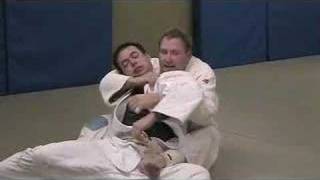
jigoku jime 1
afields71
Can Opener - Illegal BJJ Submission Neck Crank from Top Guard advanced Grappling for MMA - CanOpener
Peter Mettler Martial Arts
The Easiest Way to do the Twister
Stephan Kesting

The Crossface Cradle - Yes, it is Osaekomi
The Judokai Network
Can Opener - Illegal BJJ Submission Neck Crank from Top Guard advanced Grappling for MMA - CanOpener
Peter Mettler Martial Arts