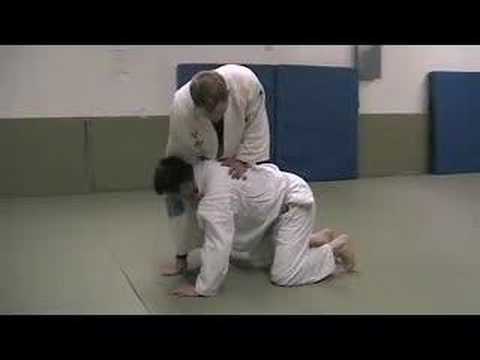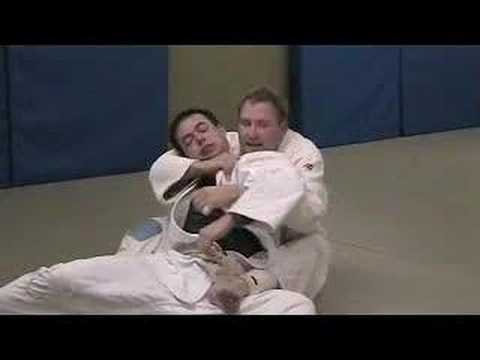
jigoku jime 1
0
Do Jime·afields71
technique of the month #1
胴絞(Do Jime)
TraditionalTranslation: body scissors strangle
Do Jime is a body scissors technique where the attacker wraps their legs around the opponent's torso and squeezes, compressing the ribcage and diaphragm. [1] It restricts breathing and can cause significant pain to the floating ribs. [1] Do Jime is one of the four kinshi waza (prohibited techniques) in IJF judo competition due to the risk of rib fractures and organ compression, but it remains legal in sambo and MMA. [1]
Do Jime is one of four kinshi waza (prohibited techniques) in Kodokan judo, along with Kani Basami, Kawazu Gake, and Ashi Garami. [1] It was banned due to the risk of rib fractures and organ compression. Despite the judo ban, body scissors and body triangles remain fundamental control tools in BJJ, sambo, and MMA. [1]
Extremely effective as both a submission and a control tool. [1] The compression of the floating ribs causes intense pain and restricts breathing. In MMA, the body triangle (a legal variation) is one of the most dominant back control positions. Banned in judo specifically because of the injury risk to ribs and internal organs. [1]
Kodokan judo lineage: Jigoro Kano (1860–1938) systematized this technique as part of the Kodokan judo curriculum. Transmitted through the Kodokan instructor system to judo federations worldwide. Adopted into BJJ through Mitsuyo Maeda → Carlos Gracie → the Gracie family lineage. [1]
Recognized Kodokan judo technique. Used in IJF World Championships and Olympic judo competition. Frequency varies by weight class and era. [1]
No images yet for this technique.
Sign in to suggest an image.
No instructional courses yet for this technique.
Sign in to suggest a course.
Risk of injury to the person this technique is applied to
Can fracture ribs and compress organs.
Skill level needed to execute this technique reliably
Whether this technique is allowed under major competition rule sets
Kano, J. Kodokan Judo. Kodansha International.
[1] Kano, J. Kodokan Judo. Kodansha International.
Official Kodokan ground technique classification system
Standard Japanese martial arts terminology (kanji/hiragana)
Established Japanese martial arts naming convention — native Japanese term (和語/漢語)
[1] Kano, J. Kodokan Judo. Kodansha International.
strong legs and hip adductors, core endurance
hip adductors (squeezing), quadriceps, hamstrings, core
Do jime (trunk squeeze) is a judo technique banned in IJF competition — it uses the legs to scissor-squeeze the opponent's torso. Classified as a prohibited act under IJF rules due to the risk of rib fracture and internal organ damage. Still practiced in kata. (Kano, Kodokan Judo; IJF Sport and Organisation Rules 2025)
You need to get the cloth positioned on the artery rather than the windpipe. Place it over the base of the neck to avoid a neck crank, and use a soft, subtle approach when initially setting it up so your opponent doesn't sense the strangle coming and defend aggressively.
People tend to attack the strangle too aggressively or at the wrong angles—hitting the windpipe, jaw, or front of the throat instead of targeting the artery. Instead, slip the cloth in gently and subtly, then rely on hip movement and body weight to finish the choke rather than hand pressure.
Your pivot and leg positioning create tension to give your hips something to move against. After slipping into position, sit down and spin into your opponent, using your body weight and hip motion (whether a drop back or drop in) to complete the strangle rather than relying on arm strength.
Do Jime is a body scissors technique where the attacker wraps their legs around the opponent's torso and squeezes, compressing the ribcage and diaphragm. It restricts breathing and can cause significant pain to the floating ribs.
Do Jime is one of four kinshi waza (prohibited techniques) in Kodokan judo, along with Kani Basami, Kawazu Gake, and Ashi Garami. It was banned due to the risk of rib fractures and organ compression.
IJF Judo: Banned: banned — prohibited technique; FIAS Sambo: Legal {src:FIAS Sambo Rules|/sources/FIAS: legal — Sambo-Rules.pdf}; Unified MMA: Legal {src:Unified Rules of MMA, August 2025|/sources/Unified: legal — MMA-Rules-August-2025.pdf}
Danger rating 8/10. Very High — can fracture ribs and compress organs.
The standard setup chain: Back control → wrap legs around torso → lock ankles → Do Jime → Closed guard → opponent postures → switch to body scissors → squeeze → Mount → opponent turns away → transition to back → Do Jime from behind.
Standard counters include: Turn into the squeeze — reduces the compression angle / Pry the ankles apart — break the lock / Tuck elbows tight — protect the floating ribs / Escape to a position where the legs can't lock.
Common variants: Body triangle (figure-four leg lock around the torso (legal in most comp…); Straight scissors (legs extended straight around the torso); Seated Do Jime (from seated position wrapping legs around standing opponent).
Recognized Kodokan judo technique. Used in IJF World Championships and Olympic judo competition.
Top errors to watch for: Using in judo competition — this is a kinshi waza (prohibited technique) / Squeezing only with ankles — must use the entire leg / Positioning too high (chest) or too low (hips) — target the floating ribs / Holding too long when the opponent taps — rib fractures can occur quickly.
The Do Jime is also known as Do Jime, Do-Jime, Body Scissors, Dojime, Trunk Squeeze.