Introduction to Thai Clinch Fundamentals
Shane presents a crash course in Thai clinch technique derived from personal training with Petchboonchu, one of history's most decorated Muay Thai champions and clinch fighters. This instructional segment covers the foundational principles that govern dominant clinch positioning and control.
Inside Hand Position and Tricep Control
The inside hand position is the dominant clinch placement, allowing the practitioner to prevent elbow and punch combinations while maintaining superior angles for linear strikes up the centerline. Controlling the opponent's triceps in a steering wheel grip breaks posture and balance while pinching their arms close to the body to neutralize offensive output.
Hip Positioning, Stance, and Head Defense
Proper clinch mechanics require a wide stance slightly beyond hip-width with bent knees and lowered center of gravity, keeping hips square to prevent the opponent from achieving dominant angles. The practitioner must maintain a tucked chin while remaining mobile to defend against upward elbows and prevent the opponent from pulling the head down for knee strikes.
Head Control and the Swim Technique
Gripping the back of the head rather than the neck provides superior control in the clinch. The swim technique allows practitioners to transition arms between inside and outside positions in a continuous positional exchange, with both competitors constantly fighting to secure the more advantageous grip and angle.
Fundamental Clinch Sweep: Head Pull with Knee Bump
The first sweep combines three simultaneous actions: pulling down on the opponent's head, lifting their arm upward, and executing a knee bump to create rotational force that drives them horizontal. Timing the sweep with the opponent's knee strike creates the opportunity to step inside their leg and execute the takedown with maximum effectiveness.
Rotational Sweep: Opposite Direction Technique
By reversing the mechanics—pushing the head while pulling the arm—the practitioner rotates the opponent in the opposite direction. Stepping to the outside while driving with the opposite knee and maintaining hip contact trips the opponent over the practitioner's legs rather than pulling them backward.
Body Lock Escape and Low Back Control
When caught in a body lock, lowering level and pushing against the opponent's lat muscles breaks the grip; however, positioning the lock on the low back rather than high back makes escape significantly more difficult. The low back control angle prevents standard escape mechanics and creates a more secure clinch position.
Sweep from Low Body Lock Position
The low body lock sweep utilizes one over-hook and one under-hook, combining a step between the opponent's feet, knee bump action, and upper body rotation. This technique leverages the body lock position to execute a takedown through rotational force rather than vertical movement.
Outside Arm Position with Elbow Pinch
Despite being on the outside, controlling the opponent's head with one arm while pinching their elbow inward with the other creates dominant positioning that breaks posture and causes discomfort. From this setup, the practitioner can step to the outside and land body knees while maintaining control through shoulder pressure.
Dominate the Muay Thai Clinch with Petchboonchu
Key Takeaways
- •Introduction to Thai Clinch Fundamentals
- •Inside Hand Position and Tricep Control
- •Hip Positioning, Stance, and Head Defense
- •Head Control and the Swim Technique
Train with me in Singapore►http://bit.ly/FightTIPSinSingapore I had the honor of taking a private training lesson with Petchboonchu, the most decorated Muay Thai champion in history, and arguably the best clinch fighter ever. He beat Saenchai 3 times, for the record. In this video, he explains his style and how to effectively use the Muay Thai Clinch to set up sweeps, elbows, and knee strikes. Subscribe to fightTIPS►http://bit.ly/1APnzvw Petchboonchu IG►https://www.instagram.com/petchboonchu FOLLOW: Facebook | http://bit.ly/fightTIPSFacebook Twitter | http://bit.ly/fightTIPSTwitter Instagram | http://bit.ly/fightTIPSInstagram
Frequently Asked Questions
What does this video teach about standard outside elbow control?
This video covers introduction to thai clinch fundamentals, inside hand position and tricep control, hip positioning, stance, and head defense. It provides detailed instruction from fightTIPS.
How long does it take to learn standard outside elbow control?
The basic mechanics can be understood in a single session, but developing reliable execution requires consistent drilling over weeks of practice. This 9-part breakdown helps structure your training by isolating each phase of the technique.
What are the key details for finishing standard outside elbow control?
The low body lock sweep utilizes one over-hook and one under-hook, combining a step between the opponent's feet, knee bump action, and upper body rotation. This technique leverages the body lock position to execute a takedown through rotational force rather than vertical movement.
Related videos
Clinch Control with Coach JD - Wrestling, Muay Thai, & More
Martial Arts Unlimited
The FIRST side control escape EVERYONE Should Master
Mads H. BJJ
Wrestling Technique: Elbow Control High Crotch
Joshua Nolan Wrestling
Elbow Control VS Post High-Crotch!...DETAILS!!
TeachMeGrappling Coach Brian
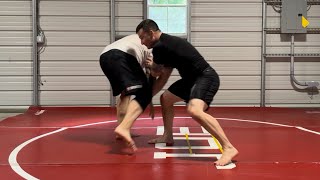
#27 Hand fighting/takedown set ups: it’s all about elbow control
Breza-Grappling