Introduction to Clinch Work
Coach J.D. Olsen introduces a comprehensive guide to clinch control across multiple martial arts disciplines. The session covers fundamental clinch positions, escape techniques, and transitions applicable to wrestling, Muay Thai, and mixed martial arts training.
The 50/50 Clinch Foundation
The 50/50 clinch represents a neutral position where both participants have equal offensive and defensive capabilities. From this position, either fighter can execute punches, elbows, knees, or uppercuts with equal effectiveness, establishing the baseline for all clinch variations.
Double Overhook and Muay Thai Clinch
When one fighter swims an arm to the inside, the position transitions into a double overhook or Muay Thai clinch. Both fighters can "pummel"—swimming their arms to contest the inside position—maintaining a competitive, balanced engagement.
Wrestler's Clinch and Tricep Control
The wrestler's clinch involves one fighter hooking over the opponent's arm while controlling the tricep. This position remains a 50/50 engagement where both fighters retain equal opportunities to execute strikes and transitions through pummeling exchanges.
Overhook and Underhook Positions
Advanced clinch control includes the overhook clinch, where the fighter pushes the opponent away while controlling their arm from above. The underhook clinch represents the opposite configuration, with the controlling fighter underneath the opponent's arm while pushing away.
Duck Under Escape from 50/50
The duck under escape begins by pushing the opponent's arm away and lifting their posture. As they push back, the escaping fighter ducks under their arm while maintaining head position against their shoulder, slides around while tracking their arm, and achieves a back control position.
Slide By Pass with Jam Control
The slide by pass begins by jamming the opponent's hands with a second hand, preventing them from establishing neck control. Both of the opponent's arms become trapped by the jam, allowing the fighter to slide by and secure the shoulder from a dominant position.
Muay Thai Clinch Escape and Lift
When caught in a Muay Thai clinch, fighters can move their hands to their opponent's triceps and execute an elbow lift to break the clinch. This technique mirrors the Seong Tak Sao movement from traditional wooden dummy training, allowing a clean separation or transition.
Drop Takedown from Muay Thai Position
If an opponent pummels to establish inside position in a Muay Thai clinch, their arms extend outward and lose control. The defending fighter can immediately drop into a double leg takedown, as the opponent's arm positioning offers no resistance to this aggressive transition.
Heel Block Takedown with Leg Trap
From a duck under position, the fighter grabs the opponent's wrist, blocks their heel with their foot, and controls their tricep. They then sit over the trapped ankle while pulling the opponent across their leg, forcing them to the ground and establishing positional control.
Clinch Control with Coach JD - Wrestling, Muay Thai, & More
Key Takeaways
- •Introduction to Clinch Work
- •The 50/50 Clinch Foundation
- •Double Overhook and Muay Thai Clinch
- •Wrestler's Clinch and Tricep Control
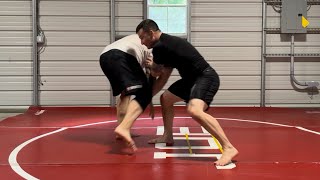
In this video, we go over some clinch techniques as well as how to pass them. We start with a standard head and arm clinch, or more commonly known as the 50/50 clinch. Then we do the Muay Thai clinch, as well as the over and under hook clinches. Once we complete the basic moves, we demonstrate a few ways to pass the clinch. The duck under from wrestling, the slide by, the elbow lift, and the double leg. Finally, the video moves into what a few options are once we have passed the clinch. We hope you enjoy the video. Professor JD Olsen and his Keishidojo Martial Arts Academy fall under the Martial Arts Unlimited Association. With the guidance of the MAUA, we have programs for gi training in Brazilian Jiu-Jitsu as well as no-gi Submission Wrestling. #wrestling #keishidojo #maua Intro @0:15 50/50 Clinch @1:21 Muay Thai Wrestling @1:44 Wrestling Clinch @2:12 Over-hook Clinch @2:26 Under-hook Clinch - 2:37 Duck Under Pass - 3:05 Slide By - 4:23 Elbow Lift - 5:00 Double Leg Takedown - 6:00 Heel Block Takedown - 6:51 Front Hook Takedown - 10:58 Keishidojo Martial Arts Unleashed - Sumter SC - https://keishidojo.com/ The Martial Arts Unlimited Association is your home for a one-stop shop for accreditation, education, resources, and consulting. If you want to train with us feel free to check us out right here, https://www.themaua.com - Low-cost membership - Online training videos - Curriculums download - Seminar and Camp Video Access - Access to program videos - Cancel Anytime - No contracts For more information here are a few links: Facebook - https://www.facebook.com/MartialArtsUnlimitedAssociation/?ref=bookmarks Martial Arts Unlimited Association Website - https://themaua.com/ Keishidojo Website: https://keishidojo.com Epic Roll Fight Shorts - https://https://epicrollbjj.com/ Music by - https://www.epidemicsound.com Thumbnail - Austin Powers - Courtesy of New Line Cinema Cameras: High: Canon M50 Right: Canon T7i Center: Canon 90D Wide: Go Pro Mic: Tackstar Editing Machine: Apple MacBook Pro 2015 Editing Software: Apple Final Cut Pro 10X
Frequently Asked Questions
What does this video teach about standard outside elbow control?
This video covers introduction to clinch work, the 50/50 clinch foundation, double overhook and muay thai clinch. It provides detailed instruction from Martial Arts Unlimited.
How long does it take to learn standard outside elbow control?
The basic mechanics can be understood in a single session, but developing reliable execution requires consistent drilling over weeks of practice. This 10-part breakdown helps structure your training by isolating each phase of the technique.
What are the key details for finishing standard outside elbow control?
If an opponent pummels to establish inside position in a Muay Thai clinch, their arms extend outward and lose control. The defending fighter can immediately drop into a double leg takedown, as the opponent's arm positioning offers no resistance to this aggressive transition.
Related videos
Dominate the Muay Thai Clinch with Petchboonchu
fightTIPS
The FIRST side control escape EVERYONE Should Master
Mads H. BJJ
Wrestling Technique: Elbow Control High Crotch
Joshua Nolan Wrestling
Elbow Control VS Post High-Crotch!...DETAILS!!
TeachMeGrappling Coach Brian
#27 Hand fighting/takedown set ups: it’s all about elbow control
Breza-Grappling