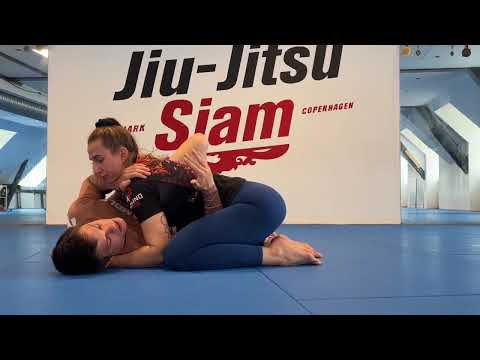
The FIRST side control escape EVERYONE Should Master
0
Standard Outside Elbow Control·Mads H. BJJ
In this video, I cover the fundamental elbow escape, which is the foundation of escaping a standard side control. I go o…
Translation: standard outside elbow control
The Standard Outside Elbow Control positions the attacker's hand on the outside of the opponent's elbow, cupping the joint and steering the arm outward away from the opponent's body. [1] By pushing the elbow out, the attacker opens the opponent's defensive frame, creating access to the body for clinch entries, underhooks, or body lock attempts. [1],[2] The outside elbow cup is frequently used in combination with a collar tie on the opposite side, creating a push-pull dynamic that off-balances the opponent. [2],[3]
The standard outside elbow control places the hand on the outer surface of the opponent's elbow, enabling push-pull mechanics that create kuzushi (off-balancing) for throw entries. [1]
A core judo kumi-kata grip taught alongside collar and sleeve grips in the Kodokan curriculum. [1]
Outside elbow control is used in MMA and wrestling clinch situations to redirect the opponent's arm and create openings for underhooks or body lock transitions. [1]
No images yet for this technique.
Sign in to suggest an image.
In this video, I cover the fundamental elbow escape, which is the foundation of escaping a standard side control. I go o…
Train with me in Singapore►http://bit.ly/FightTIPSinSingapore I had the honor of taking a private training lesson with P…
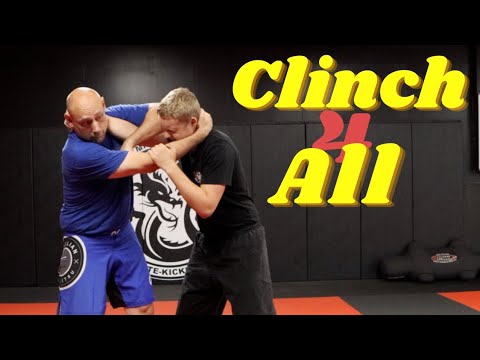
In this video, we go over some clinch techniques as well as how to pass them. We start with a standard head and arm cli…
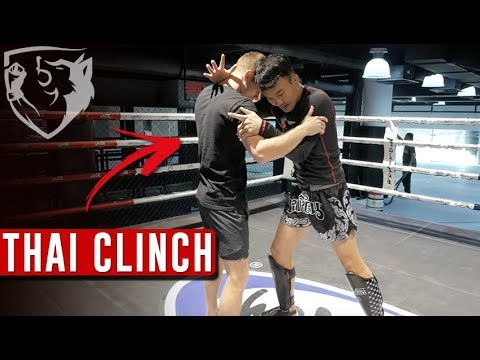
Standard outside elbow control is a foundational clinch technique employed across multiple martial arts disciplines to establish dominant positioning and control an opponent's upper body. The technique centers on controlling the opponent's arm and elbow from the outside while maintaining superior structural positioning. Martial Arts Unlimited (Coach JD Olsen) emphasizes the wrestler's clinch variant, where the controlling fighter holds the opponent's tricep from the outside while maintaining a 50/50 or transitional position, often as a prelude to more advanced control sequences such as pummeling exchanges or takedown setups. fightTIPS (Petchboonchu) demonstrates that while outside elbow control can be achieved—particularly by pinching the opponent's arm with one hand while controlling the head with the other—it is generally a less dominant position than inside arm control in the Muay Thai clinch context. However, fightTIPS notes that skilled fighters can still generate significant offensive opportunities from outside elbow control, including body knee strikes and elbow techniques, provided they maintain proper hip positioning and postural control. Both instructors stress the importance of keeping the head up, maintaining a wider stance with bent knees, and avoiding static positioning. Mads H. BJJ's side control escape content relates tangentially, emphasizing elbow-to-knee connection and framing mechanics that share structural principles with clinch elbow control. The consensus across all three sources is that elbow control—whether inside or outside—functions as a transitional position requiring continuous pressure adjustments, hand-fighting, and clear offensive intent to be effective.
Synthesized from 3 instructors
No instructional courses yet for this technique.
Sign in to suggest a course.
Risk of injury to the person this technique is applied to
Arm control positions limit opponent's offense; low direct injury risk
Skill level needed to execute this technique reliably
Whether this technique is allowed under major competition rule sets
Freestyle Wrestling: A Complete Guide for Coaches and Wrestlers (Petrov, 1977)
Alias sources — [1] Wrestling Physical Conditioning Encyclopedia (Welker, 2010) [2] Clinch Fighting for MMA (Couture, 2011) [3] Freestyle Wrestling: A Complete Guide (Petrov, 2005)
Effectiveness sources — [1] Kodokan Judo (Kano, 1986)
Mixed Japanese-Western terminology — combines traditional Japanese terms with katakana loanwords
Alias sources — [1] Wrestling Physical Conditioning Encyclopedia (Welker, 2010) [2] Clinch Fighting for MMA (Couture, 2011) [3] Freestyle Wrestling: A Complete Guide (Petrov, 2005)
Effectiveness sources — [1] Kodokan Judo (Kano, 1986)
swimming speed for inside position, shoulder drive, hip pressure
strong shoulders and low centre of gravity
deltoids, pectorals, core, quadriceps
According to Mads H. BJJ, the frame on the hip is the first and most critical frame you must establish—without it, the escape will be very difficult. You should use your forearm (not your hand) to create this frame, and it allows you to bridge and slide your elbow in even when your opponent has tied your hips.
Mads H. BJJ emphasizes that when inserting your knee, your foot must be higher than your knee—if your knee is higher than your foot, you won't be able to slide into the crease of your opponent's hip. Keep your foot close to your butt and step outside your hip to get more range and pull yourself further to the side.
Mads H. BJJ teaches that you should transition from being flat on your back (two shoulders and two hips) to being on just one shoulder and one hip as you hip escape. This side-on positioning makes it easier to disengage from your opponent's cross-face and set up the knee-elbow connection.
Mads H. BJJ stresses that simply throwing your outside leg back without securing your inside leg leaves you vulnerable to another pass attempt. You must transfer weight and force into your inside knee so you can pull out your second leg and lock a proper guard position, otherwise your opponent can immediately pass again.
The Standard Outside Elbow Control positions the attacker's hand on the outside of the opponent's elbow, cupping the joint and steering the arm outward away from the opponent's body. By pushing the elbow out, the attacker opens the opponent's defensive frame, creating access to the body for clinch entries, underhooks, or body lock attempts.
The standard outside elbow control position has been a component of clinch fighting across combat sports, used as a transitional grip that facilitates movement to more dominant positions. It is taught as a fundamental clinch skill in wrestling and MMA programmes worldwide.
Unified MMA: legal — Legal — clinching is integral to MMA; IJF: legal — Legal — kumi-kata (grip fighting) is fundamental to judo; IBJJF: legal — Legal — standing grip fighting and clinch work permitted; IFMA: legal — Legal — the clinch is a core element of Muay Thai, clinch dominance is highly…; WBC/Boxing: restricted — Holding is technically a foul — referee breaks clinch, excessive holding resu…; K: restricted — 1/GLORY — One attack from clinch allowed, then referee breaks; WAKO: restricted — Clinch generally broken by referee — limited or no clinch fighting in most fo…; UWW: legal — Legal — clinch is fundamental to wrestling, the primary position in Greco-Roman
Danger rating 3/10. Moderate — arm control positions limit opponent's offense; low direct injury risk
The standard setup chain: Close Distance → Establish Primary Grip → Position the Hips → Apply Pressure.
Standard counters include: Pummeling — fight for inside position by swimming arms under opponent's grips / Frame and Push — create distance using forearm frames against the chest or neck / Grip Break — systematically strip the opponent's controlling grips / Posture Up — straighten the spine and drive the hips forward to break clinch control.
Common variants: Single collar tie (one hand on the nape controlling the head); Double collar tie (plum) (both hands behind the head for maximum control); Collar tie with wrist control (one hand on the nape, other controlling the wrist).
Outside elbow control is used in MMA and wrestling clinch situations to redirect the opponent's arm and create openings for underhooks or body lock transitions.
Top errors to watch for: Pushing too gently — the cross-body push must be decisive to turn the opponent's shoulders / Stepping to the wrong side — step toward the side you're exposing, not away from it / Cupping with fingers only — use the full palm for a secure grip / Pushing at shoulder height instead of elbow height — the elbow is the lever point for rotating the torso.
The Standard Outside Elbow Control is also known as Sutandādo Soto Hiji Seigyo, Basic Outside Elbow Cup, Elbow Steer, Outside Elbow Redirect.