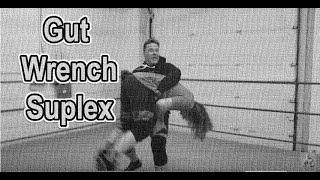
Foundational Principles of the Belly-to-Back Suplex
The belly-to-back suplex requires the thrower to execute a controlled back arch that directs impact to the opponent rather than the thrower. The head should not contact the mat; instead, the opponent absorbs the force of the throw. A proper back arch, combined with a late hip rotation, allows the thrower to minimize injury risk while maximizing throw effectiveness.
Introductory Drill: Handshake Back Arch Development
Practitioners begin developing back arch technique through an arm-wrestling-style handshake with a partner, stepping forward with feet shoulder-width apart. The thrower looks straight back and executes a back arch while the partner provides resistance, preventing excessive impact to the head. This foundational drill builds confidence in hip extension and back positioning without full throwing intensity.
Progression to Throwing Dummy Work
Once basic back arch mechanics are established, practitioners progress to working with throwing dummies using various grip options such as the gable grip. The thrower bends the knees, pops the hips, and executes an arched throw, ensuring the dummy contacts the mat before the thrower rotates to standing. This stage allows practitioners to develop explosive hip drive and timing without risk to a training partner.
Crash Pad Training and Partner Mechanics
Training on crash pads rather than standard wrestling mats enables harder throws while protecting training partners from injury. The receiving partner should keep their chin tucked and cross their arms across the chest, avoiding extended arm positioning that risks shoulder or elbow dislocation. Proper receiving mechanics—without attempting to break fall with outstretched arms—ensure safe transmission of force to the receiving surface.
Entry Techniques and Positional Timing
Effective suplex execution begins with proper entry sequences such as duck-unders or arm drags that place the thrower behind the opponent. The thrower should minimize delay once positioned behind the opponent to prevent the opponent from securing hand control or hooking a leg. Rapid transition from entry to hip extension prevents defensive adjustments and ensures the throw's success.
Underhook Variation and Hip Rotation Mechanics
The underhook belly-to-back suplex variant involves the thrower positioning an arm beneath the opponent's arm while securing the opposite side. The thrower explosively pops the hips, throws both arms overhead, and maintains the back arch before rotating at the final moment. This late rotation ensures the opponent lands on the back rather than the neck or shoulders, critical for safe technique execution in competitive environments.
Belly to Back Suplex
Key Takeaways
- •Foundational Principles of the Belly-to-Back Suplex
- •Introductory Drill: Handshake Back Arch Development
- •Progression to Throwing Dummy Work
- •Crash Pad Training and Partner Mechanics
http://teachmegrappling.com This video demonstrates how to perform a Belly to Back Suplex. Whether you are wrestling greco roman, freestyle, MMA, BJJ, or grappling, it is a great idea to get familiar with this throw. Be very careful when performing this move as there is some danger for you or your partner. Enjoy! If you have any questions, comments, or suggestions, please comment below. Please hit the subscribe button and thanks to all that have already done so!! More videos to come!
Related Techniques
Frequently Asked Questions
What does this video teach about standard suplex?
This video covers foundational principles of the belly-to-back suplex, introductory drill: handshake back arch development, progression to throwing dummy work. It provides detailed instruction from TeachMeGrappling Coach Brian.
How long does it take to learn standard suplex?
The basic mechanics can be understood in a single session, but developing reliable execution requires consistent drilling over weeks of practice. This 6-part breakdown helps structure your training by isolating each phase of the technique.
What are the key details for finishing standard suplex?
Effective suplex execution begins with proper entry sequences such as duck-unders or arm drags that place the thrower behind the opponent. The thrower should minimize delay once positioned behind the opponent to prevent the opponent from securing hand control or hooking a leg. Rapid transition from entry to hip extension prevents defensive adjustments and ensures the throw's success.