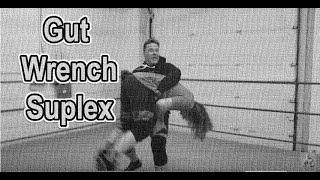
Belly-to-Belly Suplex Fundamentals
The belly-to-belly suplex is executed by securing an opponent around the midsection and using leg drive to lift and throw them backward. Proper execution requires maintaining contact with the opponent's torso while generating force through the hips and legs. The thrower arches backward at the moment of release to maximize distance and impact.
Bridge Position and Pin Conversion
Following a suplex throw, the wrestler can immediately bridge—arching the back while maintaining contact—to transition directly into a pin attempt. This technique capitalizes on the opponent's stunned state and can result in an immediate three-count without additional setup.
Kurt Angle's Belly-to-Belly Throw
The belly-to-belly suplex can be executed from neutral standing position or from clinch range. Kurt Angle's variation emphasizes explosive hip extension and precise timing to generate maximum throwing power. This throw is effective at multiple levels of competition due to its fundamental leverage principles.
Rolling Suplex and Chain Wrestling
The rolling suplex—also called the chaos theory—involves executing a suplex and immediately rolling through to maintain offensive control. The wrestler continues forward momentum after the throw rather than falling flat, allowing for continued attacks or repositioning. This variation requires timing coordination between the throw and the roll-through phase.
Superplex from Top Rope
The superplex is a vertical suplex executed when both wrestlers are on the top rope. The wrestler secures a clinch from a standing position on the rope, then falls backward to throw the opponent from the elevated position. This high-impact variation requires significant strength and balance to execute safely.
Overhead Belly-to-Belly Release
The belly-to-belly release suplex involves throwing the opponent overhead without the wrestler falling backward. This variation allows the thrower to maintain a standing position after execution, enabling immediate follow-up attacks. The release version emphasizes pure throwing power and can launch opponents significant distance across the ring.
Steiner Variations and Improvisation
Advanced wrestlers incorporate suplex variations into chain wrestling sequences, transitioning between different suplex types based on positioning and opponent reactions. The Steiner family's technical approach demonstrates how multiple suplex variations can be chained together for continuous offense without allowing the opponent recovery time.
wrestling suplex compilation (all variations)
Key Takeaways
- •Belly-to-Belly Suplex Fundamentals
- •Bridge Position and Pin Conversion
- •Kurt Angle's Belly-to-Belly Throw
- •Rolling Suplex and Chain Wrestling
a compilation of wrestling suplexes, from vertical to german, who doesn't love a suplex.
Related Techniques
Frequently Asked Questions
What does this video teach about salto suplex?
This video covers belly-to-belly suplex fundamentals, bridge position and pin conversion, kurt angle's belly-to-belly throw. It provides detailed instruction from MAD wrestling.
How long does it take to learn salto suplex?
The basic mechanics can be understood in a single session, but developing reliable execution requires consistent drilling over weeks of practice. This 7-part breakdown helps structure your training by isolating each phase of the technique.
What are the key details for finishing salto suplex?
The belly-to-belly release suplex involves throwing the opponent overhead without the wrestler falling backward. This variation allows the thrower to maintain a standing position after execution, enabling immediate follow-up attacks. The release version emphasizes pure throwing power and can launch opponents significant distance across the ring.