Course Overview: Seven Chain Takedown Systems
This instructional guide covers seven integrated takedown chains designed for MMA competition. The curriculum progresses from fundamental techniques—the single-leg and double-leg takedowns—through advanced transitions including back control, clinch positioning, and four distinct judo throws.
Single-Leg Takedown Fundamentals
The practitioner changes level, secures the opponent's lead leg between their own legs, and rotates toward the trapped leg while driving the shoulder into the opponent's thigh. Simultaneously, the shooter hinges at the hips, bringing their head toward their toes while sliding the rear leg backward for driving force.
Double-Leg Takedown Mechanics
The shooter steps forward with the lead leg, drops the lead knee between the opponent's legs, and secures both legs with a two-arm grip. The rear leg sweeps forward for power as the shooter drives forward, either running the legs to the side or continuing upward to complete the finish.
Chain One: Single-Leg to Double-Leg Transition
When a skilled opponent hops on their standing leg to escape the single-leg trap, their supporting leg moves closer to the trapped leg. The shooter capitalizes on this repositioning by transitioning to a double-leg grip and driving forward to complete the takedown.
Back Control Transition from Sprawl Defense
When the opponent sprawls to defend the double-leg, the shooter cuts a sharp angle by pushing off the rear leg and using the head to drive the opponent's upper body sideways. The shooter circles clockwise while transitioning the grip from the legs to a waist lock, achieving dominant back control.
Mat Return: Lift and Slam from Back Control
Once the shooter secures back control with the opponent standing, a gable grip around the opponent's hips combined with a deadlift motion elevates them. In competition, this results in a slam; in training, the opponent is lowered safely to the mat.
Ogoshi (Hip Throw) from Over-Under Clinch
When the opponent defends the back take with an overhook (wizard), the shooter transitions to the over-under position. From this clinch, the shooter steps parallel to the opponent, shoots the hips upward, and rotates the upper body counterclockwise to execute the hip throw.
Tai Otoshi (Major Hip Throw) Execution
From the over-under clinch position following double-leg defense, the shooter takes a wide step outside the opponent's far leg while trapping below the knee line. The upper body rotates counterclockwise as the shooter's far arm pulls the opponent's elbow downward, completing the throw over the hips.
Uchimata (Inner Thigh Throw) Technique
From the over-under position, the shooter creates space by moving their hips away from the opponent before stepping in front of the opponent's near leg. The shooter rotates their upper body while executing an inside leg sweep at the mid-thigh, then hops repeatedly while pulling with the overhook arm until the opponent flips over.
Harai Goshi (Sweeping Hip Throw) Application
This throw differs from Tai Otoshi by trapping the opponent's leg above the knee line rather than below. The shooter most effectively executes this throw when the opponent fights for a double underhook position; from this closer range, the shooter applies a head lock, pulls the arm downward, and chops above the knee while rotating to the same side.
7 Simple & Effective Chain Takedowns for MMA
Key Takeaways
- •Course Overview: Seven Chain Takedown Systems
- •Single-Leg Takedown Fundamentals
- •Double-Leg Takedown Mechanics
- •Chain One: Single-Leg to Double-Leg Transition
0:00 - Start 0:35 - 1. Single Leg 1:06 - 2. Double Leg 1:37 - 3. Single Leg to Double Leg 2:25 - 4. Double Leg to Backtake 3:41 - 5. Double Leg to Ogoshi 4:43 - 6. Double Leg to Tai Otoshi 5:08 - 7. Double Leg to Uchi Mata 5:58 - 8. Double Leg to Harai Goshi 6:51 - 9. Double Leg to Sasae / Muay Thai Sweep 🏝️ Join me in my new retreats happening this year here: https://www.mmashredded.com/traintravelcamp Get access to new partnered follow along striking & grappling classes here: https://www.mmashredded.com/mmamembership FIND ME: ➥ IG: https://www.instagram.com/mmashredded/ ➥ TIKTOK: https://www.tiktok.com/@mmashredded ➥ WEB: https://www.mmashredded.com ➥ FB: https://www.facebook.com/mmashredded/ ➥ SUPPORT & JOIN THE COMMUNITY: https://www.patreon.com/mmashredded
Related Techniques
Frequently Asked Questions
What does this video teach about counter kick to sweep-kick takedown?
This video covers course overview: seven chain takedown systems, single-leg takedown fundamentals, double-leg takedown mechanics. It provides detailed instruction from Jeff Chan MMAShredded .
How long does it take to learn counter kick to sweep-kick takedown?
The basic mechanics can be understood in a single session, but developing reliable execution requires consistent drilling over weeks of practice. This 10-part breakdown helps structure your training by isolating each phase of the technique.
What are the key details for finishing counter kick to sweep-kick takedown?
From the over-under position, the shooter creates space by moving their hips away from the opponent before stepping in front of the opponent's near leg. The shooter rotates their upper body while executing an inside leg sweep at the mid-thigh, then hops repeatedly while pulling with the overhook arm until the opponent flips over.
Related videos
4 Ways To Sweep After Catching the Round Kick
Combat Theory
Wrestling Shooting Single to Double Legs Effectively in BJJ or MMA Tutorial
Stuart Tomlinson
Judo's most devastating throw VS Greco-Roman wrestling's body lock takedown
Chadi
Takedown Against Knee Strikes - The Simple Technique That Takes Practice
Catch Wrestling Alliance
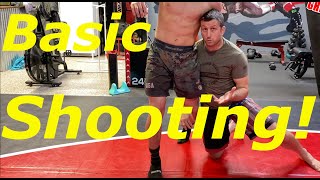
How to SHOOT the PERFECT Single Leg for Beginners!
TeachMeGrappling Coach Brian