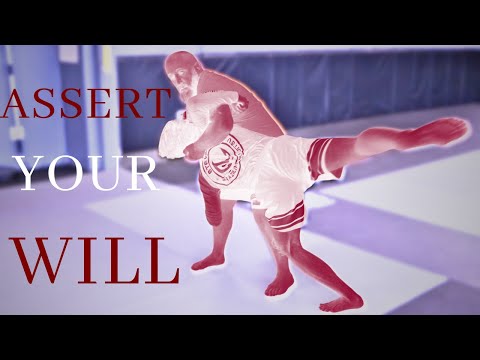
Head Clinch to Takedown

SubFamily

ヘッド・クリンチ・To・テイクダウン(Head Clinch to Takedown)

Translation: head clinch to takedown

Overview

The Head Clinch to Takedown transitions from Muay Thai head control directly into a takedown, pulling the opponent's head down while sweeping or tripping the legs. [1]

Also known as
Thai Clinch TakedownPlum to Takedown

History & Origin

MMA takedown technique. [1]

Effectiveness

Core MMA takedown. [1]

Lineage

MMA wrestling methodology. [1]

Competition Record

Used in UFC and professional MMA competition

Images

No images yet for this technique.

Sign in to suggest an image.

Biomechanical Mechanism

Primary ActionTakedown mechanics for Head Clinch to Takedown

Position & Entry

From MMA stanceExecute head clinch to takedown

Variants

Standard Head Clinch to Takedown

Videos

The Wrestling Video I Wish I Had Day One | Wrestling Fundamentals: Techniques for Beginners

0
Head Clinch to Takedown·Systematic Wrestling

Are you new to wrestling or grappling and feel completely overwhelmed? Whether you’re a wrestler, BJJ athlete, or MMA fi

A Complete Throwing System | From a Greco-Roman Wrestling National Champion

0
Head Clinch to Takedown·Wrestling University - Takedowns for Jiu Jitsu

🏆 We Transform Jiu Jitsu Practitioners Into Takedown Pros↴ Start your transformation today with our zero-cost, takedow

2 videos

What Instructors Say

The head clinch to takedown is a Greco-Roman wrestling technique that leverages a front headlock position to transition into a throw or ground takedown. Wrestling University's Coach Disco Jeff demonstrates the mechanics: the attacker pulls the opponent's head to the side to create space, secures an underhook with a gable grip or C-lock, and drives the opponent's face into the chest while locking them tight. The key to successful entry involves matching feet by pulling the opponent into forward momentum, then switching the base foot while maintaining downward pressure. Once locked in place, the attacker can finish by dropping to the knee first—a crucial detail that prevents the opponent from rolling through and reversing position. If the opponent resists the initial pull, the technique seamlessly transitions to a front headlock submission. Systematic Wrestling's foundational principles underpin this technique: achieving dominant angle prevents the opponent from defending effectively, off-balancing through controlled movement disrupts the opponent's base, and timing the entry when the opponent cannot react ensures success. Both instructors emphasize that mechanical advantage—leveraging the end of the lever (the head) rather than fighting muscle-to-muscle—makes the technique work regardless of strength differential. The technique's elegance lies in forcing the opponent to land perpendicular rather than parallel, eliminating the momentum needed to escape or counter-throw.

Synthesized from 2 instructors

  • Wrestling UniversityA Complete Throwing System | From a Greco-Roman Wrestling National Champion: Detailed mechanical breakdown of the pinch headlock to takedown series, including foot positioning, the critical pull-and-switch footwork sequence, prevention of roll-through escapes, and transition options to front headlock if initial resistance occurs. Emphasizes dropping to knee first and using perpendicular positioning to neutralize opponent momentum.
  • Systematic WrestlingThe Wrestling Video I Wish I Had Day One | Wrestling Fundamentals: Techniques for Beginners: Establishes foundational grappling principles that enable the head clinch takedown: mechanical advantage through leverage application, dominant angle positioning, timing of entry, off-balancing through disrupting the opponent's base, and fatigue as a strategic factor. Provides context for why grabbing the crown of the head (end of the lever) is more effective than grabbing low on the neck.

Learn This Technique

No instructional courses yet for this technique.

Sign in to suggest a course.

Ratings

Danger Rating

Risk of injury to the person this technique is applied to

4
Moderate4/10

Takedown technique

Difficulty

Skill level needed to execute this technique reliably

Intermediate
Competition Legality

Whether this technique is allowed under major competition rule sets

IJF — Legal takedown technique
IJF Sport and Organisation Rules 2025, Article 27PDF
UWW — Legal in freestyle, may be restricted in Greco-Roma...
UWW International Wrestling Rules, January 2026PDF
Unified MMA — Legal takedown technique
Unified Rules of MMA, August 2025PDF
ADCC — Legal, scored 2-4 points in second half of match
ADCC Rules Update, April 2025PDF
FIAS Sport Sambo — Legal — all takedowns permitted
FIAS International Sambo Competition RulesPDF
FIAS Combat Sambo — Legal
FIAS Combat Sambo RulesPDF

Training Notes

Drill with cage/wall work (Penn et al., 2007)

Common Mistakes

!Poor level change
!Over-extending

Related Techniques

Counter Techniques

Setup Chain

1Strike → Level change → Head Clinch to Takedown

Sources & References

Primary Source

Mixed Martial Arts: The Book of Knowledge (Penn, Cordoza & Krauss, 2007)

1Book[1] Penn, B.J., Cordoza, G. and Krauss, E. (2007). Mixed Martial Arts: The Book of Knowledge. Victory Belt Publishing. ISBN 978-0-9777315-6-5.

description, historyOrigin: sourced from Penn, B

2Citation[1] Penn, B.J., Cordoza, G. and Krauss, E. (2007). Mixed Martial Arts: The Book of Knowledge. Victory Belt Publishing. ISBN 978-0-9777315-6-5.

description, historyOrigin: sourced from Penn, B

Community

Athletics

Explosive legs

Good base

Notes

The head clinch (collar tie or Thai plum) to takedown uses head control to snap the opponent down or set up a level change. The collar tie snap-down appears in 21 passages across 13 books. (13 books; wrestling manuals; The Ultimate MMA Training Guide)

Frequently Asked Questions

How do I control my opponent's head effectively in a clinch before attempting a takedown?

Grab near the crown of the head rather than low on the neck to maximize leverage—mechanical advantage always beats muscle. According to Systematic Wrestling, controlling the end of the lever (the crown) makes it much easier to pull your opponent's head down than grabbing lower on the neck.

What's the key position to get into after establishing a head clinch?

Pull your opponent's head to the side to create a gap, then get their face into your chest with your shoulder underneath their elbow or shoulder, keeping a tight gable grip or C-lock. Wrestling University emphasizes pulling them into you to create momentum before the takedown.

How do I finish the takedown once I have the clinch locked in?

Keep your lock tight and pull your opponent into you while matching your feet with theirs—position your foot next to their foot by pulling them in close, then walk them backward. According to Wrestling University, this pulling momentum forward is difficult for opponents to defend against.

What common mistake should I avoid when shooting into a takedown?

Don't travel on a downward angle toward the mat, as this kills your momentum when your knee hits the ground. Systematic Wrestling stresses you must go down and then in to preserve the power of your penetration.

How does the Head Clinch to Takedown work?

The Head Clinch to Takedown transitions from Muay Thai head control directly into a takedown, pulling the opponent's head down while sweeping or tripping the legs.

Where does the Head Clinch to Takedown come from?

MMA takedown technique.

Is the Head Clinch to Takedown legal in competition?

IJF: legal — Legal takedown technique; IBJJF: legal — Legal at all belt levels, scored as takedown (2 points); UWW: legal — Legal in freestyle, may be restricted in Greco-Roman depending on technique; Unified MMA: legal — Legal takedown technique; ADCC: legal — Legal, scored 2-4 points in second half of match; FIAS Sport Sambo: legal — Legal — all takedowns permitted; FIAS Combat Sambo: legal — Legal; NCAA Folkstyle: legal — Legal, scored as takedown (2 points)

How dangerous is the Head Clinch to Takedown?

Danger rating 4/10. Takedown technique

How do I set up the Head Clinch to Takedown?

The standard setup chain: Strike → Level change → Head Clinch to Takedown.

How do I defend against the Head Clinch to Takedown?

Standard counters include: Sprawl / Whizzer / Underhook.

What are the variants of the Head Clinch to Takedown?

Common variants: Standard Head Clinch to Takedown.

How effective is the Head Clinch to Takedown in competition?

Used in UFC and professional MMA competition

What are common mistakes when doing the Head Clinch to Takedown?

Top errors to watch for: Poor level change / Over-extending.

What are other names for the Head Clinch to Takedown?

The Head Clinch to Takedown is also known as Head Clinch to Takedown, Thai Clinch Takedown, Plum to Takedown.