Introduction & Instructor Credentials
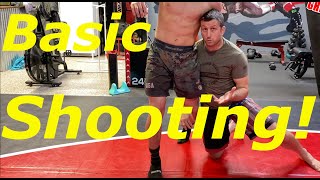
Lubo, wrestling coach at Roger Gracie Academy in London, demonstrates the wrestling posture and position essential for BJJ and MMA applications. He introduces Dean, a black belt instructor, as his demonstration partner for this single-leg to double-leg takedown progression.
The Giraffe vs. Turtle Posture Principle
A loose, open stance (the "giraffe" position) leaves practitioners vulnerable to submissions and control. By adopting a compact "turtle" posture—chin tucked toward shoulder, elbows protected—practitioners prevent opponents from establishing leverage on the collarbone, neck, and chest while maintaining the ability to sense incoming attacks.
Defending Against Forward Pressure
When an opponent pulls the practitioner forward, the correct response is to flow with the pressure rather than resist. The shooter should drop immediately on the inside knee, throw the elbow over the hips, and maintain an elevated chest and head position.
Single-Leg Entry and Foot Positioning
After establishing contact with a single-leg grip, the toes must point in the direction of the intended takedown. The practitioner pivots over the back foot while keeping the head up and chest elevated, using hip drive to drive forward into the opponent.
Transitioning from Single to Double Leg
Once the single-leg grip is secured, the practitioner switches to a double-leg control by bringing the second leg behind the opponent's other leg. The shoulders remain closed, with the head functioning as a driving force while maintaining constant forward pressure.
Leg Lacing for Positional Control
By lacing the opponent's legs together after the takedown, the practitioner prevents the opponent from establishing guard position in BJJ or escaping in MMA. This control allows immediate transition to side control or advanced submissions like the cradle.
Head Positioning and Hip Drive
The head serves as the body's strongest tool and must be actively used to drive through the opponent's center. Combined with proper hip positioning and forward momentum, this creates a powerful, difficult-to-defend takedown sequence.
Repetition and Drilling Protocol
The instructors demonstrate the complete single-to-double leg sequence on both sides, emphasizing consistent mechanics: shoulder closure, hip connection, head elevation, and seamless transitions between single and double-leg controls.
Wrestling Shooting Single to Double Legs Effectively in BJJ or MMA Tutorial
Key Takeaways
- •Introduction & Instructor Credentials
- •The Giraffe vs. Turtle Posture Principle
- •Defending Against Forward Pressure
- •Single-Leg Entry and Foot Positioning
Lyubo Kumbarov, former 4 x Bulgarian National Champion and Wrestling coach at Roger Gracie Academy HQ in London is here filmed by the Warrior Collective giving a tutorial on how to effectively shoot single to double leg takedowns in BJJ or MMA. www.warriorcollective.com www.rogergracie.com Thanks for watching, I hope you enjoyed watching this tutorial, please like, share and don't forget to subscribe to this channel for more great videos each week!! You can also follow the Warrior Collective on Facebook - https://www.facebook.com/warriorcollective Twitter - https://twitter.com/Warriorcollect Google + - https://plus.google.com/u/0/ Pinterest - http://uk.pinterest.com/warriorcollect/
Related Techniques
Frequently Asked Questions
What does this video teach about counter kick to sweep-kick takedown?
This video covers introduction & instructor credentials, the giraffe vs. turtle posture principle, defending against forward pressure. It provides detailed instruction from Stuart Tomlinson.
How long does it take to learn counter kick to sweep-kick takedown?
The basic mechanics can be understood in a single session, but developing reliable execution requires consistent drilling over weeks of practice. This 8-part breakdown helps structure your training by isolating each phase of the technique.
What are the key details for finishing counter kick to sweep-kick takedown?
The head serves as the body's strongest tool and must be actively used to drive through the opponent's center. Combined with proper hip positioning and forward momentum, this creates a powerful, difficult-to-defend takedown sequence.
Related videos
4 Ways To Sweep After Catching the Round Kick
Combat Theory
7 Simple & Effective Chain Takedowns for MMA
Jeff Chan MMAShredded
Judo's most devastating throw VS Greco-Roman wrestling's body lock takedown
Chadi
Takedown Against Knee Strikes - The Simple Technique That Takes Practice
Catch Wrestling Alliance
How to SHOOT the PERFECT Single Leg for Beginners!
TeachMeGrappling Coach Brian