Foundation Stances and Punching
The instructor establishes foundational posture through three primary stances: Anunso Kaunde Chiyogi (sitting stance), Dvichibo Chiyogi (upward punch stance), and Bandai Chiyogi (high section side waist stance). Each stance emphasizes proper body alignment and middle to high section targeting, preparing the practitioner for effective striking mechanics.
Bituro Chagi: The Twisting Kick
The twisting kick surprises opponents by attacking the opposite side of their body from where they expect contact. Executed by dropping the kicking-side hip to transfer body weight across the centerline, practitioners can strike with either the ball of the foot (Apgung Chi) or the instep (Badung). Progressive practice progresses through low, middle, and high sections, making this technique particularly effective against an opponent's ribs.
Apchagi: The Front Kick
The front kick begins by raising the folded knee to chest height before immediately extending the leg fully along a straight line toward the target. Practitioners should practice three height variations: low section targeting the groin, middle section targeting the stomach and solar plexus, and high section targeting the chin and head.
Dollyo Chagi: The Roundhouse Kick
The roundhouse kick combines knee elevation, hip rotation, and non-kicking foot pivot to snap the leg horizontally at 90 degrees into the target using the instep. Practitioners may also employ the ball of the foot, particularly when breaking through wooden boards. Balance recovery is essential—the kicking leg must return smoothly before resetting stance.
Dweet Chagi: The Back Kick
The back kick requires turning the head first to establish visual target acquisition before executing the technique. The kicking leg lifts while the practitioner maintains balance, with an optional jumping variation that generates additional power and distance.
Advanced Combinations
Combining a hook kick (Goro Chagi) with a roundhouse kick creates an effective two-technique sequence that surprises opponents through rapid directional changes. The crescent kick (Anuro Sabu Chagi) can be executed alone or combined with a back crescent kick (Back Koro Sabu Chagi), both techniques targeting high section strikes.
Power Development and Application
Back leg roundhouse kicks generate substantially greater power than front leg variations, making them ideal for board-breaking training and competition conditioning. Front leg roundhouse kicks develop speed and setup advantage for competitive applications, requiring different training emphasis based on practitioner goals.
Twisting / Roundhouse / Front Kick | Basic Taekwon-do Practice | The Martial Artist's Way🥋
Key Takeaways
- •Foundation Stances and Punching
- •Bituro Chagi: The Twisting Kick
- •Apchagi: The Front Kick
- •Dollyo Chagi: The Roundhouse Kick
Hello everyone! Today we are going to practice the Twisting Kick (Bituro Chagi), the Front Kick (Ap Chagi) and the Roundhouse Kick (Dollyo Chagi). Let's warm up and practice these techniques together! Nora Csiszar is a 3rd dan black belt in ITF Taekwond-do. *** DISCLAIMER: It is strongly recommended that you consult with your physician before beginning any exercise program. You should be in good physical condition and be able to participate in the exercise. You should understand that when participating in any exercise or exercise program, there is the possibility of physical injury. If you engage in this exercise or exercise program, you agree that you do so at your own risk, are voluntarily participating in these activities, assume all risk of injury to yourself, and agree to release and discharge the channel from any and all claims or causes of action, known or unknown, arising out of the channel's negligence.
Related Techniques
Frequently Asked Questions
What does this video teach about bituro chagi?
This video covers foundation stances and punching, bituro chagi: the twisting kick, apchagi: the front kick. It provides detailed instruction from Nora TKD.
How long does it take to learn bituro chagi?
The basic mechanics can be understood in a single session, but developing reliable execution requires consistent drilling over weeks of practice. This 7-part breakdown helps structure your training by isolating each phase of the technique.
What are the key details for finishing bituro chagi?
Combining a hook kick (Goro Chagi) with a roundhouse kick creates an effective two-technique sequence that surprises opponents through rapid directional changes. The crescent kick (Anuro Sabu Chagi) can be executed alone or combined with a back crescent kick (Back Koro Sabu Chagi), both techniques targeting high section strikes.
Related videos
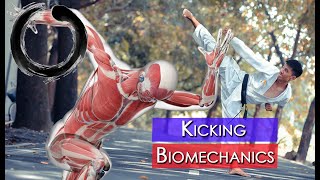
Kicking Biomechanics
Bunbu Ryodo
Day 4 - 100 TWISTING KICKS / BITURO CHAGI (12 Days of Kickmas series)
Nora TKD
Muay Thai Sangha Lower Hand Outside and Inside techniques
Sangha Muay Thai Thailand
Muay Thai Sangha Lower Hand Outside and Inside techniques
Sangha Muay Thai Thailand
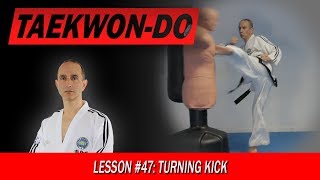
Turning Kick - Taekwon-Do Lesson #47
Donato Nardizzi