Kicking Biomechanics
0
Bituro Chagi·Bunbu Ryodo
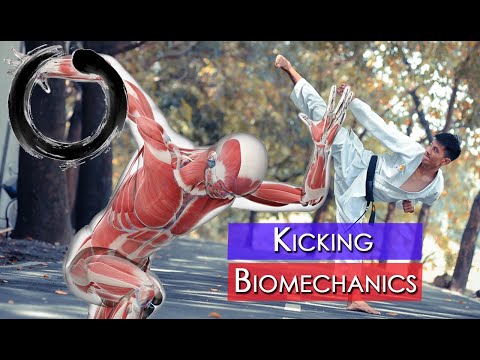
A 'light' biomechanics exercise for practicing your karate kicking techniques. Not too much detail on the science here …
Translation: twisting kick
Bituro Chagi (twisting kick) is a Taekwon-Do kicking technique that follows an outcurved line to the target, creating a twisting trajectory. [1] Unlike the straight-line front kick or the circular roundhouse, the twisting kick travels in a curved path that deceives the opponent about the final point of impact. [1] It is divided into low, middle, and high variations, with the ball of the foot as the primary striking surface for low and middle versions. [1] Classified as a smashing kick in General Choi's Taekwon-Do encyclopedia, it is designed for attacking the front of the opponent with a deceptive trajectory. [1]
Taekwondo lineage: Korean kwans → ITF system under General Choi Hong Hi. The twisting kick (bituro chagi) is an ITF-specific technique. [1]
Commonly used in WT Taekwondo Olympic competition and ITF tournament sparring. Also appears in WKF karate kumite and kickboxing. [1]
No images yet for this technique.
Sign in to suggest an image.
A 'light' biomechanics exercise for practicing your karate kicking techniques. Not too much detail on the science here …
I hope that you will all like the video! Make sure that you have SUBSCRIBED ❤️ to my channel and your notification bell …
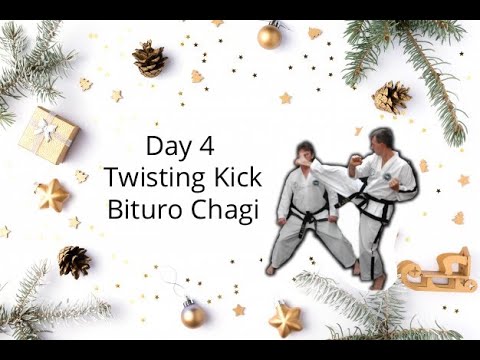
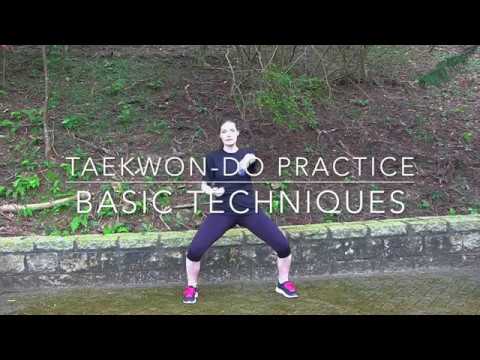
Hello everyone! Today we are going to practice the Twisting Kick (Bituro Chagi), the Front Kick (Ap Chagi) and the Round…
The Bituro Chagi (twisting kick) is a rotational striking technique in Taekwondo that surprises opponents by targeting the opposite side of the body from their defensive expectation. According to Nora TKD, the technique leverages hip drop and body weight transfer to connect with the opponent's ribs or flank when executed at mid-section. The kick can be delivered using either the ball of the foot (Apgung Chi) or the instep (Badung). Nora TKD emphasizes the counter-intuitive nature of the strike: when using the rear leg, the opponent anticipates a kick from the open side, but the twisting rotation delivers force to the closed side instead. Practitioners should progress through three height levels—low, mid, and high section—before combining alternating legs. Bunbu Ryodo's biomechanics analysis clarifies that twisting kicks like Bituro Chagi differ from thrusting kicks in their reliance on rotational force rather than directional thrust alone, requiring controlled hip and body rotation while maintaining balance. Both instructors agree on the importance of controlled practice progression and maintaining proper stance throughout the technique.
Synthesized from 3 instructors
No instructional courses yet for this technique.
Sign in to suggest a course.
Risk of injury to the person this technique is applied to
Deceptive trajectory is the primary weapon, not raw power.
Skill level needed to execute this technique reliably
Whether this technique is allowed under major competition rule sets
Choi, H.H. (1999). Condensed Encyclopedia of Taekwon-Do. International Taekwon-Do Federation.
[1] Choi, Condensed Encyclopedia of Taekwon-Do (1999), Smashing Kicks chapter
[1] Choi, Condensed Encyclopedia of Taekwon-Do (1999), Smashing Kicks chapter
hip flexibility for the twisting motion, coordination for the curved path
hip flexors, hip rotators, quadriceps
According to Nora TKD, you can use either the ball of the foot (Apgung Chi) or the instep (Badung), with the ball of the foot being especially effective when kicking through targets like wooden boards, while the instep is also a solid choice for general practice.
Nora TKD emphasizes dropping your kicking-side hip down and snapping the kick horizontally into the target at a 90-degree angle to connect with an opponent on the opposite side of their body.
Nora TKD stresses that you must always look behind you first before executing any turning kick, and remember to retract your leg and regain your balance after the kick to maintain control.
Bituro Chagi (twisting kick) is a Taekwon-Do kicking technique that follows an outcurved line to the target, creating a twisting trajectory. Unlike the straight-line front kick or the circular roundhouse, the twisting kick travels in a curved path that deceives the opponent about the final point of impact.
Bituro Chagi is classified in General Choi Hong Hi's Taekwon-Do encyclopedia as a smashing kick — one of 12 smashing kick categories. It is unique to ITF Taekwon-Do and represents the art's emphasis on curved and deceptive kicking trajectories that distinguish it from other striking arts.
Unified MMA: Legal: legal — standard striking technique; WKF Karate: Legal: legal — controlled contact required; WT Taekwondo: Legal: legal — kicks are primary scoring technique; WAKO Kickboxing: Legal: legal — full contact permitted; IFMA Muay Thai: Legal: legal — all strikes permitted
Danger rating 4/10. Moderate — deceptive trajectory is the primary weapon, not raw power.
The standard setup chain: Feint straight front kick → change to curved bituro chagi → Jab to freeze → bituro chagi to exposed ribs → After a blocked roundhouse → bituro chagi from the opposite angle.
Standard counters include: Step back — the curved path has limited range / Inside parry — redirect the curving kick / Low kick counter — attack the standing leg during the twist.
Common variants: Low twisting kick (targeting the thigh or knee); Middle twisting kick (targeting the ribs or solar plexus); High twisting kick (targeting the head (uses instep as striking surface)).
Commonly used in WT Taekwondo Olympic competition and ITF tournament sparring. Also appears in WKF karate kumite and kickboxing.
Top errors to watch for: Making the curve too wide — becomes a slow, telegraphed roundhouse / Not starting with a front kick chamber — the deception requires a straight start / Using incorrect striking surface — ball of foot for low/mid, instep for high / Losing balance from the twisting motion.
The Bituro Chagi is also known as Bituro Chagi, Twisting Kick, Bituro-Chagi, 비틀어 차기.