Okuri Ashi Barai Fundamentals
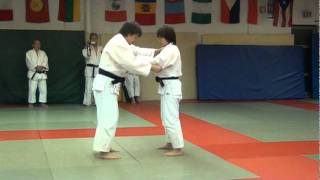
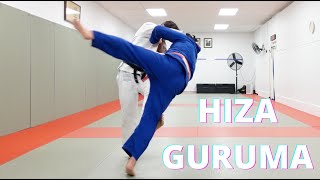
Okuri ashi barai is executed when the opponent moves away from the practitioner. The practitioner steps alongside the opponent while simultaneously sweeping both legs together in a single coordinated motion. Proper positioning requires the practitioner to remain slightly behind the opponent rather than ahead, ensuring the sweep connects with the target leg.
Positional Control and Grip
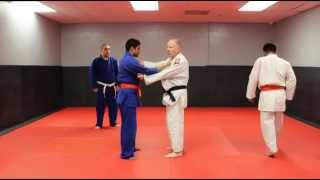
The practitioner maintains control throughout the technique by keeping a firm grip on the opponent's lapel while managing speed and distance. For a right-handed practitioner, the left foot executes the sweep while the sleeve-side hand maintains control, allowing the practitioner to push the opponent downward after the sweep.
Basic Synchronization Drill
The first training drill involves mirroring the opponent's movement by skipping together in synchronized steps. After establishing rhythm, the practitioner progresses to touching the opponent's foot every two skips, maintaining the same directional movement before alternating sides.
Frequency Reduction and Directional Changes
Training progresses by reducing the number of skips between sweep attempts, moving from every two skips to every three or four skips. The practitioner then executes the technique while moving in a square pattern, incorporating lapel pulls to change direction and developing the rhythm needed for the throw.
Power Generation and Footwork
Effective okuri ashi barai requires power generated from the legs rather than just bouncing on the toes. The practitioner maintains control by stepping with the left leg and pulling with the lapel hand, creating forward momentum that drives both the directional change and the sweeping action.
Competition-Realistic Execution
In realistic scenarios, the practitioner steps with the left leg while pulling with the right hand, maintaining control through two skips before executing the throw on the third step. This timing replicates match conditions where the practitioner must respond to the opponent's actual movement rather than predetermined choreography.
Advanced Feinting Technique
The advanced drill involves feinting a seoi nage throw before executing the sweep. The practitioner pulls the opponent in one direction as if committing to seoi nage, then immediately steps back and executes the okuri ashi barai in the opposite direction, exploiting the opponent's reactionary resistance.
Okuri Ashi Barai Tutorial - Drill Development
Key Takeaways
- •Okuri Ashi Barai Fundamentals
- •Positional Control and Grip
- •Basic Synchronization Drill
- •Frequency Reduction and Directional Changes
Okuri Ashi Barai Tutorial - Drill Development - https://youtu.be/b6QvivOXWxs Ashi Waza is believed to be the essence of Judo, but can be so difficult to do! This is a great way to take a difficult technique and master it! I find drill development like this really useful when teaching juniors! This video is for building your skills within Judo, I hope it helps! https://www.facebook.com/VinceSkillcornCoach https://twitter.com/Vinceskillcorn https://www.instagram.com/vinceskillcorn/ Take your Judo skills to the next level with The Judo Coach! Join our community! Facebook - https://www.facebook.com/thejudocoach Instagram - https://www.instagram.com/thejudocoach/ TikTok - https://www.tiktok.com/@thejudocoach?lang=en and www.thejudocoach.com to stay up-to-date on the latest techniques, training tips, and motivational content. And make sure to get exclusive access to our content before anyone else by signing up for our mailing list http://bit.ly/3mjJkba today!
Frequently Asked Questions
What does this video teach about okuri ashi barai?
This video covers okuri ashi barai fundamentals, positional control and grip, basic synchronization drill. It provides detailed instruction from The Judo Coach.
How long does it take to learn okuri ashi barai?
The basic mechanics can be understood in a single session, but developing reliable execution requires consistent drilling over weeks of practice. This 7-part breakdown helps structure your training by isolating each phase of the technique.
What are the key details for finishing okuri ashi barai?
In realistic scenarios, the practitioner steps with the left leg while pulling with the right hand, maintaining control through two skips before executing the throw on the third step. This timing replicates match conditions where the practitioner must respond to the opponent's actual movement rather than predetermined choreography.