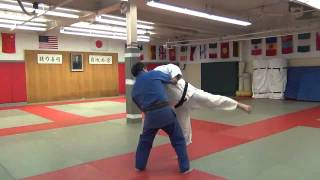
Introduction to Ko Soto Gari
Ko Soto Gari is one of the most fundamental and commonly executed techniques in judo. This instructional guide covers the essential mechanics and strategic applications of this leg sweep, breaking down both basic and advanced variations for different grip scenarios.
Right-vs-Right Grip Foundation
When facing an opponent in right-vs-right stance, the instructor establishes a dominant grip by securing the sleeve first. From this position, executing Ko Soto becomes more complex when the opponent's arm crosses the body, requiring adjustment to either Ko Soto or the related Harai technique.
Progressive Grip Development
Advanced practitioners employ a two-step grip strategy: first establishing pressure and control, then searching for the optimal secondary grip. This methodical approach allows the practitioner to open the opponent's guard and create the proper angle for the throwing technique.
Sleeve Grip Concealment
A subtle but effective variation involves placing the fingers inside the opponent's gi sleeve to maintain control without referee visibility. This advanced grip makes the opponent extremely difficult to unbalance or throw, providing the practitioner with significant technical advantage.
Far-Side Ko Soto Mechanics
When the opponent's near-side arm is controlled, the far-side Ko Soto becomes the optimal attack. The practitioner must crowd the opponent with hip pressure, place their head into the opponent's midsection, and drive weight onto the far leg before executing the sweep.
Weight Distribution and Leg Commitment
The critical advantage of far-side Ko Soto is creating weight distribution on the target leg. By maintaining dominant hip and shoulder pressure, the opponent cannot easily lift their leg off the ground, making the sweep significantly more effective than reaching from distance.
Control Position Requirements
Proper execution demands closed elbow positioning and hip crowding to prevent the opponent from turning into the practitioner's back. The head position against the opponent's midsection anchors the entire technique while pinning the arm prevents defensive rotation.
Finishing and Follow-Up Attacks
When Ko Soto fails to complete the throw, the practitioner can seamlessly transition to alternative techniques such as Kouchi Gari, Tomoe Nage, or additional Ko Soto variations. The initial control position creates natural setup opportunities for these subsequent attacks.
Advanced Combination Strategies
Ko Soto combines effectively with Ashi Waza techniques after neutralizing the opponent's defensive arm placement. By maintaining dominant positioning and recognizing when sweeps open secondary attack opportunities, the practitioner can execute a cohesive throwing combination.
Kosoto gari in depth
Key Takeaways
- •Introduction to Ko Soto Gari
- •Right-vs-Right Grip Foundation
- •Progressive Grip Development
- •Sleeve Grip Concealment
Kosoto gari https://www.instagram.com/judoshintaronyc/
Frequently Asked Questions
What does this video teach about standard ko soto gari?
This video covers introduction to ko soto gari, right-vs-right grip foundation, progressive grip development. It provides detailed instruction from Shintaro Higashi.
How long does it take to learn standard ko soto gari?
The basic mechanics can be understood in a single session, but developing reliable execution requires consistent drilling over weeks of practice. This 9-part breakdown helps structure your training by isolating each phase of the technique.
What are the key details for finishing standard ko soto gari?
When Ko Soto fails to complete the throw, the practitioner can seamlessly transition to alternative techniques such as Kouchi Gari, Tomoe Nage, or additional Ko Soto variations. The initial control position creates natural setup opportunities for these subsequent attacks.