Introduction to Guard Retention
Guard retention is a foundational concept in Brazilian Jiu-Jitsu that is often developed through experience rather than explicit instruction. For beginners who spend approximately 70% of their training time in guard situations, mastering guard retention is essential before learning submissions. Without solid guard retention fundamentals, a practitioner cannot effectively implement offensive techniques from guard.
The Knee-Elbow Connection Concept
The knee-elbow connection is the primary defensive mechanism in guard retention, conceptualized as a door that must remain closed to prevent guard passage. The defender maintains connection by keeping their knees close to their elbows, creating a barrier that the passer must breach to successfully pass. This connection serves as the first line of defense against guard passing techniques.
Cannonball Position Setup
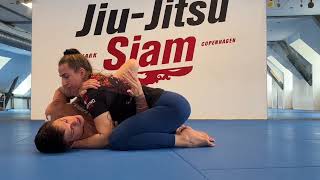
The foundational position for developing knee-elbow connection is a recumbent open guard with hips elevated slightly off the mat. The practitioner pulls their knees toward their shoulders while keeping their head off the mat and hands hooked over the front of the knees. This positioning creates two separate levers rather than one solid lever, making the guard more resistant to pressure.
Hand Placement and Positioning
Correct hand placement is critical, with hands positioned in front of the knees rather than behind them to maintain the knee-elbow connection. The practitioner should keep their elbows tight and avoid reaching outward prematurely, as this creates gaps the passer can exploit. Proper hand positioning is essential for the upcoming lever-based retention techniques.
Toriando Movement Drill
The Toriando drill trains the bottom player to follow the top player's lateral movements while maintaining the knee-elbow frame. The bottom player tracks the passer's position by rotating their hips and following with their knees, keeping their torso facing the opponent (headlights concept). This 10-repetition drill builds the muscle memory and strength necessary for sustained guard retention.
Headlights Principle and Hip Angle
The "headlights" concept refers to directing the knees toward the opponent to maintain defensive positioning and prevent guard passage. As the passer moves laterally, the defender must continuously reset their hip angle to keep their knees pointed at the passer. A flat-back position eliminates this defensive advantage, making proper hip angle management critical for guard retention.
Flexibility and Hand Reach Variations
Practitioners with sufficient flexibility may extend their hands to block the passer while maintaining the knee-elbow connection, provided they do not open up the defensive frame. The key distinction is that any hand reach must occur without sacrificing the integrity of the knee-elbow barrier. This allows for more active defense without compromising the fundamental connection.
Lever Control and Grip-Based Defense
Lever control utilizes grip-based techniques, particularly sleeve grips in the gi, to prevent the passer from turning the legs into levers for passage. This advanced guard retention method is primarily applicable in gi training but has principles transferable to no-gi settings. Lever control supplements the knee-elbow connection by controlling the passer's upper body mechanics.
Spectrum | BJJ Fundamentals - Knee Elbow Connection and Lever Based Retention
Key Takeaways
- •Introduction to Guard Retention
- •The Knee-Elbow Connection Concept
- •Cannonball Position Setup
- •Hand Placement and Positioning
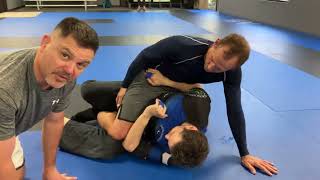
Main guard retention concept: Block the leading edge of your opponent's body and recompose your hip angle. Keeping a tight knee elbow connection is one of the most important concepts in guard retention. Here we will discuss the knee elbow connection and show a drill to get your body used to holding the position. We will also look at how to use the lever to your opponent's shoulder to assist you in retaining your guard.
Frequently Asked Questions
What does this video teach about standard knee-elbow frame?
This video covers introduction to guard retention, the knee-elbow connection concept, cannonball position setup. It provides detailed instruction from SPECTRUM JIU JITSU.
How long does it take to learn standard knee-elbow frame?
The basic mechanics can be understood in a single session, but developing reliable execution requires consistent drilling over weeks of practice. This 8-part breakdown helps structure your training by isolating each phase of the technique.
What are the key details for finishing standard knee-elbow frame?
Practitioners with sufficient flexibility may extend their hands to block the passer while maintaining the knee-elbow connection, provided they do not open up the defensive frame. The key distinction is that any hand reach must occur without sacrificing the integrity of the knee-elbow barrier. This allows for more active defense without compromising the fundamental connection.