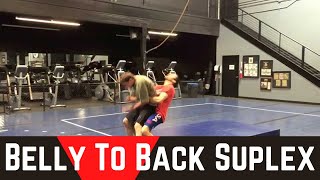
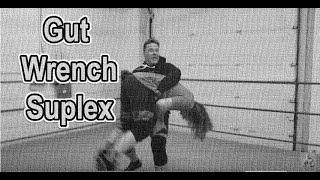
Introduction to the Standard Suplex
Bubba Jenkins demonstrates the fundamental mechanics of executing a proper suplex technique. This instructional guide covers the essential principles and common mistakes to avoid when performing this throwing technique.
The Power Line: Foundation of the Suplex
The power line—the opponent's torso and midsection—is the critical control point for executing an effective suplex. A secure lock on the power line ensures efficiency and technical precision throughout the throw.
Establishing Hip Control
The practitioner should identify a specific point on the opponent's hip and establish a tight lock at that location. This hip-focused grip prevents the opponent from escaping, lowering their center of gravity, or creating defensive angles.
Lead Leg Positioning and Blocking
The lead leg must block the opponent's leg on the opposite side of the body, preventing lateral movement and limiting defensive options. Combined with the secure hip lock, proper leg positioning neutralizes all escape routes.
Correct Lock Technique
Rather than relying on arm strength alone, the practitioner should establish a tight forearm lock that secures the opponent's waist. This lock leaves no gaps for the opponent's arms to manipulate or escape through.
Hip-Driven Execution
The throw derives its power from the hips, not the arms. The practitioner drives their hips underneath the opponent, arches the back, and rotates to complete the suplex with maximum efficiency and control.
Heavy Bag Drill Setup
The bag should be positioned approximately one foot above the practitioner's head to simulate proper opponent positioning. This setup allows the practitioner to develop the correct mechanics and feel the arching motion required for the technique.
Progression Drill: Arch and Rotation
The practitioner performs a controlled swing, maintains their arch at the peak moment, and rotates outward rather than executing a back flip motion. This rotation must occur at the last moment to complete the throw with precision.
Advanced Drill: Controlled Drop
Once the basic mechanics are mastered, the practitioner should control the bag's descent and prevent it from touching the ground during the rotation. This advanced progression develops the squeeze and controlled landing necessary for safe, effective throws.
Training Safety and Application
Practitioners should master this technique on heavy bags before attempting it on training partners, prioritizing safety in all drilling scenarios. Competition environments allow for full intensity application once technique proficiency is established.
How to Suplex: Instruction & Heavybag Drills
Key Takeaways
- •Introduction to the Standard Suplex
- •The Power Line: Foundation of the Suplex
- •Establishing Hip Control
- •Lead Leg Positioning and Blocking
Bubba Jenkins teaches the suplex, one of his signature wrestling takedowns. The suplex is a powerful throw where you launch your opponent upside-down by locking your arms around their waist, thrusting your hips, and arching your back. In this video are some drills you can practice safely on a heavy bag. Subscribe to FIGHTTIPS►http://bit.ly/1APnzvw Follow Bubba: https://www.instagram.com/bubba_jenkins FOLLOW: Facebook | http://bit.ly/fightTIPSFacebook Twitter | http://bit.ly/fightTIPSTwitter Instagram | http://bit.ly/fightTIPSInstagram
Frequently Asked Questions
What does this video teach about standard suplex technique?
This video covers introduction to the standard suplex, the power line: foundation of the suplex, establishing hip control. It provides detailed instruction from fightTIPS.
How long does it take to learn standard suplex technique?
The basic mechanics can be understood in a single session, but developing reliable execution requires consistent drilling over weeks of practice. This 10-part breakdown helps structure your training by isolating each phase of the technique.
What are the key details for finishing standard suplex technique?
Once the basic mechanics are mastered, the practitioner should control the bag's descent and prevent it from touching the ground during the rotation. This advanced progression develops the squeeze and controlled landing necessary for safe, effective throws.