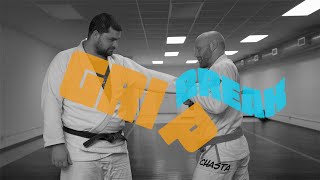
Introduction to Posture Breaking
Breaking an opponent's posture is a fundamental requirement for effective attacks from closed guard. The instructor identifies posture breaking as one of the most common technical challenges that guard players face. This foundational concept determines success in launching subsequent offensive techniques.
Three Primary Defensive Hand Positions
Opponents defend against posture breaks using three distinct hand placements: both hands on the hips, one high and one low grip, or both hands high in the armpits. Each position creates a different structural support that requires a specialized breakdown approach. Understanding these three categories is essential for adapting technique to any defensive scenario.
Breaking Low Hand Position
When an opponent places both hands low on the hips, the instructor uses a lapel grip combined with an abdominal crunch to collapse the defender's posture. The coordinated pull of the lapels and elevation of the knees creates a buckling action that forces the opponent forward. This position typically triggers defensive hand posts that open opportunities for overhooks or triangle transitions.
Countering High-Low Cross Grip
Against a one-high, one-low grip, the instructor employs a cross-sleeve grip with wrist pressure to break the high lapel control. Once the grip is broken, the attacker catches the opponent's wrist to prevent re-engagement and guides the arm across the body. Chest positioning behind the tricep enables back control opportunities or pendulum sweep entry.
Dismantling Bilateral High Armpit Control
When facing both hands high in the armpits, the instructor uses shoulder pressure to create space for pummeling underneath. After achieving the under-hook position, a cross-collar grip combined with elbow-to-chest pressure prevents the opponent from re-pummeling. This configuration facilitates triangle choke setups or high guard transitions.
Hip Bump Sweep Against Leaning Posture
When an opponent leans excessively backward to avoid posture breaks, the hip bump sweep becomes the primary offensive tool. The instructor initiates the technique by crunching upward to create elevation, then drives over the opponent's elbow to execute the sweep. Even if the sweep fails, the counter-pressure forces the opponent to drive forward, allowing posture break completion.
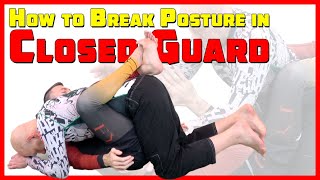
Breaking Posture in Closed Guard ( The Complete Guide )
Key Takeaways
- •Introduction to Posture Breaking
- •Three Primary Defensive Hand Positions
- •Breaking Low Hand Position
- •Countering High-Low Cross Grip
Closed guard is one of the most powerful guards in all of jiu jitsu. When controlled well it is very difficult to escape and allows for so many submission opportunities. However to be able to unlock all of the different attacking options breaking posture is key skill set you need. This video I outline the main way to break posture against 4 different responses your opponent can have and how to build you attack series after that. Closed Guard Triangle Set Up https://youtu.be/vmv-7wfEAE4 Follow on IG for daily content: @jonthomasbjj Kimonos: www.vitalkimonos.eu
Frequently Asked Questions
What does this video teach about standard posture break?
This video covers introduction to posture breaking, three primary defensive hand positions, breaking low hand position. It provides detailed instruction from JonThomasBJJ.
How long does it take to learn standard posture break?
The basic mechanics can be understood in a single session, but developing reliable execution requires consistent drilling over weeks of practice. This 6-part breakdown helps structure your training by isolating each phase of the technique.
What are the key details for finishing standard posture break?
When facing both hands high in the armpits, the instructor uses shoulder pressure to create space for pummeling underneath. After achieving the under-hook position, a cross-collar grip combined with elbow-to-chest pressure prevents the opponent from re-pummeling. This configuration facilitates triangle choke setups or high guard transitions.