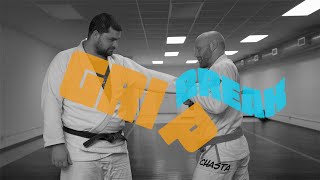
Rule Context: Judo Grip-Breaking Restrictions
Ribeiro explains that modern judo rules prohibit two-handed grip breaks, requiring practitioners to develop single-hand techniques instead. This rule change necessitates adapting traditional grip-breaking methods to work with limited hand resources.
Core Principle: The Wide Break
The fundamental technique involves creating distance by driving the opponent's grip toward their own face using a framing motion. Rather than muscling the grip apart directly, the practitioner uses body positioning and leverage to naturally open the opponent's hands.
Standing Application and Positional Control
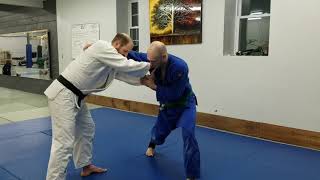
When gripped at standing, the defender maintains a centered posture with elbows tucked, then extends their forearm across the opponent's wrist while driving upward toward the opponent's face. This creates an unfavorable angle for the opponent to maintain their grip while simultaneously establishing control of the opponent's wrist.
Guard Position Grip Break
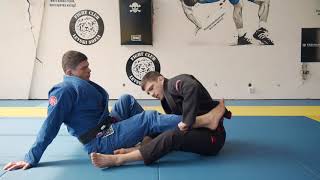
The same wide-break principle applies when the opponent establishes a grip while the defender is in closed guard. The defender frames on the opponent's chest or arm, then drives their elbow inward while extending their forearm across the opponent's wrist upward.
Two-Stage Breaking Sequence
Against a two-handed grip, the defender must break each hand sequentially rather than attempting simultaneous release. The first break targets the grip hand closest to the defender's center, followed by breaking the secondary grip hand.
Traditional vs. Umbrella Grip Variations
The traditional collar grip can be countered with a rolling motion, but the umbrella grip—legal in Brazilian Jiu-Jitsu but prohibited in judo—requires a different approach using the wide-break method with upward wrist pressure. The practitioner drives the opponent's wrist toward their own face while maintaining wrist control.
Training Methodology and Partner Drills
Ribeiro recommends practicing the wide-break grip release against a compliant partner to develop timing and mechanics. Practitioners should drill breaking grips from both standing and guard positions before adding resistance or defensive layers.
Xande Ribeiro - One Handed Grip Break (Y Grip Break)
Key Takeaways
- •Rule Context: Judo Grip-Breaking Restrictions
- •Core Principle: The Wide Break
- •Standing Application and Positional Control
- •Guard Position Grip Break
Get instant access to the BJJ Roadmap for White and Blue belts at: http://www.bjjlibrary.com Come train BJJ in San Diego and stay at the BJJ Hostel: http://bjjhostel.com Tape Armor Finger Tape for BJJ: http://tapeyourfingers.com
Related Techniques
Frequently Asked Questions
What does this video teach about two-on-one grip break?
This video covers rule context: judo grip-breaking restrictions, core principle: the wide break, standing application and positional control. It provides detailed instruction from BJJLibrary.
How long does it take to learn two-on-one grip break?
The basic mechanics can be understood in a single session, but developing reliable execution requires consistent drilling over weeks of practice. This 7-part breakdown helps structure your training by isolating each phase of the technique.
What are the key details for finishing two-on-one grip break?
The traditional collar grip can be countered with a rolling motion, but the umbrella grip—legal in Brazilian Jiu-Jitsu but prohibited in judo—requires a different approach using the wide-break method with upward wrist pressure. The practitioner drives the opponent's wrist toward their own face while maintaining wrist control.