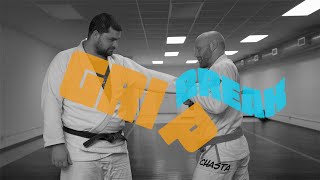
Understanding the Two-On-One Grip
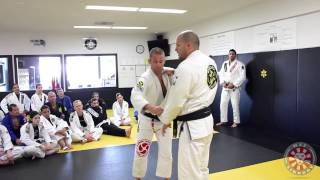
The two-on-one grip, also called an oblique grip in Sambo, is a common control position in grappling when opponents assume opposite stances. The opponent's primary objective is to neutralize the defender's inside power and compromise their posture, creating openings for foot attacks and takedowns. Understanding this position's mechanics is essential for effective defense.
The Critical Error: Bending Into the Grip
The most common defensive mistake is bending forward with the opponent's downward pressure. This posture collapse prevents the defender from establishing an inside frame with their arms or head, leaving them vulnerable until thrown. Maintaining upright posture is fundamental to executing any successful escape.
Speed and the Cross-Grip Counter
The moment the opponent applies downward pressure, the defender must immediately establish a cross-grip on the opponent's shoulder or head. Speed is critical; this counter must be executed instantaneously to prevent further breakdown. Hesitation allows the opponent to establish a dominant position behind the back.
Squaring Up and Head Control
After establishing the cross-grip, the defender must square their shoulders directly facing the opponent while maintaining firm pressure on the opponent's head. This prevents the opponent from ducking under for a single or double leg takedown. Head control must be maintained throughout the escape sequence to neutralize leg attack opportunities.
Foot Positioning and Distance Management
The defender's feet must be positioned away from the opponent to prevent easy access to single or double leg takedowns. Keeping feet close to the opponent creates vulnerability regardless of whether the defender is posting or moving. Proper distance combined with head control creates a secure defensive position.
Directional Movement: Avoiding the Hip Throw
The defender should avoid moving laterally in the direction of the opponent's hips, as this exposes them to hip throw entries. Instead, the defender should either maintain a squared-up position while repositioning or circle around the opponent's outside. Moving through the opponent's centerline allows the defender to attack across their plane and regain the offensive initiative.
Three Essential Defensive Principles
First, the defender must maintain posture and resist being broken down. Second, the defender must execute the cross-grip frame with immediate speed upon feeling pressure. Third, the defender must control the head while keeping feet at proper distance to prevent takedown entries.
Advanced Counter Techniques
Once the defender has established proper position, advanced practitioners can use head positioning and arm blocking to further disable the opponent's grip transitions. From this secured defensive base, the defender can then initiate their own offensive sequences and regain control of the engagement. These advanced techniques build upon the fundamental defensive mechanics covered in this sequence.
Breaking the two on one grip
Key Takeaways
- •Understanding the Two-On-One Grip
- •The Critical Error: Bending Into the Grip
- •Speed and the Cross-Grip Counter
- •Squaring Up and Head Control
Frequently Asked Questions
What does this video teach about standard two-on-one grip break?
This video covers understanding the two-on-one grip, the critical error: bending into the grip, speed and the cross-grip counter. It provides detailed instruction from Rochester Judo.
How long does it take to learn standard two-on-one grip break?
The basic mechanics can be understood in a single session, but developing reliable execution requires consistent drilling over weeks of practice. This 8-part breakdown helps structure your training by isolating each phase of the technique.
What are the key details for finishing standard two-on-one grip break?
First, the defender must maintain posture and resist being broken down. Second, the defender must execute the cross-grip frame with immediate speed upon feeling pressure. Third, the defender must control the head while keeping feet at proper distance to prevent takedown entries.