Importance of Posture Break in Closed Guard
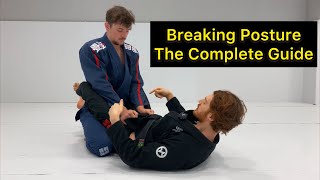
The posture break is fundamental to closed guard technique, as it allows the guard player to control their opponent's position and create opportunities for submissions. Understanding how to properly pull an opponent forward using the legs is essential for effective guard work.
Common Mistakes in Guard Positioning
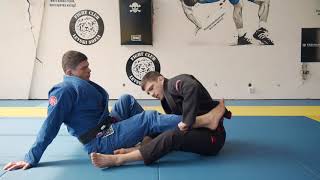
A sloppy closed guard with knees too open and legs positioned too low makes direct hip pulls ineffective, as the opponent's center of gravity is well-distributed and difficult to move with insufficient leg strength. Proper positioning requires adjustment before attempting any pulling mechanics.
High Guard Positioning and Hip Placement
The guard player should climb their hips as high as possible and position the guard high on the opponent's torso, with knees clamped close to the armpits rather than lower on the body. This creates a mechanical lever using the opponent's spine as the fulcrum, making the pull significantly more efficient.
Heel Pressure and Ankle Positioning
The guard player should use heel pressure against the opponent's lower back to maintain control and can briefly uncross ankles if necessary to reposition hips closer to the opponent before re-establishing the crossed ankle position. Maintaining tight knee pressure without excessive strain is critical for creating proper tension.
Directional Pull and Safety Mechanics
Rather than pulling the opponent directly forward, the guard player should pull slightly to one side, which protects both the guard player's own face and improves the dominant angle for subsequent attacks. This angled pull redirects potential headbutt attempts away from both fighters' faces.
Hand Position During Posture Break
The guard player's hands should remain positioned to guide, underhook, or overhook the opponent as the pull is executed, preventing the hands from being exposed to injury. Proper hand placement ensures both safety and the ability to flow into follow-up techniques.
Application Across Training Contexts
The posture break technique is applicable in both self-defense situations and sport jiu-jitsu competition, though the directional pull mechanics remain consistent to prevent injury to either participant. Proper technique allows practitioners of varying strength levels to effectively control larger opponents.
How to Break Posture in Closed Guard
Key Takeaways
- •Importance of Posture Break in Closed Guard
- •Common Mistakes in Guard Positioning
- •High Guard Positioning and Hip Placement
- •Heel Pressure and Ankle Positioning
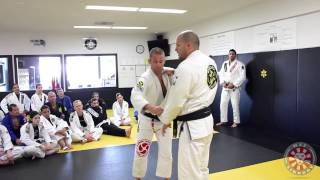
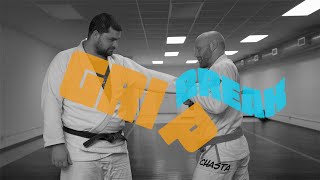
To attack from the closed guard with sweeps and submissions you need to first need to off-balance your opponent with Kuzushi. This clip is from https://www.grapplearts.com/the-gripfighting-and-kuzushi-formula-with-rob-biernacki-and-stephan-kesting/ and shows you one of the best ways to disrupt his balance, his posture and his alignment in order to set up your own attack. Without Kuzushi just deploying ‘a technique’ at your opponent from the closed guard is unlikely to work unless he’s a beginner. After all, every technique has a counter. But once his alignment is compromised then he’s much less able to prevent the sweep or submission. Kuzushi kills the counters. Once he’s off balance with his alignment broken he’ll be much easier to deal with. He won’t be trying to pass your guard. He’ll be so off balance that all he’ll be thinking about is recovering his position. His frantic reactions to get back into position actually give YOU the opportunity to launch your real attack. There’s no such thing as magic in BJJ, but properly applied Kuzushi comes pretty close. In The Gripfighting and Kuzushi Formula you’ll learn exactly how to apply kuzushi to triple the effectiveness of your guard in both gi and no gi, against both standing and kneeling opponents, and from both the closed and open guard. Grab the The Gripfighting and Kuzushi Formula Here: https://www.grapplearts.com/the-gripfighting-and-kuzushi-formula-with-rob-biernacki-and-stephan-kesting/ Cheers Stephan Kesting Grapplearts.com
Related Techniques
Frequently Asked Questions
What does this video teach about posture break?
This video covers importance of posture break in closed guard, common mistakes in guard positioning, high guard positioning and hip placement. It provides detailed instruction from Stephan Kesting.
How long does it take to learn posture break?
The basic mechanics can be understood in a single session, but developing reliable execution requires consistent drilling over weeks of practice. This 7-part breakdown helps structure your training by isolating each phase of the technique.
What are the key details for finishing posture break?
The guard player's hands should remain positioned to guide, underhook, or overhook the opponent as the pull is executed, preventing the hands from being exposed to injury. Proper hand placement ensures both safety and the ability to flow into follow-up techniques.