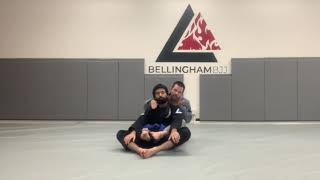
Defense Scope and Threat Assessment
The two-hand collar rear choke defense applies to any situation where an opponent places both hands on the defender's neck or shoulders from behind. The primary threat is not the squeezing pressure itself, but rather the opponent's fingers digging into the trachea—thumbs from the front and four fingers from the rear.
Neck Muscle Engagement
The defender tightens all neck muscles to create a protective ridge that prevents fingers from penetrating the trachea. This muscle engagement buys critical time and should be practiced in front of a mirror to develop the correct facial contraction.
Two-Hand Grip and Thumb Location
Upon being grabbed, the defender uses both hands simultaneously to locate and grip the opponent's thumbs at the meaty base. Using both hands doubles the chances of successfully peeling away the choking grip compared to attempting a single-handed escape.
Palm Rotation Mechanics
Once the thumb is located, the defender peels it away by rotating the opponent's palm upward to face the ceiling. This palm-up rotation exposes the meaty outer edge of the opponent's hand, which becomes the secondary grip point.
Grip Hierarchy and Hand Positioning
The defender must always grab fingers to palm rather than fingers to thumb, as the latter creates a weak grip. Even if only the thumb is captured initially, this provides sufficient control to proceed with the escape.
Step-Through vs. Step-Out Footwork
After securing the hand, the defender may step through or step out to establish proper angle and distance. Stepping out is preferred to create separation from the opponent's remaining arm and reduce vulnerability to strikes.
Torque Application and Takedown
The defender maintains wrist torque while stepping out, which drops the opponent's shoulder and creates mechanical leverage for the takedown. Continuous torque application while pushing the arm to the ground completes the escape sequence.
Adaptation to Shoulder Placement
The same defense mechanics apply when the opponent places hands on the shoulders rather than the throat. The grip location, palm rotation, and torque application remain unchanged regardless of initial hand placement.
Helio Gracie Self Defense #50 Rear Two Hand Choke Defense
Key Takeaways
- •Defense Scope and Threat Assessment
- •Neck Muscle Engagement
- •Two-Hand Grip and Thumb Location
- •Palm Rotation Mechanics
Related Techniques
Frequently Asked Questions
What does this video teach about two hand collar rear choke?
This video covers defense scope and threat assessment, neck muscle engagement, two-hand grip and thumb location. It provides detailed instruction from Grayson Greener BJJ.
How long does it take to learn two hand collar rear choke?
The basic mechanics can be understood in a single session, but developing reliable execution requires consistent drilling over weeks of practice. This 8-part breakdown helps structure your training by isolating each phase of the technique.
What are the key details for finishing two hand collar rear choke?
The defender maintains wrist torque while stepping out, which drops the opponent's shoulder and creates mechanical leverage for the takedown. Continuous torque application while pushing the arm to the ground completes the escape sequence.