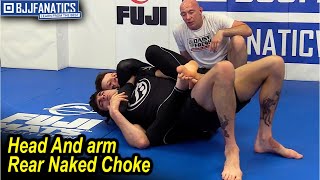
Systematic Hand Control Against Rear Naked Choke Defense
A skilled opponent will naturally defend the rear naked choke by placing their hands defensively. The instructor emphasizes the need for a methodical approach to neutralize hand defense from the weak side, where the attacker has more lateral space to work with and can systematically trap the opponent's hands before executing the choke.
Motorcycle Grip and Initial Hand Positioning
The defender typically responds with a C-grip or V-grip at the wrist and a monkey grip or false grip on the forearm. The attacker establishes a motorcycle grip (false grip without thumb over top) and begins pulling the opponent's head into their chest while punching the arm away, using both hands to control the trapped arm.
Wrist Lock Pressure to Break Grip Structure
If hand resistance persists, the attacker can circle their thumb over top and apply wrist lock pressure, not to submit but to break the structural integrity of the opponent's grip. This discomfort forces the opponent to reposition and weakens their defensive posture.
Forcing Lever Position and Preventing Mechanical Advantage
Once the frame is broken, the defender must slide their arm down to the end of the lever; keeping it positioned higher provides insufficient leverage against the attacker. If the defender fails to slide down, the attacker can execute a one-arm rear naked choke or adjust their hips to the strong side for a complete finish.
Peeling the Wrist Grip with Forearm Pressure
The attacker maintains their right-hand grip while using their left hand in a karate chop motion, placing the palm against their own wrist. The meaty part of the pinky slides tightly along the forearm, exploiting the weakness of the opponent's grip in the direction of thumb sliding, gradually peeling the hand away.
Dual-Arm Trapping Against the Body
The attacker pulls the opponent's elbow inward and raises it against the mat to prevent the wing-out escape. By positioning their forearms below and across the opponent's arms and holding them tight against the body, the attacker temporarily traps both arms while preparing for the choke entry.
Arrowhead Hand Position and Jaw Entry
The attacker creates an arrowhead frame by punching the thumb into the index finger's knuckle for reinforcement. Starting near the opponent's jaw by the ear, the attacker slides this reinforced structure downward through the space under the jaw, creating a wedge that works even when the opponent keeps their chin tight.
Head Positioning and Scapula Control
Rather than keeping the head extended outward, the attacker moves in close with their jaw to lock the opponent in place and prevent head movement. The securing hand comes over the scapula and shoulder blade, allowing the choke to become effective once arm pressure is applied.
Finishing from the Strong Side with Hip Movement
The attacker uses a long hook with their foot and circles to the side, creating room to wrap their left arm around for the final choke. By moving the opponent onto their side and positioning their head close to the opponent's head, the attacker creates the mechanical advantage needed to finish the rear naked choke.
Weak Side Advantages and Advanced Choke Transitions
The weak side position offers superior hand-fighting opportunities since the choking hand is less constrained than from the strong side. This systematic hand trapping and control method also creates opportunities for transitions to other submissions, including triangles and armbar variations.
How To Beat RNC Defense: Weak Side Hand Fighting
Key Takeaways
- •Systematic Hand Control Against Rear Naked Choke Defense
- •Motorcycle Grip and Initial Hand Positioning
- •Wrist Lock Pressure to Break Grip Structure
- •Forcing Lever Position and Preventing Mechanical Advantage
The Rear Naked Choke is powerful, but it can be difficult to get on skilled opponents. Here is our preferred method of hand fighting to the choke. The goal to trap one of our opponent's arms so we can dig for the choke unobstructed. This video is dedicated to the weak/under hook side of back control, and the next video will cover the strong side. *** WANT MORE? *** Join hundreds of other BJJ athletes in our online academy led by BJJ Black Belt, Rob Biernacki. Access Rob’s constantly evolving concepts from beginner to advanced, personalized Q&A, and much more. Click here for the details – https://go.bjjconcepts.net/ytlink Use code "immunity" for a free week to try and 15% off after. Check out my Mantis Guard course, or my course for Health Care professionals (self defense and control strategies) at - https://courses.rvvbjj.ca
Related Techniques
Frequently Asked Questions
What does this video teach about single hand collar rear choke?
This video covers systematic hand control against rear naked choke defense, motorcycle grip and initial hand positioning, wrist lock pressure to break grip structure. It provides detailed instruction from RVV BJJ.
How long does it take to learn single hand collar rear choke?
The basic mechanics can be understood in a single session, but developing reliable execution requires consistent drilling over weeks of practice. This 10-part breakdown helps structure your training by isolating each phase of the technique.
What are the key details for finishing single hand collar rear choke?
The attacker uses a long hook with their foot and circles to the side, creating room to wrap their left arm around for the final choke. By moving the opponent onto their side and positioning their head close to the opponent's head, the attacker creates the mechanical advantage needed to finish the rear naked choke.