The Fish Hook Problem
When the practitioner attempts an elbow escape and the opponent responds by squeezing the knees together, the initial knee extraction becomes compromised. The opponent's knee lifts off the ground, making it impossible to keep the leg flush and extract it underneath. This defensive response necessitates an immediate tactical adjustment.
Introducing the Fish Hook
The fish hook technique involves dangling the foot underneath the opponent's shin and ankle to lift the entire leg unit. The practitioner walks the foot into position after making another shrimp movement, aiming to elevate the opponent's leg by hooking underneath. This works well when the opponent's knee is elevated and the shin is exposed.
When Fish Hook Fails
An experienced opponent will counter the fish hook by driving their knee to the ground and applying weight, preventing any lift. When the practitioner cannot elevate the leg unit, they must abandon the fish hook technique immediately. A new approach becomes necessary to progress the escape.
The Shin Bite Setup
Rather than attempting to lift, the practitioner transitions to biting the leg by wrapping their calf and thigh around the opponent's shin. Before establishing the bite, the practitioner must slide their knee underneath the opponent's leg to keep it elevated. This prevents the opponent from placing their foot back on the ground and regaining base.
Hip-Driven Drag Mechanics
Instead of using the hand and knee together to drag the leg, the practitioner maintains the shin bite and turns their hips back underneath to face the opponent. This hip rotation creates the mechanical advantage needed to shove the knee through effectively. The movement simultaneously sets up the inside trap without requiring additional hand positioning.
Inside Trap Advantage
After the hip rotation and knee shove, the inside trap is already established, making it the optimal choice over the outside trap. The practitioner walks the foot open and swims in front to reach around the opponent's head. This configuration allows for a smoother continuation of the elbow escape sequence.
Finishing the Escape
The practitioner swims the arm in front of the opponent's guard arm and places their leg around the back while connecting the elbow and knee. The critical detail is spinning the hips while looking away to ensure the leg exits toward the back door. Straightening the leg and squaring up completes the escape into stage one control.
Full Sequence Recap
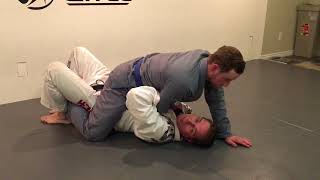
The heel drag escape sequence begins with the opponent closing their knees to stop the initial extraction. When the fish hook fails due to the opponent pinning their knee, the practitioner places their own knee under the opponent's shin, bites the leg, and rotates their hips to shove the knee through. The practitioner then completes the escape using the inside trap and finishing movements already established.
L12S5_Elbow Escape, Heel Drag
Key Takeaways
- •The Fish Hook Problem
- •Introducing the Fish Hook
- •When Fish Hook Fails
- •The Shin Bite Setup
Elbow Escape, Heel Drag
Frequently Asked Questions
What does this video teach about standard heel drag?
This video covers the fish hook problem, introducing the fish hook, when fish hook fails. It provides detailed instruction from SundarJiuJitsu.
How long does it take to learn standard heel drag?
The basic mechanics can be understood in a single session, but developing reliable execution requires consistent drilling over weeks of practice. This 8-part breakdown helps structure your training by isolating each phase of the technique.
What are the key details for finishing standard heel drag?
The practitioner swims the arm in front of the opponent's guard arm and places their leg around the back while connecting the elbow and knee. The critical detail is spinning the hips while looking away to ensure the leg exits toward the back door. Straightening the leg and squaring up completes the escape into stage one control.