Foundation: Side Control Setup
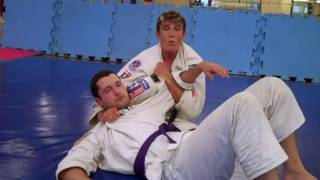
Professor Gustavo establishes side control with the gi as the optimal position for launching choke attacks. Strong shoulder pressure prevents the opponent from turning into the instructor and creates space to work. This stable base is essential before attempting any lapel-based submissions.
Securing Lapel Control
The instructor lifts the opponent's shoulder and drives his hand behind the middle of the back to drop his shoulder on the opponent's jaw. This shoulder pressure neutralizes turning attempts while the lapel is opened and passed to the opposite hand. Maintaining a tight lapel grip replaces the function of the underhook and prevents escape.
Transition to Knee-on-Belly
From side control, the instructor transitions to knee-on-belly by driving his hand toward the opponent's hip to block hip escapes. This position shift maintains superior control while opening multiple attack angles with the secured lapel. The lapel grip remains the primary control point throughout the transition.
Deep Lapel Placement for Choke Setup
The instructor passes the lapel to the far hand, ensuring deep penetration behind the opponent's neck for maximum choke efficiency. Proper hand depth requires the instructor's shoulder to nearly touch the opponent's body, creating the correct angle for arm extension. Shallow hand placement will result in an ineffective submission attempt.
Executing the Brabo Choke Finish
When the opponent resists the cross-choke by pushing on the chest, the instructor crosses the opponent's arm and drops his chest behind the tricep. Dropping the knee toward the ground rotates the opponent onto his side, deepening the choke and securing the arm against the neck. The instructor then drives his chest forward while pulling the lapel upward to complete the submission.
Critical Detail: Arm Positioning
The instructor must guide the opponent's arm and shoulder directly against the neck rather than allowing the arm to drop low where the shoulder disconnects. Proper alignment of the opponent's shoulder against their own neck maximizes choke pressure and submission effectiveness. This positioning distinction separates successful finishes from failed attempts.
Alternative: Baseball Bat Choke
If arm crossing is unavailable after lapel passing and knee-on-belly positioning, the instructor can transition to the baseball bat choke as a viable alternative. This variation uses the same foundational control and lapel grip but employs a different arm configuration. Both techniques share the same setup, offering flexibility in finish options.
Countering Leg Defense
When the opponent catches the instructor's leg in half guard while defending against knee-on-belly, the choke remains viable from top half guard position. The opponent's focus on controlling the leg creates an opportunity to continue working the lapel-based submission. This defensive reaction does not substantially alter the choke setup or finish mechanics.
Brabo Choke From Side Control
Key Takeaways
- •Foundation: Side Control Setup
- •Securing Lapel Control
- •Transition to Knee-on-Belly
- •Deep Lapel Placement for Choke Setup
Watch our Special FREE Tutorials at http://www.mmaleech.com/free-stuff/ Go to our Facebook page for the latest trends in BJJ and MMA. https://www.facebook.com/mmaleech. Professor Gustavo Gasperin teaches how to set up the Brabo Choke from side control/knee-on-belly and the many options from that position.
Frequently Asked Questions
What does this video teach about brabo choke?
This video covers foundation: side control setup, securing lapel control, transition to knee-on-belly. It provides detailed instruction from MMA Leech.
How long does it take to learn brabo choke?
The basic mechanics can be understood in a single session, but developing reliable execution requires consistent drilling over weeks of practice. This 8-part breakdown helps structure your training by isolating each phase of the technique.
What are the key details for finishing brabo choke?
If arm crossing is unavailable after lapel passing and knee-on-belly positioning, the instructor can transition to the baseball bat choke as a viable alternative. This variation uses the same foundational control and lapel grip but employs a different arm configuration. Both techniques share the same setup, offering flexibility in finish options.
Related videos
How To Do the Brabo Choke In The Gi
Stephan Kesting
Rodrigo Cavaca: Brabo Grip Sequence From Closed Guard
BJJ Fanatics
Smart Strategy for Older BJJ Grapplers - Brabo Choke from Closed Guard
Coach Chuck | Integrated Martial Athletics
Gogoplata And Locoplata - From Closed Guard!
The Grappling Academy
Academy of Combat: BJJ Shin Choke
Academy of Combat