Introduction: Adapting Jiu-Jitsu for the Aging Athlete
Coach Chuck introduces the reality that time becomes the toughest opponent for aging grapplers. Rather than fighting against physical decline, smart jiu-jitsu players adapt their game to work with their body's current capabilities. This session focuses on leveraging the closed guard position and Brabo choke as tools that prioritize technique and leverage over athleticism.
Closed Guard as a Sustainable Position
The closed guard remains highly viable for grapplers of all ages when properly refined. The Brabo choke serves as the primary mechanism for this position, allowing practitioners to control pace and force opponents into unathletic exchanges. This approach maximizes isometric grip strength—one of the physical attributes that persists with age—while minimizing reliance on explosive power or cardiovascular demands.
Breaking Posture and Creating Control
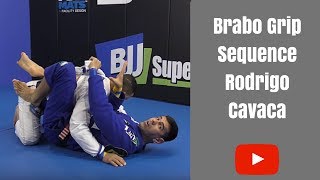
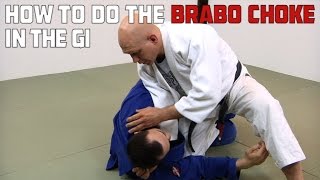
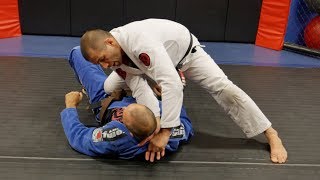
The initial setup requires breaking the opponent's posture and preventing them from creating space. By feeding the collar across and extending the grip, the top player establishes a stable frame. This extension acts as a safety mechanism, similar to a rollover bar, that prevents the bottom player from regaining posture and escaping the choke threats that follow.
The Brabo Choke Grip and Application
From the controlled position, the instructor secures the Brabo choke by gripping across the collar. This grip provides multiple submission angles and forces the opponent into defensive decisions. When the opponent blocks the initial choke threat, they create openings for sleeve or wrist control that lead to additional finishing options from the same position.
Supplementary Choke Options and Control Systems
Beyond the primary Brabo grip, the closed guard offers secondary submissions including cross-collar chokes and neck control from high-percentage positions. When the opponent defends the collar choke by tightening their elbow to the body, this creates an orthopedic constraint that buys time and space for alternative finishing techniques. These layered options ensure constant submission threats regardless of the opponent's defensive choices.
Armlock and Triangle Setups from Closed Guard
The controlled collar grip creates opportunities for armlock and triangle submissions without requiring the mobility demands of younger grappling styles. Using the established grip as an anchor, the player can transition to armlock positions with minimal hip movement or to triangle setups using a deliberate, economical technique. This approach preserves joint health while maintaining access to high-percentage submissions.
Triangle Execution: The Conservative Approach
Triangle setups for aging grapplers utilize a controlled method that minimizes spinal rotation and hip stress. The technique involves folding the knee into position, using the Brabo grip as leverage to slingshot the hips, and then walking away from the opponent to straighten the body before securing the top knot grip. This methodical approach achieves the same mechanical advantage as explosive triangles while reducing injury risk.
Strategic Principles for Aging Grapplers
The fundamental strategy for older athletes is to maximize mechanical leverage and force opponents into asymmetric work rates. By prioritizing positions that demand technical precision over athleticism, the aging grappler can control pace and fatigue younger, stronger opponents. Focusing on gi-based tail chokes and control systems allows practitioners to maintain competitive advantage while managing accumulated injuries and physical limitations.
Smart Strategy for Older BJJ Grapplers - Brabo Choke from Closed Guard
Key Takeaways
- •Introduction: Adapting Jiu-Jitsu for the Aging Athlete
- •Closed Guard as a Sustainable Position
- •Breaking Posture and Creating Control
- •The Brabo Choke Grip and Application
Is the Brabo choke from closed guard the perfect submission for older BJJ players? In this video, we break down the pros, challenges, and key adjustments to help you tap opponents without relying on athleticism. ✅ Why It Works for Older Grapplers: • Leverage over strength – No need for explosive movements • Strong control position – Slow down aggressive opponents • Efficient mechanics – Works without excessive flexibility 🔥 How to Set It Up: • Break posture early – Make them uncomfortable from the start • Maximize grip efficiency – Use the gi to reinforce your hold • Be ready to transition – Switch to an arm drag, back take, or loop choke if needed Drop a comment if you’ve used this in training! Don’t forget to like, subscribe, and share this with your training partners. 👊 #BJJ #BrazilianJiuJitsu #BraboChoke #OldManJiuJitsu #BJJForLife #Grappling #BJJTechniques #jiujitsu #CoachChuck
Frequently Asked Questions
What does this video teach about brabo choke from closed guard?
This video covers introduction: adapting jiu-jitsu for the aging athlete, closed guard as a sustainable position, breaking posture and creating control. It provides detailed instruction from Coach Chuck | Integrated Martial Athletics.
How long does it take to learn brabo choke from closed guard?
The basic mechanics can be understood in a single session, but developing reliable execution requires consistent drilling over weeks of practice. This 8-part breakdown helps structure your training by isolating each phase of the technique.
What are the key details for finishing brabo choke from closed guard?
Triangle setups for aging grapplers utilize a controlled method that minimizes spinal rotation and hip stress. The technique involves folding the knee into position, using the Brabo grip as leverage to slingshot the hips, and then walking away from the opponent to straighten the body before securing the top knot grip. This methodical approach achieves the same mechanical advantage as explosive triangles while reducing injury risk.