The Training Principle
Combat performance is directly proportional to training intensity and quality. Athletes must drill efficiently and with full commitment, as competitive situations will not allow for hesitation or adjustment. The principle "you fight as hard as you train" underscores the importance of maintaining high standards during all practice sessions.
Overview of the Peterson Roll
The Peterson Roll is a high-percentage escape technique from the bottom position, named after Olympic wrestling champions. This relatively simple shoulder roll escape is effective for bottom players who need to create immediate positional advantage. The technique involves catching the opponent's arm, executing a shoulder roll, and using the inside leg to drive the opponent over.
Basic Mechanics and Execution
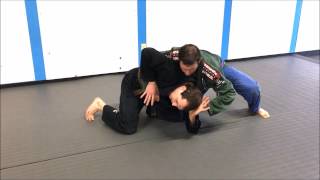
From an elbows-and-knees bottom position, the performer catches and traps the opponent's arm without grabbing the jacket. The movement combines a shoulder roll with a leg drive from the inside leg to roll the opponent over completely. If initial momentum is insufficient, the performer can post with the outside arm to complete the reversal on top.
Bilateral Training Protocol
Practitioners must develop equal proficiency on both the right and left sides, as opponents may approach from either direction. The drill alternates between catching the right arm and rolling right, then catching the left arm and rolling left. This ensures balanced skill development and prepares the athlete for unpredictable offensive approaches.
Arm Control and Positioning
The critical detail is to catch the wrist and trap it with the performer's arm rather than grabbing only the jacket. The elbow must be controlled and prevented from flaring outward to maintain complete arm control. This positioning resembles a shoulder throw executed on the ground, with the leg kick providing additional propulsive force.
Developing Threat Awareness
The drill teaches kinesthetic awareness by training the bottom player to feel the opponent's control attempts before fully establishing them. Athletes learn to recognize the subtle pressure when an opponent begins controlling the arm or attempting a spiral ride. This split-second recognition of threat allows the performer to execute the escape before the opponent's position becomes too strong.
Drill Execution Standards
The drill should be performed at a fast, continuous pace without unnecessary pauses for correction unless fundamental errors occur. Partners alternate positions after each repetition, with one performing right-side and left-side escapes before switching roles. The emphasis is on building efficiency and pattern recognition through high-repetition practice rather than perfect technical execution.
Training with Purpose and Intensity
All drills must be performed with 100% effort regardless of whether the athlete is still learning the technique. Efficient movement should be prioritized over slow, deliberate practice, as competition will not allow for pauses or adjustments. Athletes should emerge from drill sessions noticeably fatigued, indicating sufficient intensity and commitment to skill development.
PETERSON ROLL & DRILL TRAINING FOR IT "YOU FIGHT AS HARD AS YOU TRAIN"
Key Takeaways
- •The Training Principle
- •Overview of the Peterson Roll
- •Basic Mechanics and Execution
- •Bilateral Training Protocol
This video shows how to do the Peterson Roll, which is an effective way of getting from the bottom position in groundfighting to the top. This video also shows how to efficiently use drill training for developing effective skill in this move. Go to www.amazon.com or www.ymaa.com to get Steve Scott's books THE JUDO ADVANTAGE and JUJI GATAME ENCYCLOPEDIA. Our channel was started in 2010 as an extension of our program at Welcome Mat. Welcome Mat was founded in 1969 by Steve Scott in Kansas City, Missouri, USA and has produced thousands of successful students, athletes and coaches in a variety of grappling sports. View over a thousand videos on the subjects of judo, freestyle judo, Shingitai Jujitsu, sambo, submission grappling and sport jujitsu are on our Youtube channel. Browse through our playlists to see what we have on our channel. If a video is listed as "private" is it because that video is still in development or scheduled for later viewing. You can subscribe for free to our channel at http://youtube.com/user/welcomematstevescott. We strive to provide fundamentally sound and technically innovative skills and information on a variety of grappling sports. We appreciate your support! Please tell others about our channel. You can help support our channel by going to our online store and purchasing items. Go to http://www.WelcomeMatStore.com. We have a variety of books, shirts and other items for sale. Music for the Freestyle Judo show provided by YouTube Copyright Free Audio featuring "Fiend" by Sting and performed by the Jingle Punks and "All This Down Time" by Sting and performed by the Jingle Punks. Visit our club web site at http://www.WelcomeMatJudoClub. For information on the Judo Black Belt Association, go to http://www.judoblackbelt.com. Thank you for watching our video. Please tell others about our channel. Our videos are all original material and are copyrighted. Reproduction or showing these videos without the specific permission of Steve Scott is prohibited.
Frequently Asked Questions
What does this video teach about standard peterson roll?
This video covers the training principle, overview of the peterson roll, basic mechanics and execution. It provides detailed instruction from welcomematstevescott.
How long does it take to learn standard peterson roll?
The basic mechanics can be understood in a single session, but developing reliable execution requires consistent drilling over weeks of practice. This 8-part breakdown helps structure your training by isolating each phase of the technique.
What are the key details for finishing standard peterson roll?
The drill should be performed at a fast, continuous pace without unnecessary pauses for correction unless fundamental errors occur. Partners alternate positions after each repetition, with one performing right-side and left-side escapes before switching roles. The emphasis is on building efficiency and pattern recognition through high-repetition practice rather than perfect technical execution.