Front Headlock Overview
The front headlock is a fundamental transitional position in grappling that frequently occurs when a standing opponent's takedown attempt fails or when defending from side control. The instructor covers spinning to the back, attacking the guillotine choke, and defensive options from this position.
Hand Placement and Grip Setup
The practitioner establishes a front headlock by cupping one hand on the opponent's chin while the other hand grips the inside of the opponent's bicep. The bicep of the controlling arm is positioned behind the opponent's neck at the base to check forward momentum during shooting attempts.
Creating Space and Positioning
The controlling grappler removes slack by pulling the opponent's head and arm apart while establishing an elevated posture on their toes. This heavy positioning makes it difficult for the opponent to drive forward into the position.
Transition to Back Control
The controlling arm winds over the opponent's tricep to backstop the shoulder and neck, enabling a step and transition into turtle position. Spinning to the back is identified as the most fundamental attack from the front headlock.
Complementary Guillotine and Back Attacks
Spinning to the back and guillotine attacks function as complementary techniques that create a strategic dilemma for the opponent. If the opponent widens their arms to prevent back spinning, they create space to thread a guillotine grip; if they keep their arms tight for guillotine defense, they facilitate back spinning.
Back Control Transitions
Two primary methods exist for moving to back control: walking around the outside while maintaining control, or executing a short arm drag. Walking the outside is considered slightly more secure, though both approaches can be effective.
Execution to Back Control
The practitioner establishes the chin-strap grip, positions the bicep and shoulder junction on the nape of the opponent's neck, pulls the opponent's arm inward to separate their arm and chin, then rotates behind the opponent. Once behind the opponent, hooks can be inserted to attack or control.
Front headlock basics
Key Takeaways
- •Front Headlock Overview
- •Hand Placement and Grip Setup
- •Creating Space and Positioning
- •Transition to Back Control
This week Greg shows a spin to the back from a front headlock
Related Techniques
Frequently Asked Questions
What does this video teach about front headlock turtle?
This video covers front headlock overview, hand placement and grip setup, creating space and positioning. It provides detailed instruction from Lincoln Brazilian Jiu-Jitsu Center.
How long does it take to learn front headlock turtle?
The basic mechanics can be understood in a single session, but developing reliable execution requires consistent drilling over weeks of practice. This 7-part breakdown helps structure your training by isolating each phase of the technique.
What are the key details for finishing front headlock turtle?
Two primary methods exist for moving to back control: walking around the outside while maintaining control, or executing a short arm drag. Walking the outside is considered slightly more secure, though both approaches can be effective.
Related videos
HOW TO ATTACK THE TURTLE - Front Headlock System
Fargo BJJ Academy
Getting the Hooks on a Tight TURTLE!!! Seatbelt Series - 2
TeachMeGrappling Coach Brian
Escape Seatbelt in Turtle with Josh Barnett
Bernardo Faria BJJ Fanatics
Front Headlock to Side Turtle from Sprawl - Grapplers Guide
The Grapplers Guide by Jason Scully
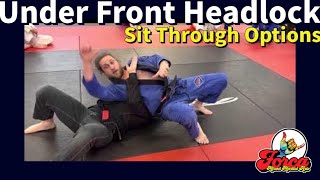
Sit-Through Overview from Under Front Headlock
Força Martial Arts & Fitness