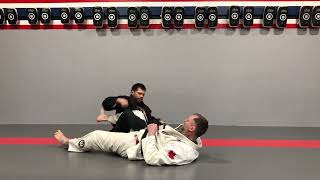
Introduction to Worm Guard
The instructor introduces the worm guard, a fundamental gi-based guard position in Brazilian Jiu-Jitsu. The session will focus on basic setup and entry mechanics before progressing to sweeps.
Setup from De La Riva Position
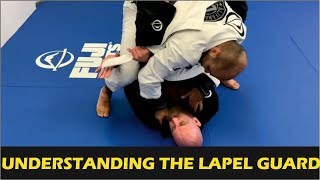
One effective entry to worm guard is from de la riva guard, which allows the practitioner to control the opponent while extracting the gi. The instructor demonstrates reaching across and pulling the gi while maintaining superior control over the partner.
Foot Placement and Heel Positioning
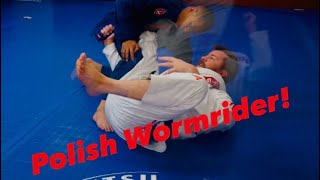
The practitioner places their heel on the opponent's hip with toes curled around it, ensuring the foot remains attached to the hip rather than passing completely through. This positioning is critical for maintaining control throughout the guard.
Gi Grip and Hand Positioning
The gi is passed underneath the calf in a specific sequence: under the practitioner's own leg, then under the opponent's leg. The grip is transferred between hands, with the top hand positioned palm-down to maximize control and prevent the opponent from stripping the gi.
Knee Positioning for Control
The controlling knee must remain positioned over the opponent's knee to prevent the opponent from passing the guard or escaping. Allowing the knee to drop too low gives the opponent opportunities to advance their own position or begin guard passage techniques.
Technical Stand-Up Sweep Mechanics
The first sweep begins from the established worm guard position by lifting onto the elbow and transitioning weight forward. The practitioner uses their top leg—positioned across the opponent's thigh—as leverage to hip-escape upward while extracting their bottom leg.
Managing Knee Placement During Sweep
If the opponent's knee blocks the leg extraction, the practitioner can punch it down with their hand while maintaining the gi grip. Successfully clearing the knee allows completion of the sweep into a control position; if blocked, the opponent achieves a single-leg position but the practitioner retains tactical advantage.
Alternative Sweep and Leg Repositioning
A second, simpler sweep variation addresses situations where the opponent's leg is positioned too far back for the standard setup. The practitioner uses their secondary leg or de la riva hook to draw the opponent's leg back into range before executing the sweep sequence.
Basic WORM GUARD Entry and Sweeps
Key Takeaways
- •Introduction to Worm Guard
- •Setup from De La Riva Position
- •Foot Placement and Heel Positioning
- •Gi Grip and Hand Positioning
Basic worm guard entry and sweeps. In this video with look at the real basics of worm guard. Firstly we look at a basic entry, how to control the lapel and the grips we need to make. Second we look at the first 2 sweeps you should be learning from this position in my opinion. They are simple to do and very effective particularly when you combine them together. If you would like to see more worm guard or other lapel guards please comment below. #bjj #jiujitsu #martialarts Please don't forget to 'LIKE' this video and if you enjoyed the content please make sure you leave a 'COMMENT' and 'SUBSCRIBE' to the channel ... Thank you ❤️ // LINKS Facebook www.facebook.com/thegrapplelab Instagram www.instagram.com/thegrapplelab TikTok https://www.tiktok.com/thegrapplelab
Frequently Asked Questions
What does this video teach about standard worm guard?
This video covers introduction to worm guard, setup from de la riva position, foot placement and heel positioning. It provides detailed instruction from The Grapple Lab.
How long does it take to learn standard worm guard?
The basic mechanics can be understood in a single session, but developing reliable execution requires consistent drilling over weeks of practice. This 8-part breakdown helps structure your training by isolating each phase of the technique.
What are the key details for finishing standard worm guard?
If the opponent's knee blocks the leg extraction, the practitioner can punch it down with their hand while maintaining the gi grip. Successfully clearing the knee allows completion of the sweep into a control position; if blocked, the opponent achieves a single-leg position but the practitioner retains tactical advantage.