Engagement and Distance Control
The instructor emphasizes the importance of active engagement in grappling rather than allowing opponents to create distance. Proper control relies on positioning the legs and body to minimize gaps, as distance makes control difficult. The goal is to maintain closeness so the opponent cannot escape or create space.
Overhooks and Underhooks Foundation
Overhooks and underhooks form the structural basis for controlling an opponent in the reclined butterfly guard. A standard clinch alone is insufficient because the opponent can escape by pulling their arm free. The instructor demonstrates raising the elbow to the ankle while controlling the hand, making arm extraction more difficult.
Head Control and Arm Trap Mechanics
Maintaining head control prevents the opponent from standing or escaping upward. By keeping the neck close to the elbow, the practitioner increases the difficulty of arm removal. When the opponent begins extracting their arm, the practitioner can exploit this movement by driving the head to the side.
Transition to Arm Positioning
As the opponent attempts to free their arm, the practitioner allows controlled space while positioning the hand and arm against the opponent's armpit. This transition creates an opportunity to wrap around the opponent's body. The simultaneous coordination of arms, hips, and legs is essential for successful advancement.
Hook Placement and Heel Positioning
When establishing hooks from the butterfly guard, the placement should utilize the heels rather than just the toes, ensuring the opponent cannot walk away. Proper heel hooks lock the opponent in place, and every movement they make can be controlled through these leg attachments. The heels remain active throughout the position.
Hip Control During Escape Attempts
As the opponent moves to escape, the practitioner must control the hip gap by staying low and maintaining contact. Without hip control, the opponent can create distance and potentially move to safety. Maintaining head-to-head contact and eliminating gaps prevents the opponent from repositioning their hips.
Side Transition Mechanics
The practitioner moves to the side by standing into the overhook while maintaining hip contact. Pushing through the floor and raising the foot toward the elbow facilitates the transition. Turning the hips on top of the opponent's hips completes the position shift, preventing the opponent from shooting or escaping.
Hook Sweep Execution
The hook sweep culminates the sequence through coordinated leg and hip mechanics. The practitioner positions heels firmly on the mat, then drops the feet while maintaining hip pressure to complete the sweep. This basic hook sweep demonstrates the culmination of proper weight distribution and control mechanics from the butterfly guard.
Basics of the no-gi butterfly guard
Key Takeaways
- •Engagement and Distance Control
- •Overhooks and Underhooks Foundation
- •Head Control and Arm Trap Mechanics
- •Transition to Arm Positioning
#openguard #jeanjacquesmachado #bjj ----- One of the pioneers of the art of Brazilian Jiu-Jitsu and one of its greatest champions, Jean Jacques Machado is one of five brothers of the world-renown Machado Brazilian Jiu-Jitsu family. This channel is dedicated to his work as a competitor as well as a world class instructor through his ground breaking online training program. Subscribe for more instructional media and the No Gi Required podcast. Join our channel membership for JJM 3.0 Online Training Program brought to you through YouTube! https://www.youtube.com/channel/UC8eFlweeoWP_RLSYrRhiYTA/join
Related Techniques
Frequently Asked Questions
What does this video teach about reclined butterfly guard?
This video covers engagement and distance control, overhooks and underhooks foundation, head control and arm trap mechanics. It provides detailed instruction from JeanJacquesMachado.
How long does it take to learn reclined butterfly guard?
The basic mechanics can be understood in a single session, but developing reliable execution requires consistent drilling over weeks of practice. This 8-part breakdown helps structure your training by isolating each phase of the technique.
What are the key details for finishing reclined butterfly guard?
The practitioner moves to the side by standing into the overhook while maintaining hip contact. Pushing through the floor and raising the foot toward the elbow facilitates the transition. Turning the hips on top of the opponent's hips completes the position shift, preventing the opponent from shooting or escaping.
Related videos
Use your Butterfly Hook from Half Guard
Eduardo Fraga BJJ
Double Leg from Seated Butterfly Guard (No Gi BJJ)
Brian Glick
Distance butterfly guard (Lachlan Giles)
Absolute MMA St Kilda - Melbourne
Butterfly Ashi and Single Leg to Aoki Lock!
Still Rolling
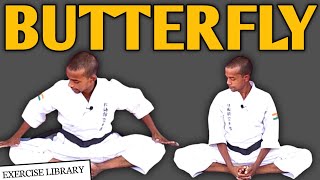
HOW TO DO BUTTERFLY EXERCISE | BEST STRETCHING EXERCISE | BUTTERFLY STRETCH | EXERCISE LIBRARY
VIRTUAL KARATE CLUB