Introduction to Arm Drag from Seated Guard
The arm drag from seated or butterfly guard is a fundamental technique suitable for beginners in Brazilian Jiu-Jitsu. This technique provides an excellent foundation for developing control and positional awareness during no-gi grappling.
Grip Setup and Hand Placement
The instructor secures the opponent's wrist with the same-side arm while simultaneously threading the opposite arm underneath the armpit. This double-arm control creates the foundational grip necessary for executing the technique.
Body Movement and Leg Drive
Executing the arm drag requires simultaneous movement of both the upper body and lower body. The practitioner kicks the leg on the same side as the wrist grip while using the leg drive to generate momentum and transition the body laterally around the opponent.
Controlling Positioning and Creating Space
The practitioner must pull the opponent downward into the space vacated by their own lateral movement. This creates a vacuum effect that draws the opponent toward where the practitioner previously was, facilitating the passage around their guard.
Establishing Control with Upper Body Weight
Once lateral movement begins, the practitioner maintains pressure by keeping their elbow heavy against the floor and their cheek against the opponent's shoulder blade. This positioning prevents the opponent from escaping without pulling the practitioner along.
Executing the Sweep Alternative
If the guard pass is not immediately available, the practitioner can transition to a sweep by securing a deep grip around the opponent's thigh with the opposite arm. Using full-body pressure and perpendicular leg drive, the practitioner tilts the opponent onto their side.
Recognizing Guard Pass Opportunities
As the opponent shifts their position in response to the arm drag pressure, the practitioner should continuously assess whether a guard pass is viable. Clear positioning allows the practitioner to transition past the legs when the opportunity presents itself.
Drilling Both Sides
Practitioners should perform the arm drag technique on both sides to develop balanced technical proficiency. This bilateral practice ensures balanced development and prevents habit-based reliance on one preferred side.
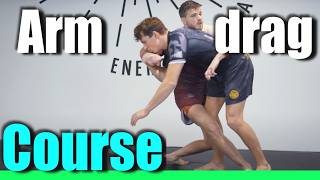
Arm Drag From Seated Guard
Key Takeaways
- •Introduction to Arm Drag from Seated Guard
- •Grip Setup and Hand Placement
- •Body Movement and Leg Drive
- •Controlling Positioning and Creating Space
🔗 Links: Follow me on Instagram for more jiu-jitsu content: https://www.instagram.com/tarik_bjj/ Discover top-quality gear at Progress JJ. Use "TARIK15" for 15% Discount! UK Progress Referral: https://shorturl.at/joJMX EU Progress Referral: https://shorturl.at/pADPQ Teespring merch: https://shorturl.at/opHK3 Patreon: https://www.patreon.com/tarikbjj BJJ Fanatics: https://shorturl.at/cqsEI Twitch: https://www.twitch.tv/tarik_bjj
Frequently Asked Questions
What does this video teach about arm drag from seated:guard?
This video covers introduction to arm drag from seated guard, grip setup and hand placement, body movement and leg drive. It provides detailed instruction from Tarik BJJ.
How long does it take to learn arm drag from seated:guard?
The basic mechanics can be understood in a single session, but developing reliable execution requires consistent drilling over weeks of practice. This 8-part breakdown helps structure your training by isolating each phase of the technique.
What are the key details for finishing arm drag from seated:guard?
As the opponent shifts their position in response to the arm drag pressure, the practitioner should continuously assess whether a guard pass is viable. Clear positioning allows the practitioner to transition past the legs when the opportunity presents itself.
Related videos
BJJ Techniques: Arm Drag to Back Take by Gordon Ryan
BJJ Fanatics
Arm Drag from Seated Guard (Lachlan Giles)
Absolute MMA St Kilda - Melbourne
Arm Drag and Hip Kouchi Trip by John Danaher
BJJ Fanatics
38 Arm Drag Techniques In Less Than 12 Minutes by Jason Scully
Jiu Jitsu In Minutes by Jason Scully
Armdrag TAKEDOWNS | Grappling BJJ
Energia Martial Arts