Arm Drag Fundamentals
The arm drag is a fundamental technique for transitioning from seated guard to back control. The practitioner kicks the opponent's inside knee while stepping to the side, simultaneously reaching to the opponent's tricep and pulling them around toward the back.
Optimal Timing and Setup
The arm drag is most effective when the opponent reaches down to control the legs, creating an open lane around the arm. Attempting the technique when the opponent is controlling the upper body requires a much larger movement and is significantly less effective.
Coordinated Lower Body Movement
Success requires simultaneous action from both the legs and upper body. The practitioner must turn the opponent away with an inside knee kick while simultaneously moving the hips out to the side, rather than relying solely on arm pulling to control larger or well-positioned opponents.
Upper Body Grip and Hand Placement
The wrist grip should be secured with one hand while the other grips the shoulder rather than the elbow. The gripping hand must clear the body to the outside, and the pulling action should be timed to push across the body simultaneously to maintain control and maximize rotational force.
Advanced Pulling Mechanics
When standard horizontal pulling causes the opponent's arms to rise and lose traction, the practitioner can instead push the wrist downward and across the body. This adjustment changes the shoulder angle to allow the leg to move forward more effectively while maintaining control.
Chest-to-Arm Attachment
Immediately after the arm drag, the practitioner must trap the opponent's arm against their chest to prevent it from being reclaimed. Rather than transitioning directly over the back, the practitioner should face away and maintain chest-to-tricep contact while securing the far-side waist.
Hip Positioning and Underhook Prevention
From the chest-attached position, the practitioner scoots their hips back and comes over the top to establish a bottom hook and seat belt grip. Closing the gap between the hip and the opponent's body blocks the arm from escaping underneath, which is critical before attempting the back take.
Common Mistakes: Timing and Sequencing
The most frequent error is executing the arm and leg movements sequentially rather than simultaneously. Practitioners must drill the technique extensively until the coordinated leg kick, hip movement, and arm pull become automatic.
Common Mistakes: Hip Movement
Attempting the arm drag with a butterfly hook instead of an outside foot position significantly reduces effectiveness. The practitioner must ensure the back foot is positioned on the outside, allowing the hips to scoop underneath while the opponent is turned away.
Arm Drag from Seated Guard (Lachlan Giles)
Key Takeaways
- •Arm Drag Fundamentals
- •Optimal Timing and Setup
- •Coordinated Lower Body Movement
- •Upper Body Grip and Hand Placement
You can check out the full seated guard instructional on SUBMETA, for now we are in Beta mode, register your interest through https://submeta.io/want for an invite.
Frequently Asked Questions
What does this video teach about arm drag from seated:guard?
This video covers arm drag fundamentals, optimal timing and setup, coordinated lower body movement. It provides detailed instruction from Absolute MMA St Kilda - Melbourne.
How long does it take to learn arm drag from seated:guard?
The basic mechanics can be understood in a single session, but developing reliable execution requires consistent drilling over weeks of practice. This 9-part breakdown helps structure your training by isolating each phase of the technique.
What are the key details for finishing arm drag from seated:guard?
The most frequent error is executing the arm and leg movements sequentially rather than simultaneously. Practitioners must drill the technique extensively until the coordinated leg kick, hip movement, and arm pull become automatic.
Related videos
Arm Drag From Seated Guard
Tarik BJJ
BJJ Techniques: Arm Drag to Back Take by Gordon Ryan
BJJ Fanatics
Arm Drag and Hip Kouchi Trip by John Danaher
BJJ Fanatics
38 Arm Drag Techniques In Less Than 12 Minutes by Jason Scully
Jiu Jitsu In Minutes by Jason Scully
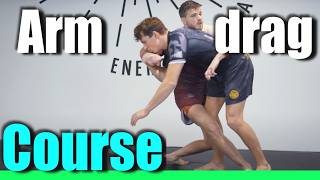
Armdrag TAKEDOWNS | Grappling BJJ
Energia Martial Arts