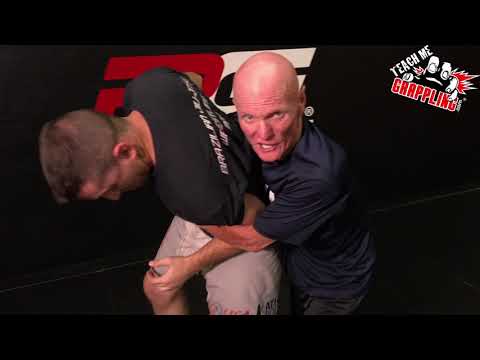
Johnny Smithson's TRICK ARMDRAG!!
0
Arm Drag From Clinch:Tie-Ups·TeachMeGrappling Coach Brian
PLEASE Click this link to SUPPORT the TeachMeGrappling Channel!!! https://www.patreon.com/TeachMeGrappling or https:/…
Translation: arm drag from clinch/tie-ups
The arm drag from clinch tie-ups is a wrist flexion technique applied during the standing clinch by gripping the opponent's wrist and bending it into flexion while simultaneously dragging the arm across the body to off-balance. [1],[2] In the clinch, the wrist becomes vulnerable when the opponent pushes or posts with an extended arm, and the arm drag motion amplifies the wrist lock by adding lateral pulling force to the flexion pressure. [1] The technique combines positional disruption with joint attack, serving both as a takedown setup and a submission threat. [1],[2]
Arm drag techniques from the clinch are fundamental in both wrestling and traditional jujutsu, where grip manipulation and off-balancing are core principles. [1],[2] The addition of wrist flexion to the arm drag represents a synthesis of wrestling's positional manipulation with the joint-locking emphasis of Japanese martial arts and chin na. [1] This clinch-based wrist attack is commonly seen in self-defense systems and has been adapted for competition grappling. [1],[2]
The arm drag from clinch tie-ups creates an angular advantage by pulling the opponent past centre, exposing the back for takedowns or back control. [1]
Clinch arm drags originated in wrestling and were brought into MMA and BJJ clinch work. [1]
Arm drags from the clinch are used frequently in MMA and wrestling to create takedown angles. [1]
No images yet for this technique.
Sign in to suggest an image.
PLEASE Click this link to SUPPORT the TeachMeGrappling Channel!!! https://www.patreon.com/TeachMeGrappling or https:/…
No instructional courses yet for this technique.
Sign in to suggest a course.
Risk of injury to the person this technique is applied to
Wrist lock variant targeting carpal and radioulnar joints through forced deviation or torsion
Skill level needed to execute this technique reliably
Whether this technique is allowed under major competition rule sets
Japanese wrestling/BJJ standard terminology; widely used in Japanese competition
Japanese wrestling/BJJ standard terminology; widely used in Japanese competition
Standard katakana transliteration of Western martial arts terminology (外来語) — used in Japanese MMA, boxing, and BJJ communities
Japanese terminology sourced from Japanese wrestling/BJJ standard terminology; widely used in Japanese competition
fine motor control, grip sensitivity, quick hand transitions
dexterous hands with strong fingers
forearm flexors and extensors, intrinsic hand muscles
Coach Brian demonstrates that you should let go of the tie and grab the opponent's tricep instead, which allows you to execute the arm drag more effectively.
According to Coach Brian, the trick with Johnny Smithson's method is that you 'steal' the arm from your opponent by controlling it before executing the inside drag, rather than trying to drag them from the outside.
The arm drag from clinch tie-ups is a wrist flexion technique applied during the standing clinch by gripping the opponent's wrist and bending it into flexion while simultaneously dragging the arm across the body to off-balance. In the clinch, the wrist becomes vulnerable when the opponent pushes or posts with an extended arm, and the arm drag motion amplifies the wrist lock by adding lateral pulling force to the flexion pressure.
Arm drag techniques from the clinch are fundamental in both wrestling and traditional jujutsu, where grip manipulation and off-balancing are core principles. The addition of wrist flexion to the arm drag represents a synthesis of wrestling's positional manipulation with the joint-locking emphasis of Japanese martial arts and chin na.
IBJJF: legal — Legal at all belt levels; IJF: banned — Only elbow joint locks (kansetsu-waza) permitted in judo — all other joint lo…; ADCC: legal — Legal — all submissions legal in ADCC; Unified MMA: legal — Legal submission technique; FIAS Sport Sambo: legal — Legal; FIAS Combat Sambo: legal — Legal
Danger rating 5/10. Wrist lock variant targeting carpal and radioulnar joints through forced deviation or torsion
The standard setup chain: Establish Position → Create the Threat → Secure the Hold → Finish.
Standard counters include: Early Recognition — identify the submission attempt early and begin defence immediately / Posture and Base — maintain strong posture and base to prevent submission setups / Grip Fight — deny the attacker their preferred gripping configuration.
Common variants: Standard wrist lock (kote gaeshi) (two-handed rotational lock on the wrist); Gooseneck wrist lock (flexion lock bending the wrist down toward the forearm); Standing wrist lock (applied during grip fighting or a standing exchange); Ground wrist lock (catching the opponent's posted hand from mount, side cont…).
Arm drags from the clinch are used frequently in MMA and wrestling to create takedown angles.
Top errors to watch for: Dragging without snapping the head down first — the head snap lowers the opponent's posture and commitment, making th… / Not releasing the collar tie cleanly — the head-control hand must release and re-grip the tricep as part of the drag … / Standing in place — circle to the dragged side; the clinch arm drag requires footwork to create the angle / Not using the clinch position to set up the drag — the drag works best as a counter to the opponent's clinch actions,….
The Arm Drag From Clinch:Tie-Ups is also known as Kurinchi kara no Āmu Doraggu, Clinch Arm Drag, Tie-Up Arm Drag.