Introduction to the Americana
The Americana is one of jiu-jitsu's most recognizable submissions, targeting the shoulder's rotator cuff through precise mechanical leverage. While appearing simple, mastering this technique requires understanding intricate positional details and timing, particularly when executing against skilled opponents. This guide covers setup, finishing mechanics, anti-rollover strategies, and advanced problem-solving tactics.
Primary Positions and Initial Setup
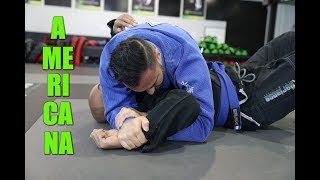
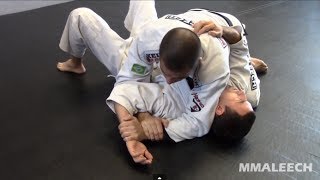
The Americana is predominantly executed from mount position, with secondary applications available from side control. The initial phase requires isolating one of the opponent's arms rather than engaging both simultaneously, as matching strength against a two-armed defense proves inefficient. The practitioner should consolidate their arm strength and apply body weight to pin the isolated wrist to the mat.
Hand Positioning and Grip Structure
The gripping hand must employ a monkey grip—a hook formed by positioning the thumb over the opponent's arm rather than around it, preventing escape through finger separation. The second hand approaches from underneath using a palm-up orientation initially, then rotates palm-down once secured under the opponent's elbow. Both hands must maintain connection to the floor with elbows positioned for maximum control.
Finish Mechanics and Wrist Control
The finishing sequence begins by bringing the opponent's elbow toward their ribcage while maintaining their wrist pinned to the mat—a movement resembling a paintbrush stroke. If the opponent has not submitted by the time their elbow reaches their rib, minimal additional lift (approximately one inch) combined with the downward pressure generates the submission. This controlled descent prevents the excessive elevation that typically leads to positional reversals.
Preventing Rollover Through Hip Anchoring
The most common failure occurs when practitioners attempt to finish without establishing anti-rollover anchoring, resulting in positional loss. The practitioner must immediately establish a grapevine hook on the opposite side of the finishing arm while dropping their hip bone directly onto the opponent's hip. This anchored position neutralizes rollover attempts and allows the practitioner to complete the submission securely.
Problem-Solving: Arm Isolation Failure
When the opponent's arm cannot be isolated due to superior strength or defensive tightness, the practitioner should capitalize on the tension by causing body rotation. Continuous directional changes may dislodge one arm, or the practitioner can drop their chest and belly weight onto the opponent's tricep to force the elbow upward and expose the back. Once this gift wrap position is achieved, multiple submission options emerge, including back takes, arm triangles, and armbars.
Problem-Solving: Arm Stays Connected to Chest
If the isolated arm remains connected to the opponent's chest and cannot be driven to the mat, the objective shifts toward forcing upper body rotation rather than arm separation. The practitioner applies chest pressure while repositioning the opponent horizontally, then transitions to the gift wrap control around the opponent's neck. This lateral movement eliminates the opponent's ability to retract the arm and opens alternative finishing paths.
Problem-Solving: Defensive Arm Insertion
Experienced practitioners frequently attempt to save the submission by inserting their free arm to reinforce the trapped limb. When the opponent elevates their elbow to create this defensive barrier, the practitioner immediately drops their chest weight and transitions to the gift wrap position around the opponent's neck. From this dominant control, the practitioner can execute multiple high-percentage submissions or transition to positional advantage.
Secrets to a DEADLY Americana | Jiu Jitsu Tutorial | How to do the Americana #bjj
Key Takeaways
- •Introduction to the Americana
- •Primary Positions and Initial Setup
- •Hand Positioning and Grip Structure
- •Finish Mechanics and Wrist Control
Join My Online Academy to Improve Your Jiu Jitsu FAST!!! https://www.skool.com/mattarroyojiujitsu/about Buy my complete Jiu Jitsu Intro Curriculum and Skyrocket your Jiu Jitsu today! https://intro.mattarroyo.com/home --------------------------------------------------------------------------------------------------------------------------- Master one of the most popular submissions in Jiu Jitsu, the Guillotine Choke! In this video, we’ll walk you through a step-by-step guide on how to execute the americana from different positions, ensuring you have the tools to use it effectively in training, sparring, or competition. Whether you’re a beginner or an advanced grappler, adding the americana to your arsenal can take your submission game to the next level. 🔑 What You’ll Learn in This Video: • How to set up the americana from the mount and side control positions • Proper grip and body positioning for maximum control • Finishing details to secure the tap every time • Common mistakes to avoid and tips to make your choke unstoppable --------------------------------------------------------------------------------------------------------------------------- 🎥 Who is this video for? • Beginners looking to learn high-percentage BJJ submissions • Intermediate grapplers refining their americana technique • Competitors and MMA fighters wanting to expand their submission game --------------------------------------------------------------------------------------------------------------------------- 🔥 Take Your Jiu Jitsu to the Next Level: Subscribe to the channel for more detailed tutorials, tips, and strategies to dominate on the mats. Like, share, and drop a comment with your thoughts or questions about the guillotine choke!
Related Techniques
Frequently Asked Questions
What does this video teach about striking to americana?
This video covers introduction to the americana, primary positions and initial setup, hand positioning and grip structure. It provides detailed instruction from Matt Arroyo Jiu Jitsu .
How long does it take to learn striking to americana?
The basic mechanics can be understood in a single session, but developing reliable execution requires consistent drilling over weeks of practice. This 8-part breakdown helps structure your training by isolating each phase of the technique.
What are the key details for finishing striking to americana?
If the isolated arm remains connected to the opponent's chest and cannot be driven to the mat, the objective shifts toward forcing upper body rotation rather than arm separation. The practitioner applies chest pressure while repositioning the opponent horizontally, then transitions to the gift wrap control around the opponent's neck. This lateral movement eliminates the opponent's ability to retract the arm and opens alternative finishing paths.