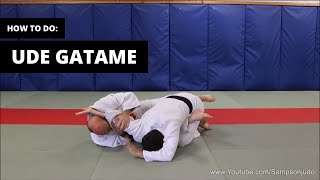
Head Position Fundamentals
Proper head positioning is critical when establishing side control. The instructor maintains a low head position to prevent the opponent from attacking the throat and to create opportunities for submissions. A raised head exposes the neck to attacks and diminishes control.
Americana Setup from Reactive Defense
The Americana trap capitalizes on the opponent's natural defensive movements from side control. By keeping the head low, the instructor can catch the opponent's arm when they attempt to create space or push on the throat. This reactive setup requires minimal initial grip pressure to avoid telegraphing the submission.
Proactive Americana Entry
When the opponent is not actively defending, the instructor takes the initiative by unlocking the hands and cupping the shoulder for control. The arm is then positioned across the opponent's neck with the elbow placed against their neck. The hand slides from the shoulder to trap the elbow while remaining light to avoid detection.
Finishing Position and Mechanics
The finish is executed by sucking the elbows inward while pinning the opponent's hand and lifting their elbow. The arm should be kept low and connected to the body to minimize the opponent's shoulder mobility and range of motion. This positioning makes the submission significantly more difficult to escape than a high-arm configuration.
Reading Defensive Handhold Connections
When the opponent connects hand-to-hand in a tight grip, attempting the Americana becomes ineffective. The instructor recognizes this defensive position and pivots to alternative submissions such as neck attacks or mount position transitions. Understanding when to abandon a submission attempt prevents loss of control and maintains offensive dominance.
Forcing the Americana When Opponent Stalls
If the opponent recognizes the trap and avoids moving their arm, the instructor forces the submission by driving the shoulder toward the opponent's wrist. The shoulder must be lowered to the mat and angled to feed the hand toward the neck rather than driving the elbow. This aggressive positioning pressures the opponent into the submission.
Arm Height Adjustments Before Forcing
Before attempting to force the submission, the instructor must ensure the opponent's elbow is low relative to their own shoulder. If the elbow is positioned too high, the instructor pulls down to adjust the arm angle before driving the shoulder forward. This preparatory adjustment is essential for successful completion of the forced submission.
Recognition of Futile Submission Attempts
When the opponent's arm cannot be pulled down or manipulated into position, attempting the Americana wastes energy and risks losing control. The instructor abandons the technique and transitions to high-percentage alternatives such as belly-down chokes or positional dominance. Recognizing failed setup conditions demonstrates technical maturity and maintains positional advantage.
Americana trap from side control - BJJ submissions from side control - Part 1 of 2
Key Takeaways
- •Head Position Fundamentals
- •Americana Setup from Reactive Defense
- •Proactive Americana Entry
- •Finishing Position and Mechanics
Watch our Special FREE Tutorials at http://www.mmaleech.com/free-stuff/ Go to our Facebook page for the latest trends in BJJ and MMA. https://www.facebook.com/mmaleech. Professor Gustavo Gasperin teaches how to set up the americana trap from side control, and goes over some variations you can do, as the shoulder punch to still catch the same submission.
Related Techniques
Frequently Asked Questions
What does this video teach about striking to americana?
This video covers head position fundamentals, americana setup from reactive defense, proactive americana entry. It provides detailed instruction from MMA Leech.
How long does it take to learn striking to americana?
The basic mechanics can be understood in a single session, but developing reliable execution requires consistent drilling over weeks of practice. This 8-part breakdown helps structure your training by isolating each phase of the technique.
What are the key details for finishing striking to americana?
Before attempting to force the submission, the instructor must ensure the opponent's elbow is low relative to their own shoulder. If the elbow is positioned too high, the instructor pulls down to adjust the arm angle before driving the shoulder forward. This preparatory adjustment is essential for successful completion of the forced submission.