Introduction to the Armbar from Mount
The armbar is one of the most fundamental submissions in Brazilian Jiu-Jitsu. Success requires not only proper technique but also precise timing and positioning. This guide breaks down the setup, execution, and finish of the S-Mount armbar.
Establishing Control in Mount Position
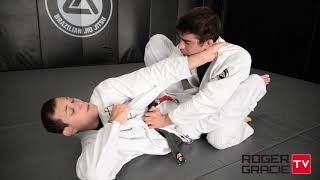
Before attempting any submission, the practitioner must first establish dominant control by locking the feet under the opponent's buttocks and driving the hips downward. Lifting the hands off the ground transfers full body weight onto the opponent, preventing both the upward escape (upa) and elbow escape. The wide base and locked leg position force the opponent to expend energy on failed escape attempts.
Creating the Arm Defense Reaction
Rather than forcing the arm upward, the practitioner must provoke the opponent into raising their own arm defensively. In no-gi grappling, this is accomplished through two primary methods: the 'what time is it' grip on the jaw and shoulder pressure to the face. Both techniques create discomfort that forces the opponent's arm to rise in a natural defensive response.
The 'What Time Is It' Grip
The grip is executed by placing the blade of the forearm (not the soft wrist or palm) against the opponent's neck and hooking into their jaw, resembling a watch-checking motion. This targeted pressure on the jaw and neck forces the opponent to defend by pushing or pulling the attacking arm. The resulting arm movement creates the opening needed to transition into the S-Mount position.
Transitioning to S-Mount Position
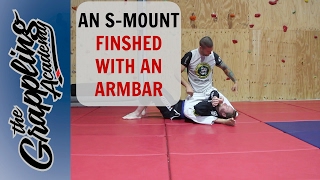
Once the opponent's arm is raised defensively, the attacking knee drives up under the opponent's armpit, positioned at least level with their head to prevent escape. The hips must be inserted directly underneath the opponent's raised elbow to control the limb. At this point, the 'what time is it' grip is no longer needed and should be released.
Locking the Door with Head and Hip Pressure
Both hands transition to control the opponent's head—one at the neck, one at the temple—driving their head into their shoulder while simultaneously pushing the hips forward into their armpit. Both feet must be positioned under the armpits with the back of the foot, not the palm, creating an S-shaped leg configuration. This creates an inescapable lock that prevents the opponent from withdrawing their elbow to the mat.
Weight Transfer and Leg Positioning
The practitioner shifts their entire upper body weight onto the right knee while keeping the left leg light and mobile. This weight distribution allows the left leg to be lifted freely and positioned over the opponent's head. The transition from hand control to foot control must be precise—the foot replaces the hand before the grip is released.
The Finish: Securing the Lock
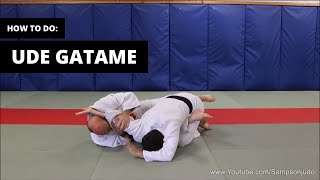
The practitioner sits back while simultaneously pulling the opponent close and replacing the controlling hand with the foot position. The opponent's wrist is then secured with both hands using a tight clamp grip to prevent wrist rotation. Once the configuration is locked, the lever is straightened to apply pressure to the elbow joint, completing the submission.
How To Do the Armbar From Mount in Jiu Jitsu | Jiu Jitsu Tutorial
Key Takeaways
- •Introduction to the Armbar from Mount
- •Establishing Control in Mount Position
- •Creating the Arm Defense Reaction
- •The 'What Time Is It' Grip
Get the Full Mount Attack Blueprint Course! http://mountattackblueprint.com/ Subscribe for more Jiu Jitsu Secrets to Help You Improve Your Jiu Jitsu FAST! _________________________________________________________________________ Master the armbar from the mount and level up your Jiu Jitsu game! In this video, I break down step-by-step how to execute one of the most effective BJJ submissions: the armbar. Whether you’re a white belt looking to add this classic move to your arsenal or a seasoned grappler polishing your fundamentals, this tutorial will help you dominate from the mount position. ✅ What you’ll learn in this video: • Key details to maintain control from the mount • How to isolate your opponent’s arm • Perfect technique to finish the armbar with precision • Common mistakes and how to avoid them The armbar is a cornerstone submission in Brazilian Jiu Jitsu, and mastering it can take your offense to the next level – whether you’re training for competition, self-defense, or just for fun. Who this video is for: • BJJ beginners learning core submissions • Intermediate grapplers fine-tuning their technique • Jiu Jitsu enthusiasts looking to dominate from top position 🔔 Subscribe for more BJJ tutorials, drills, and techniques! 👉 Share this video with your training partners and leave a comment letting me know what move you’d like to see next.
Related Techniques
Frequently Asked Questions
What does this video teach about s-mount armbar?
This video covers introduction to the armbar from mount, establishing control in mount position, creating the arm defense reaction. It provides detailed instruction from Matt Arroyo Jiu Jitsu .
How long does it take to learn s-mount armbar?
The basic mechanics can be understood in a single session, but developing reliable execution requires consistent drilling over weeks of practice. This 8-part breakdown helps structure your training by isolating each phase of the technique.
What are the key details for finishing s-mount armbar?
The practitioner shifts their entire upper body weight onto the right knee while keeping the left leg light and mobile. This weight distribution allows the left leg to be lifted freely and positioned over the opponent's head. The transition from hand control to foot control must be precise—the foot replaces the hand before the grip is released.