Positioning: When the Guard Pass Forces Bottom Player Supine
As the top player aggressively passes the guard and flattens the bottom player onto their back, the bottom player must recognize this inevitable outcome and prepare defensive measures immediately. Rather than resist the positioning, the practitioner should focus on establishing the lockdown before the top player can fully consolidate control.
Entry Mechanics: Securing the Lockdown from Disadvantage
When feeling the guard collapse and sensing imminent back-flattening, the bottom player takes the outside foot and drags it over the opponent's ankle, opening up the outside space. This movement allows the practitioner to slip underneath and establish the lockdown before the top player secures a dominant position with shoulder pressure.
Escape Sequence: The Bump and Underhook Recovery
Immediately after lacing the lockdown, the bottom player drives their knees upward to disrupt the top player's base and weight distribution. The first movement is never to stretch; instead, the practitioner bumps the opponent above them and turns to the side, which creates the space necessary to recover the underhook on the opposite side.
Pummeling Against Tight Pressure
When the top player maintains extreme downward pressure and minimal space, the bottom player cannot rely on large circular movements. Instead, the practitioner makes controlled, small pummeling motions with the elbow tight to the body, gradually working the hand through rather than forcing it through aggressively.
Frame Defense: Using the Humerus Instead of Hand Strength
The bottom player frames the top player using the humerus bone across the opponent's torso rather than attempting to control with hand strength alone. This bone-on-body positioning is more mechanically efficient and less prone to error, while the elbow remains tight to prevent the top player from slipping through the frame.
Solo Drilling: The Dip Set Motion Foundation
The fundamental movement pattern, called a dip set, involves bumping knees upward, stretching the hips back, bumping again, and extending all the way over to the shoulder and back. Practitioners should master this rhythmic motion without a partner first, ensuring full hip extension with each repetition to build the muscular memory required for the submission.
Partner Drilling: Transitioning to Active Resistance
The top player begins in push-up position with hands on the ground while maintaining the lockdown control. The bottom player performs the dip set motion without hand involvement initially, allowing the top player to experience the force generation from leg and hip power alone before integrating upper body mechanics.
Offensive Sequencing: The Three-Point Rotation
After establishing solid dip set rhythm, the bottom player adds hand involvement: the back hand goes to the back pocket, creating the first bump and underhook recovery. The practitioner then rotates across the midline, repositioning for the second underhook, and continues rotating to the opposite side for a third underhook, building momentum toward the sweep.
Hamstring Engagement and Resistance Principles
As the bottom player stretches the top player across the shoulder, the opponent's hamstring settles onto the bottom player's shoulder. The top player must maintain active leg resistance by pulling the leg back rather than allowing it to collapse forward, as passive resistance makes the position nearly impossible to defend against.
Safety Protocol: Recognizing Injury Risk and Tapping Obligations
The Electric Chair position carries serious injury risk, particularly to the knee and hamstring of the defending player, and should never be treated as a position for stubbornness or ego. The top player experiencing pain or instability should tap immediately without hesitation, as the bottom player's spinal leverage makes this submission extraordinarily difficult to escape once fully applied.
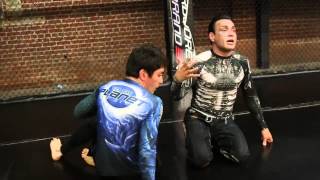
HOW TO use the Electric Chair PROPERLY (10th Planet Jiu Jitsu)
Key Takeaways
- •Positioning: When the Guard Pass Forces Bottom Player Supine
- •Entry Mechanics: Securing the Lockdown from Disadvantage
- •Escape Sequence: The Bump and Underhook Recovery
- •Pummeling Against Tight Pressure
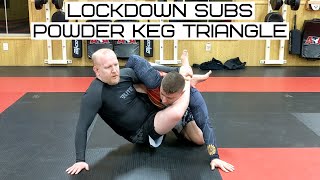
BMAC discusses how to get TO the electric chair & the options we have once we get the sweep. Check out the full Lockdown course here: https://bmac.mykajabi.com/offers/4S7LSDBf/checkout Join this channel to get access to Members Only Perks such as: - Weekly Live Classes - Members Only Chat - Exclusive Members Only Videos - Access to the PGF Archive - Custom Badges and Emojis and more! https://www.youtube.com/channel/UCr7VU0Cnef4AhQk7Pe_9nTA/join
Frequently Asked Questions
What does this video teach about electric chair submission?
This video covers positioning: when the guard pass forces bottom player supine, entry mechanics: securing the lockdown from disadvantage, escape sequence: the bump and underhook recovery. It provides detailed instruction from Brandon Mccaghren.
How long does it take to learn electric chair submission?
The basic mechanics can be understood in a single session, but developing reliable execution requires consistent drilling over weeks of practice. This 10-part breakdown helps structure your training by isolating each phase of the technique.
What are the key details for finishing electric chair submission?
As the bottom player stretches the top player across the shoulder, the opponent's hamstring settles onto the bottom player's shoulder. The top player must maintain active leg resistance by pulling the leg back rather than allowing it to collapse forward, as passive resistance makes the position nearly impossible to defend against.