Foundation: Electric Underhooks Position
The electric chair submission begins from the electric underhooks position. This setup is superior to simply grabbing and muscling the opponent over, as it maintains strategic ambiguity and prevents the opponent from committing fully to defense.
Why Muscular Force Fails
Attempting to brute-force the submission by squeezing and driving the elbow reveals the practitioner's intent completely. Once the opponent recognizes the committed underhook, they can sprawl with full defensive energy, eliminating any opportunity to transition to the dog fight position.
Creating Defensive Ambiguity
By threatening the dog fight while maintaining electric underhooks, the practitioner forces the opponent into decision paralysis. If the opponent overcommits to sprawl defense, the practitioner can easily transition to the dog fight; if they hesitate, the electric chair becomes accessible.
Motion Without Hesitation
Executing submissions with continuous, fluid motion prevents the opponent from overcommitting to defensive measures. This technical efficiency reduces the opponent's defensive options and makes the submission entry significantly easier.
Initial Directional Manipulation
The first movement involves pushing the opponent's chest upward and inward, causing them to naturally push back in the desired direction of travel. This reactive response sets up the leg positioning necessary for the submission.
Securing the Leg Across the Bicep
As the opponent sprawls defensively, the practitioner traps their leg across their bicep while maintaining the lockdown. The opponent will attempt to walk backward and remove their base; the practitioner must prevent backward movement and secure the leg on their shoulder.
Removing Base and Shoulder Control
Eliminating the opponent's base is critical to successful submission entry. Once the base is compromised and the opponent's leg is firmly positioned across the practitioner's shoulder and neck, the sweep becomes nearly guaranteed.
The Sweep Prerequisites
Two critical elements determine sweep success: maintaining the lockdown grip and keeping the opponent's leg secured on the shoulder. Losing either element prevents the practitioner from achieving top position.
Finishing Position: The Stretch
From the secured position, the practitioner rises onto their elbow and applies a gable grip. Collapsing forward with the chest on the mat while maintaining the leg grip hyperextends the opponent's hip, completing the electric chair submission.
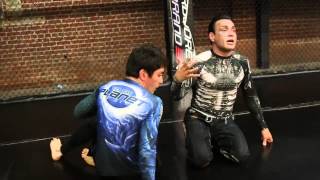
Eddie Bravo Getting to Electric Chair
Key Takeaways
- •Foundation: Electric Underhooks Position
- •Why Muscular Force Fails
- •Creating Defensive Ambiguity
- •Motion Without Hesitation
Technique from Jiu-Jitsu Magazine Issue 34 July 2015 http://www.jiujitsumag.com
Frequently Asked Questions
What does this video teach about electric chair submission?
This video covers foundation: electric underhooks position, why muscular force fails, creating defensive ambiguity. It provides detailed instruction from JiuJitsuMag.
How long does it take to learn electric chair submission?
The basic mechanics can be understood in a single session, but developing reliable execution requires consistent drilling over weeks of practice. This 9-part breakdown helps structure your training by isolating each phase of the technique.
What are the key details for finishing electric chair submission?
Two critical elements determine sweep success: maintaining the lockdown grip and keeping the opponent's leg secured on the shoulder. Losing either element prevents the practitioner from achieving top position.
Related videos
Eddie Bravo Electric Chair Sweep
JiuJitsuMag
HOW TO use the Electric Chair PROPERLY (10th Planet Jiu Jitsu)
Brandon Mccaghren

Ice Pick on the Ground
Kalah UK

The Carni Shoulder Lock From BJJ Z Guard by Richie "Boogeyman" Martinez
Bernardo Faria BJJ Fanatics

Lockdown Half Guard, Part 12: Powder Keg Triangle
Cheat Code Jiu Jitsu