Addressing the Sitting Up Defense
When the opponent begins to sit up after the initial hook is established, the practitioner loses the ability to bridge effectively as the opponent climbs over them. Two defensive strategies exist to counter this common escape: preempting the sit-up or blocking it entirely. Understanding when to apply each method is essential for submission control.
The Preemptive Foot Block
The preemptive approach involves placing the foot across the opponent's belt line before they can generate upward momentum. This placement is effective regardless of whether it contacts the arm or torso, as long as it creates a physical barrier. The foot placement neutralizes the sit-up defense by blocking the opponent's path forward.
Using Opponent Pressure Against Them
When the foot is properly positioned across the opponent's belt line, their defensive pressure against it actually assists the submission. As the opponent pushes forward against the barrier, their own force drives their leg into the submission mechanism. The practitioner can maintain the position with minimal effort, allowing the opponent's resistance to complete the technique.
The Reactive Hip Block Method
If the opponent escapes to an upright position before the initial foot block is applied, the heel can be driven into their hip as a reactive counter. This heel placement prevents further upward movement while allowing the practitioner to bridge and rotate. This method proves especially valuable during live rolling when the opponent anticipates the initial setup.
Hip Control Through Positional Rolling
Rather than remaining flat on the back, the practitioner should roll onto their hip to establish superior control. This angled position provides greater stability and allows the practitioner to dictate the direction and pace of the exchange. Proper hip positioning is fundamental to preventing the opponent's escape.
Catching the Second Foot
When rolling to one side, the practitioner should capture the opponent's far foot or shin with their free leg. By controlling both of the opponent's feet, escape options are completely eliminated. Maintaining a tight grip on the shin prevents the opponent from establishing a base to stand or advance their position.
Rolling into the Submission
Once both feet are controlled, rolling toward the trapped shin while applying leg pressure creates a prying action that intensifies the submission. When executed with sufficient speed and timing, this rolling motion can approximate a headlock-style attack. The dual-leg control makes this finish particularly difficult to defend against.
The Critical Importance of Staying Round
Maintaining a curved body position throughout the technique is essential to moving in unison with the opponent's defensive movements. A flat or extended position causes the practitioner to lose relative position as the opponent rotates or shifts. By staying round, the practitioner moves with the opponent rather than allowing them to escape.
Momentum and Movement Synchronization
Walking onto the technique while maintaining spinal flexion creates forward momentum that keeps the practitioner connected to the opponent. This synchronized movement prevents the common escape where the opponent slips past a stationary attacker. The combination of proper positioning and continuous forward motion ensures successful submission completion.
CROWBAR TO PREVENT OPPONENT FROM STANDING
Key Takeaways
- •Addressing the Sitting Up Defense
- •The Preemptive Foot Block
- •Using Opponent Pressure Against Them
- •The Reactive Hip Block Method
The Crowbar is a compression bent knee lock that has a variety of applications. In this video, we show how to use the Crowbar to prevent your opponent from standing up after you have taken him to the mat. View hundreds of videos of judo, freestyle judo, Shingitai Jujitsu, sambo, submission grappling and sport jujitsu on our Youtube channel at http://youtube.com/user/welcomematstevescott. The Welcome Mat Judo-Jujitsu Club was founded in 1969. Please subscribe to our Youtube channel if you have not done so already. Visit our web sites at http://www.WelcomeMatJudoClub, http://www.judoblackbelt.com and visit our online store at http://www.WelcomeMatStore.com. Join our premium channel at http://www.grapplingcoach.us. Thank you for watching our video.
Related Techniques
Frequently Asked Questions
What does this video teach about crowbar submission?
This video covers addressing the sitting up defense, the preemptive foot block, using opponent pressure against them. It provides detailed instruction from welcomematstevescott.
How long does it take to learn crowbar submission?
The basic mechanics can be understood in a single session, but developing reliable execution requires consistent drilling over weeks of practice. This 9-part breakdown helps structure your training by isolating each phase of the technique.
What are the key details for finishing crowbar submission?
Maintaining a curved body position throughout the technique is essential to moving in unison with the opponent's defensive movements. A flat or extended position causes the practitioner to lose relative position as the opponent rotates or shifts. By staying round, the practitioner moves with the opponent rather than allowing them to escape.
Related videos
Derrick Darling: Windmill Throw to Submissions
sambosteve
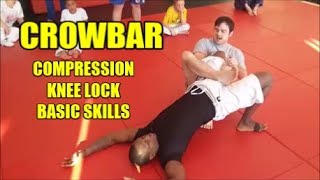
CROWBAR COMPRESSION BENT KNEE LOCK CORE SKILLS
welcomematstevescott
Ice Pick on the Ground
Kalah UK
The Carni Shoulder Lock From BJJ Z Guard by Richie "Boogeyman" Martinez
Bernardo Faria BJJ Fanatics
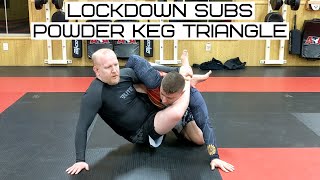
Lockdown Half Guard, Part 12: Powder Keg Triangle
Cheat Code Jiu Jitsu