Initial Position and Knee Placement
The instructor begins from a back control position with a knee placed firmly against the opponent's buttocks. The practitioner then pops back while maintaining this knee pressure, establishing the foundational posture for the crowbar submission.
Leg Trapping and Hand Positioning
From the initial position, the instructor catches the opponent's leg and brings it back in while keeping one hand positioned between the opponent's legs. This hand placement is critical for controlling the trapped leg throughout the technique.
Executing the Crowbar Lock
The instructor pops the opposite leg up and sits back into the position while catching through the space between the opponent's legs. This creates the characteristic crowbar compression where the opponent's shin is trapped against the instructor's chest while their arm is pinned.
Foot Placement and Grip Options
The instructor places their foot over and up to complete the lock, then demonstrates two grip options: either holding the thigh directly or clasping both hands together. Proper foot placement prevents the opponent from bridging or rolling out of the submission.
Understanding Compression vs. Calf Pressure
The instructor clarifies that the crowbar is a compression-based leg lock using hip pressure to jam the foot toward the buttocks and separate the knee, not a calf pressure targeting compressed nerves. The distinction is crucial because compression bent-knee locks achieve faster submissions through structural separation rather than nerve compression.
Entry from Guard Pass Positioning
The instructor demonstrates a practical entry by hooking the far leg during a guard pass attempt, allowing the hand to come up the middle. The practitioner then kicks the leg out of range while stepping forward to establish control before rolling back into the lock.
Hip Drive and Pressure Application
Once in the locked position, the instructor emphasizes using the foot on the opponent's hip to help apply pressure while driving the hips forward. This hip engagement is essential for maximizing the mechanical advantage and forcing the tap.
Ankle Pick Entry Variation
The instructor shows an alternative entry starting with an ankle pick takedown, demonstrating how to smoothly transition from the takedown into the crowbar by sliding the foot from ankle to knee. Staying round and rolling back throughout the transition maintains control and prevents the opponent from escaping.
Bridging and Finishing Position
The instructor emphasizes proper bridging technique, positioning the body as if performing a weighted squat while rolled back. This bridging position is critical for applying maximum pressure and securing the submission before the opponent can sit up or escape.
CROWBAR COMPRESSION BENT KNEE LOCK CORE SKILLS
Key Takeaways
- •Initial Position and Knee Placement
- •Leg Trapping and Hand Positioning
- •Executing the Crowbar Lock
- •Foot Placement and Grip Options
The Crowbar is a compression bent knee lock that has numerous applications. In this video, we show the core skills of how to do this effective knee lock. View hundreds of videos of judo, freestyle judo, Shingitai Jujitsu, sambo, submission grappling and sport jujitsu on our Youtube channel at http://youtube.com/user/welcomematstevescott. The Welcome Mat Judo-Jujitsu Club was founded in 1969. Please subscribe to our Youtube channel if you have not done so already. Visit our web sites at http://www.WelcomeMatJudoClub, http://www.judoblackbelt.com and visit our online store at http://www.WelcomeMatStore.com. Join our premium channel at http://www.grapplingcoach.us. Thank you for watching our video.
Related Techniques
Frequently Asked Questions
What does this video teach about crowbar submission?
This video covers initial position and knee placement, leg trapping and hand positioning, executing the crowbar lock. It provides detailed instruction from welcomematstevescott.
How long does it take to learn crowbar submission?
The basic mechanics can be understood in a single session, but developing reliable execution requires consistent drilling over weeks of practice. This 9-part breakdown helps structure your training by isolating each phase of the technique.
What are the key details for finishing crowbar submission?
The instructor shows an alternative entry starting with an ankle pick takedown, demonstrating how to smoothly transition from the takedown into the crowbar by sliding the foot from ankle to knee. Staying round and rolling back throughout the transition maintains control and prevents the opponent from escaping.
Related videos
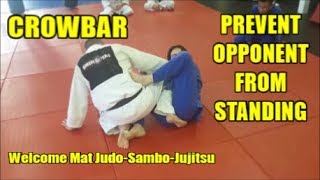
CROWBAR TO PREVENT OPPONENT FROM STANDING
welcomematstevescott
Derrick Darling: Windmill Throw to Submissions
sambosteve
Ice Pick on the Ground
Kalah UK
The Carni Shoulder Lock From BJJ Z Guard by Richie "Boogeyman" Martinez
Bernardo Faria BJJ Fanatics
Lockdown Half Guard, Part 12: Powder Keg Triangle
Cheat Code Jiu Jitsu