Introduction to the Cradle Pass
The cradle pass is an effective technique for passing the Z guard, particularly when opponents shield aggressively and keep their guard tight. This wrestling-inspired approach solves common passing problems and creates immediate pressure.
Initial Frame and Hand Positioning
The instructor establishes the foundation by framing on the opponent's shield with the outside hand. The practitioner weaves through and places knuckles on the ground, leaning into the frame while tempting the opponent to advance their head forward.
Executing the S-Grip
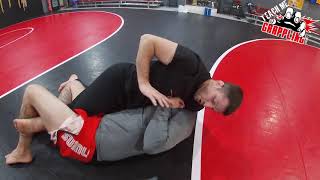
Once the opponent commits by bringing their head forward, the practitioner secures an S-grip with one hand belly-down and the other belly-up. The elbows are then driven tightly together to create a locked cradle position.
Sprawl and Weight Distribution
The practitioner sprawls their leg out and drops their full weight onto the opponent's knees. The left hand goes under the arm while the right hand controls under the knee, preparing for the opening movement.
Opening and Flattening
From the controlled position, the practitioner performs a controlled collapse—like a swan dive—to flatten the opponent completely. Once secure on the toes, the practitioner opens and backs up, finishing the pass.
S-Grip Advantages Over Gable Grip
The S-grip offers two critical advantages: it can be established from a greater distance than a gable grip, and it allows angle changes by hooking against the opponent's own fingers. This versatility makes it superior for cradle applications.
Elbow Control and Hook Variations
The practitioner can adjust grip angles by twisting the S-grip to create different elbow positions against the opponent's head. This flexibility allows the practitioner to maintain the cradle even when the opponent resists or adjusts position.
Drive, Scoop, and Opening Mechanics
As the practitioner drives forward on their toes, the momentum naturally elevates the opponent's arm off the mat. The key is scooping under the arm during this drive rather than attempting to pull—the same principle applies when controlling the leg.
Post-Pass Hip Control and Elbow Coverage
After clearing the opponent's limbs, the practitioner must drop their hip and cover the opponent's elbow with body weight to prevent recovery. Maintaining control below the elbow prevents the opponent from re-establishing guard through a high underhook.
Using THE CRADLE to pass. When WRESTLING meets JIU JITSU
Key Takeaways
- •Introduction to the Cradle Pass
- •Initial Frame and Hand Positioning
- •Executing the S-Grip
- •Sprawl and Weight Distribution
Bmac talks using this staple of Wrestling to pass in Jiu Jitsu & what we need to do to stop the guard recovery. Join this channel to get access to Members Only Perks such as: - Weekly Live Classes - Members Only Chat - Exclusive Members Only Videos - Access to the PGF Archive - Custom Badges and Emojis and more! https://www.youtube.com/channel/UCr7VU0Cnef4AhQk7Pe_9nTA/join
Related Techniques
Frequently Asked Questions
What does this video teach about cradle from side control?
This video covers introduction to the cradle pass, initial frame and hand positioning, executing the s-grip. It provides detailed instruction from Brandon Mccaghren.
How long does it take to learn cradle from side control?
The basic mechanics can be understood in a single session, but developing reliable execution requires consistent drilling over weeks of practice. This 9-part breakdown helps structure your training by isolating each phase of the technique.
What are the key details for finishing cradle from side control?
As the practitioner drives forward on their toes, the momentum naturally elevates the opponent's arm off the mat. The key is scooping under the arm during this drive rather than attempting to pull—the same principle applies when controlling the leg.
Related videos
Wrestling Cradles in MMA & Jiu-Jitsu: Breakdown, Smash Guard, Submit
Sonny Brown
Side Control BJJ Cradle Attack
David Avellan
The Crossface Cradle - Yes, it is Osaekomi
The Judokai Network
Keep Connection From Top Turtle Against Your Opponent by Jason Scully - BJJ Grappling
The Grapplers Guide by Jason Scully
Catch Them by SURPRISE in Half Guard!!
TeachMeGrappling Coach Brian