Catch Them by SURPRISE in Half Guard!!
0
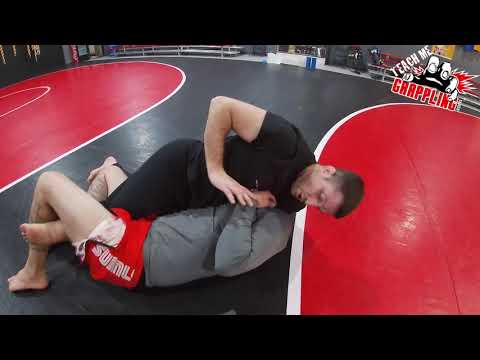
Cradle From Top Half Guard·TeachMeGrappling Coach Brian
In this video I breakdown a guillotine you can hit from top half guard or quarter guard. Check out the details and you …
クレイドル(Kureidoru)
TransliterationTranslation: Cradle (katakana loanword); cervical flexion neck crank
The cradle neck crank from top half-guard is applied when the top player locks a cradle from the half-guard position by reaching around the opponent's head with one arm and under the near-side leg with the other, clasping the hands together. [1],[2] The cradle immobilizes the bottom player by connecting the head and leg, and the top player drives forward to compress the spine into forced cervical flexion. [1] The half-guard makes the near-side leg accessible for the cradle grip while the head is within reach from the top position. [1],[2]
The cradle from half-guard became a popular technique among wrestlers competing in BJJ and MMA, as the half-guard position closely resembles the wrestling referee's position where cradles are commonly initiated. [1],[2] Wrestlers like Ben Askren and Khabib Nurmagomedov demonstrated the effectiveness of cradle-based control from top half-guard in MMA. [1] The technique represents a direct transfer of folkstyle wrestling methodology into modern submission grappling. [1],[2]
Effective way to pass and submit simultaneously — the cradle from top half guard compresses the opponent's spine and can force the tap through neck pressure or claustrophobia [1]
Adapted from wrestling's cradle series to BJJ half guard situations; popularized by wrestlers who use the cradle to neutralize half guard [1]
Occasionally seen in MMA and no-gi competition; Ben Askren notably used cradle attacks from half guard in both wrestling and MMA [1]
No images yet for this technique.
Sign in to suggest an image.
In this video I breakdown a guillotine you can hit from top half guard or quarter guard. Check out the details and you …
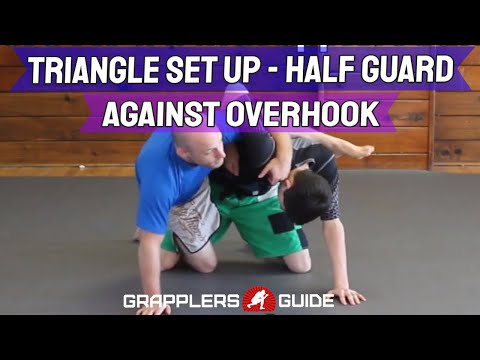
Thousands of Videos at http://www.GrapplersGuide.com/open - In this video Jason Scully shows how to counter your opponen…
The cradle from top half guard is a neck-crank choke that exploits the opponent's transition through half guard by trapping the neck as they attempt to escape or establish an underhook. TeachMeGrappling Coach Brian emphasizes the setup from quarter guard or top half guard, where the defender focuses on controlling the opponent's lower body while the attacker deliberately allows the opponent to come up on their elbow—a moment when the neck is exposed and undefended. Brian advocates jamming the hand over the neck and converting to a high-elbow guillotine or arm-in guillotine, using the principle that strong defenders who come up with power inadvertently expose their neck more than those who stay compressed. He stresses grip placement (grabbing the meat of the hand rather than extending fingers) and chest pressure to seal gaps. The Grappler's Guide by Jason Scully presents a related but distinct approach: when caught in an overhook from half guard, the bottom player comes up to their knees, swipes the opponent's leg open, wrenches them down to control posture, and shoots the back leg to transition into a triangle choke rather than a guillotine. While both instructors address escapes from half guard top position, Brian focuses on guillotine finishes from the top, whereas Scully demonstrates a triangle entry from the bottom with an underhook advantage. Both agree that timing the attack when the opponent is transitioning and posturally vulnerable is crucial.
Synthesized from 2 instructors
No instructional courses yet for this technique.
Sign in to suggest a course.
Risk of injury to the person this technique is applied to
Flexion cranks force the chin toward the chest; compresses anterior cervical structures
Skill level needed to execute this technique reliably
Whether this technique is allowed under major competition rule sets
Japanese wrestling/BJJ standard terminology
Japanese wrestling/BJJ standard terminology
Standard katakana transliteration of Western martial arts terminology (外来語) — used in Japanese MMA, boxing, and BJJ communities
Japanese terminology sourced from Japanese wrestling/BJJ standard terminology
grip or squeeze strength, positional control
strong upper body for sustained compression
forearms, biceps, pectorals, core stabilisers
According to Coach Brian at TeachMeGrappling, when your opponent tries to get an underhook and escape, jam your hand over their neck as they come up on top. Rather than trying to smash them, use a high elbow guillotine by letting them come up to open their neck, then put your head inside and start the choke.
Coach Brian emphasizes keeping your hand placement on the meat of the neck rather than going all the way down the fingers, and then driving that bone upward. The key is catching them by surprise when their hands are focused low and their neck is exposed.
Yes—according to Jason Scully at The Grapplers Guide, when you're underhooked in half guard, swipe your opponent's leg open with your outside leg, come up while controlling their posture, bring your outside leg over their back, and then shoot your leg through to finish the triangle choke.
The cradle neck crank from top half-guard is applied when the top player locks a cradle from the half-guard position by reaching around the opponent's head with one arm and under the near-side leg with the other, clasping the hands together. The cradle immobilizes the bottom player by connecting the head and leg, and the top player drives forward to compress the spine into forced cervical flexion.
The cradle from half-guard became a popular technique among wrestlers competing in BJJ and MMA, as the half-guard position closely resembles the wrestling referee's position where cradles are commonly initiated. Wrestlers like Ben Askren and Khabib Nurmagomedov demonstrated the effectiveness of cradle-based control from top half-guard in MMA.
IBJJF: legal — Legal at all belt levels, gi and no-gi — chokes are the safest submission cat…; IJF: legal — Legal (shime-waza) — strangulation techniques are one of three permitted subm…; ADCC: legal — Legal; Unified MMA: legal — Legal — choke submissions are among the most common finishes in MMA; FIAS Sport Sambo: banned — All chokes prohibited in Sport Sambo; FIAS Combat Sambo: legal — Legal
Danger rating 8/10. Flexion cranks force the chin toward the chest; compresses anterior cervical structures
The standard setup chain: Establish Position → Create the Threat → Secure the Hold → Finish.
Standard counters include: Early Recognition — identify the submission attempt early and begin defence immediately / Posture and Base — maintain strong posture and base to prevent submission setups / Grip Fight — deny the attacker their preferred gripping configuration.
Common variants: Standard grip variation (primary hand configuration for maximum choking pressure); Gi variation (uses the lapel or collar as an anchor for additional fric…); No-gi variation (adapted grip and positioning for submission grappling wit…); Transition finish (applied during a positional change to catch the opponent …).
Occasionally seen in MMA and no-gi competition; Ben Askren notably used cradle attacks from half guard in both wrestling and MMA
Top errors to watch for: Not recognising the natural cradle geometry from half guard — the bent knee is already there; many practitioners miss… / Reaching for the head without controlling the opponent — maintain top half guard pressure while reaching; lifting up … / Not connecting the hands — the cradle requires the head and knee to be linked; if the distance is too great, improve … / Releasing the cradle to pass — the cradle can assist the pass; maintain it while extracting the leg rather than relea….
The Cradle From Top Half Guard is also known as Kureidoru, Half-Guard Cradle Crank, Top Cradle Neck Lock.