Cradle From Turtle

Species

クレイドル(Kureidoru)

Transliteration

Translation: Cradle (katakana loanword); cervical flexion neck crank

Overview

The cradle neck crank from turtle is applied against a turtled opponent by the attacker reaching around the head and under a leg to lock a cradle grip, then rolling the opponent onto their back while maintaining the cradle pressure. [1],[2] The turtle position makes both the head and the near-side leg accessible from a top or side angle, facilitating the cradle lock. [1] Once the cradle is secured, the attacker rolls the opponent over and drives the knee toward the head to compress the spine into forced flexion. [1],[2]

Also known as
Turtle Cradle CrankWrestling[1]Cradle from Turtle RideWrestling[2]

History & Origin

The cradle from turtle is derived directly from amateur wrestling, where the cradle is one of the primary methods for turning an opponent from the bottom (referee's) position. [1],[2] In folkstyle wrestling, the cradle is among the first combination moves taught for turning turtled opponents onto their backs for a pin. [1] Submission grapplers and MMA fighters adopted this wrestling staple and added the neck crank finishing mechanic to convert the pinning position into a submission. [1],[2]

Effectiveness

The cradle is one of the most powerful turtle attacks available — locking the head and leg together creates complete body control and severe spinal compression [1]

Lineage

A classical wrestling technique for attacking turtle (referee's position). The cradle from turtle is fundamental in folkstyle and freestyle wrestling, adapted to submission grappling [1]

Competition Record

Standard technique in folkstyle wrestling competition; used in MMA by wrestlers with strong mat return skills. Ben Askren's cradle from turtle is among the most famous examples [1]

Images

No images yet for this technique.

Sign in to suggest an image.

Biomechanical Mechanism

Primary ActionCompression of the neck structures — restricts blood flow or airway depending on technique application
Joints InvolvedCervical spine, surrounding musculature, and vascular structures of the neck
Force VectorDirected compression against the neck from the choking limb or body position
Finishing MechanicSustained pressure causes either vascular occlusion (unconsciousness) or tracheal restriction (breathing difficulty)

Position & Entry

From back control with seatbeltEstablish hooks or body triangle, slide choking arm under the chin, connect hands and squeeze
From turtle top (back take)Break down the turtle, insert hooks, secure seatbelt grip, slide to back control and apply the choke
From standing back clinchSecure rear body lock, drag opponent to the mat while inserting hooks, transition to choking position

Videos

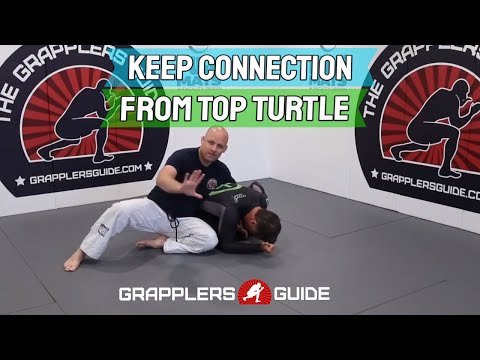
Keep Connection From Top Turtle Against Your Opponent by Jason Scully - BJJ Grappling

0
Cradle From Turtle·The Grapplers Guide by Jason Scully

The Grapplers Guide is the longest running and most recommended premium BJJ and grappling learning site ever created. L

The 2 Easiest Attacks Against the Turtle Position

0
Cradle From Turtle·Stephan Kesting

Two of the easiest ways to attack the turtle position in BJJ and Judo by Stephan Kesting. Thousands of other videos, ar

2 videos

What Instructors Say

The cradle from turtle is approached through two complementary instructional frameworks that emphasize different aspects of control and attack. Jason Scully (The Grapplers Guide) prioritizes the foundational concept of hip connection when controlling a turtled opponent from the top position, arguing that maintaining constant hip-to-hip contact—via ribs, hands, and leg pressure—prevents the bottom player from executing escapes like sit-outs, Peterson rolls, or hip switches. Scully emphasizes that hip connection is the prerequisite for all subsequent control techniques; without it, even harness grips provide false security. By floating with the opponent's hip movement, the top player can follow escape attempts and either maintain positional advantage or transition to back control. Stephan Kesting (Grapplerage) addresses the attacking phase from turtle, offering two primary submission approaches: the far-arm trap combined with a potential reverse arm triangle or clock choke, and the knee-mount transition via elbow-knee material control. Kesting's methods assume a defensive, stationary turtle and require comparable size or advantage. While Scully focuses on positional maintenance and escape prevention, Kesting provides concrete turning mechanisms and submission paths once control is established. Together, they frame the cradle from turtle as a two-phase operation: first securing hip connection to neutralize movement, then executing turning attacks or submissions.

Synthesized from 2 instructors

  • The Grapplers Guide by Jason ScullyKeep Connection From Top Turtle Against Your Opponent by Jason Scully - BJJ Grappling: Establishes hip connection as the foundational control mechanism in turtle position; demonstrates how hip-to-hip contact prevents escapes and allows the top player to float with opponent movement; emphasizes that hip connection is often overlooked but essential for all subsequent attacks.
  • Stephan KestingThe 2 Easiest Attacks Against the Turtle Position: Provides two primary attack sequences from turtle: the far-arm trap leading to reverse arm triangle or clock choke, and the knee-mount transition via material control at elbow and knee; focuses on turning the opponent over and transitioning to submission or positional dominance.

Learn This Technique

No instructional courses yet for this technique.

Sign in to suggest a course.

Ratings

Danger Rating

Risk of injury to the person this technique is applied to

8
Very High8/10

Flexion cranks force the chin toward the chest; compresses anterior cervical structures

Difficulty

Skill level needed to execute this technique reliably

Advanced
Competition Legality

Whether this technique is allowed under major competition rule sets

Illegal
FIAS Sport Sambo — All chokes prohibited in Sport Sambo
FIAS International Sambo Competition RulesPDF
Legal
IBJJF — Legal at all belt levels, gi and no-gi — chokes a...
IBJJF Rules Book v6.0, June 2024PDF
ADCC — Legal
ADCC Rules Update, April 2025PDF
Unified MMA — Legal — choke submissions are among the mos...
Unified Rules of MMA, August 2025PDF
FIAS Combat Sambo — Legal
FIAS Combat Sambo RulesPDF

Training Notes

The cradle from turtle connects the head and a knee of the turtled opponent — the turtle's compact posture naturally brings the head and knees close together, making the cradle connection achievable (Paulson, Shoot Wrestling, 2007)
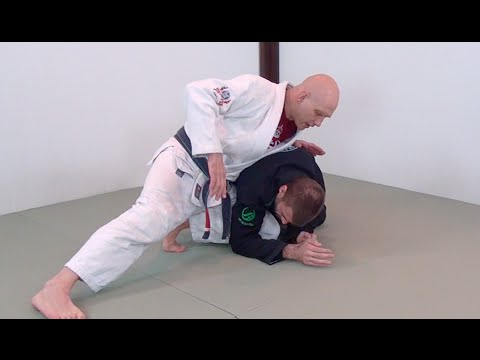
Against the turtle: approach from the side, reach one arm around the head and the other under the near knee — connect the hands to lock the cradle
The turtle's posture is paradoxically ideal for the cradle: the head is down and the knees are beneath the body — the head-to-knee distance is minimised
The cradle from turtle serves as a turtle-breaking technique: the head-to-knee fold rolls the opponent from turtle to their side or back, exposing them for further attacks
The rolling motion: once the cradle is locked, roll the opponent toward the head — the connected head-and-knee prevent them from re-turtling
The cradle from turtle is one of the primary wrestling turtle attacks: turning a turtled opponent is a core wrestling skill, and the cradle is the most common turning method
In submission grappling, the turtle cradle creates the cervical crank (head-to-knee flexion) while simultaneously advancing position — dual-purpose technique
Common Mistakes

!Approaching from directly behind — the side approach provides better access to both head and knee; from behind, the head is protected
!Not connecting the hands before rolling — the cradle must be locked; attempting to roll with an open cradle fails
!Rolling in the wrong direction — roll toward the head side; rolling opposite opens the cradle
!Not maintaining the cradle after rolling — keep the hands connected through the roll; the connection is the position
!Attempting against a very tight turtle without setup — use snap-downs or pressure to loosen the turtle before connecting the cradle
!Not following with positional advancement — the roll exposes the back and side; immediately establish hooks, mount, or side control
!Applying explosive cervical force during the fold — the head-to-knee compression creates cervical stress; control the fold speed, especially in training

Related Techniques

Counter Techniques

Setup Chain

1Establish Positionachieve the controlling position needed for this submission
2Create the Threatbegin the submission setup to force a defensive reaction
3Secure the Holdlock the submission grip with proper body mechanics
4Finishapply increasing pressure until the opponent taps or the joint/choke takes effect

Sources & References

Primary Source

Japanese wrestling/BJJ standard terminology

1OtherJapanese Martial Arts Community Terminology

Japanese wrestling/BJJ standard terminology

2OtherJapanese Combat Sports Katakana Convention

Standard katakana transliteration of Western martial arts terminology (外来語) — used in Japanese MMA, boxing, and BJJ communities

3CitationJapanese wrestling/BJJ standard terminology

Japanese terminology sourced from Japanese wrestling/BJJ standard terminology

Community

Athletics

Requires

grip or squeeze strength, positional control

Favours

strong upper body for sustained compression

Key muscles

forearms, biceps, pectorals, core stabilisers

Sub-techniques

Frequently Asked Questions

How do I break apart my opponent's defense when they're in a tight turtle position?

According to Stephan Kesting, separate the opponent's elbow from their knee by driving your knee down between them while in side control. This opens up their posture and makes them less balled up, creating opportunities for submissions like the choke or arm attacks.

What's the fastest way to advance from turtle into a dominant position?

Stephan Kesting recommends getting control of the elbow and knee, then popping up to your feet and backing up directly into knee mount. This transition puts immediate pressure on your opponent and allows you to threaten submissions.

Why is maintaining hip connection important when attacking from top turtle?

Jason Scully emphasizes that keeping a connection at the opponent's hips is crucial because it prevents them from escaping or reversing the position. If they try to roll through or grab your arm, the hip connection makes these escape attempts significantly harder to execute.

How does the Cradle From Turtle work?

The cradle neck crank from turtle is applied against a turtled opponent by the attacker reaching around the head and under a leg to lock a cradle grip, then rolling the opponent onto their back while maintaining the cradle pressure. The turtle position makes both the head and the near-side leg accessible from a top or side angle, facilitating the cradle lock.

Where does the Cradle From Turtle come from?

The cradle from turtle is derived directly from amateur wrestling, where the cradle is one of the primary methods for turning an opponent from the bottom (referee's) position. In folkstyle wrestling, the cradle is among the first combination moves taught for turning turtled opponents onto their backs for a pin.

Is the Cradle From Turtle legal in competition?

IBJJF: legal — Legal at all belt levels, gi and no-gi — chokes are the safest submission cat…; IJF: legal — Legal (shime-waza) — strangulation techniques are one of three permitted subm…; ADCC: legal — Legal; Unified MMA: legal — Legal — choke submissions are among the most common finishes in MMA; FIAS Sport Sambo: banned — All chokes prohibited in Sport Sambo; FIAS Combat Sambo: legal — Legal

How dangerous is the Cradle From Turtle?

Danger rating 8/10. Flexion cranks force the chin toward the chest; compresses anterior cervical structures

How do I set up the Cradle From Turtle?

The standard setup chain: Establish Position → Create the Threat → Secure the Hold → Finish.

How do I defend against the Cradle From Turtle?

Standard counters include: Early Recognition — identify the submission attempt early and begin defence immediately / Posture and Base — maintain strong posture and base to prevent submission setups / Grip Fight — deny the attacker their preferred gripping configuration.

What are the variants of the Cradle From Turtle?

Common variants: Standard grip variation (primary hand configuration for maximum choking pressure); Gi variation (uses the lapel or collar as an anchor for additional fric…); No-gi variation (adapted grip and positioning for submission grappling wit…); Transition finish (applied during a positional change to catch the opponent …).

How effective is the Cradle From Turtle in competition?

Standard technique in folkstyle wrestling competition; used in MMA by wrestlers with strong mat return skills.

What are common mistakes when doing the Cradle From Turtle?

Top errors to watch for: Approaching from directly behind — the side approach provides better access to both head and knee; from behind, the h… / Not connecting the hands before rolling — the cradle must be locked; attempting to roll with an open cradle fails / Rolling in the wrong direction — roll toward the head side; rolling opposite opens the cradle / Not maintaining the cradle after rolling — keep the hands connected through the roll; the connection is the position.

What are other names for the Cradle From Turtle?

The Cradle From Turtle is also known as Kureidoru, Turtle Cradle Crank, Cradle from Turtle Ride.