Front Headlock Fundamentals
The front headlock is wrestling's most effective scoring position. Mastery requires understanding three core components: proper grip mechanics for head and arm control, spinning techniques to achieve dominant position behind the opponent, and finishing pin sequences. This instructional progression builds from foundational grips through advanced transitions.
Grip One: Chin and Tricep Control
The chin-and-tricep grip provides foundational control by securing the opponent's head directly beneath the practitioner's torso. The controlling hand grasps the chin while maintaining 'T-Rex arms'—elbows pinched tightly to the sides—with the opposite hand controlling the tricep at mid-back height. Critical positioning ensures the opponent's head stays low; if the head rises, the opponent can counter with a double-leg takedown.
Grip Two: Hand Lock Position
When locking hands, the lock must be established at neck height rather than reaching deep around the neck, which invites arm drag counters. The hand circling the armpit extends deeply while the hand around the neck stays high. Practitioners typically employ this grip when opponents attempt to stand, providing superior control to return them to the mat.
Grip Three: Double Armpit Control
The double-armpit grip sacrifices head control for increased mobility and versatility. Both hands cup inside the armpits with the chest positioned above the neck and middle back, with the practitioner on both feet rather than one knee. This position enables faster lateral circling in either direction while maintaining options to attack both sides simultaneously.
Pre-Spin Positioning: Forcing Elbow Contact
Before executing any go-behind, practitioners must snap the opponent to their elbows to eliminate mobility. An opponent supporting weight on their hands remains mobile and difficult to control; forcing elbow contact significantly increases the likelihood of a successful transition. A sharp push-pull action drives the opponent to the mat into the desired position.
Go-Behind Technique One: The Drag
From the chin-and-tricep grip, the controlling hand rotates around the opponent's neck to grasp the armpit while the tricep hand pulls. The practitioner's body weight shifts as the hand rotates, then attacks the hamstring to complete the spin behind. This fundamental transition maintains connection throughout the movement.
Go-Behind Technique Two: The V-Block
The V-block variation differs from the drag by blocking the opponent's shoulder on the outside rather than controlling the inside armpit. After the push-pull sequence, the hand rotates to create a V-shaped arm position blocking the shoulder. Weight placement remains critical as the practitioner attacks the hamstring to spin behind.
Advanced Variation: Knee Tap to Pin or Spin
When the opponent's knee positions close to the torso, the controlling hand reaches deeply across to tap the knee, forcing the opponent to fall to their hip. From this position, practitioners may circle upward into a pin or spin backward behind the opponent. The backward spin offers superior defensive coverage since the opponent cannot use their hands to prevent the transition.
Advanced Variation: Head in the Hole
This technique positions the practitioner's head inside the opponent's armpit while shifting weight to the hip and sitting perpendicular. Pressure applied to the opponent's head prevents them from circling to face the attacker. A pre-snap can enhance effectiveness, creating compounded pressure that facilitates the transition behind.
The Front Headlock | Wrestling Moves
Key Takeaways
- •Front Headlock Fundamentals
- •Grip One: Chin and Tricep Control
- •Grip Two: Hand Lock Position
- •Grip Three: Double Armpit Control
Iron Faith Merch ➡️ https://amptstudio.chipply.com/ifwc/ Join the #1 Online Wrestling Academy in the world ➡️ https://www.skool.com/iron-faith-academy Intro: 00:00 Grips: The Chin & Tricep 00:27 Grips: Locking Hands 01:29 Grips: Double Armpits 02:36 Go Behind: Drag 04:11 Go Behind: V-Block 05:11 Go Behind: Knee Tap 06:04 Go Behind: Head in the Hole 07:27 Go Behind: Re-Attacks 09:02 Pins: Cradle 11:06 Pins: Gator Roll/ DJ (Combo) 11:44 Pins: Quarter Nelson 13:30
Related Techniques
Frequently Asked Questions
What does this video teach about nelson from front headlock?
This video covers front headlock fundamentals, grip one: chin and tricep control, grip two: hand lock position. It provides detailed instruction from Iron Faith Wrestling.
How long does it take to learn nelson from front headlock?
The basic mechanics can be understood in a single session, but developing reliable execution requires consistent drilling over weeks of practice. This 9-part breakdown helps structure your training by isolating each phase of the technique.
What are the key details for finishing nelson from front headlock?
When the opponent's knee positions close to the torso, the controlling hand reaches deeply across to tap the knee, forcing the opponent to fall to their hip. From this position, practitioners may circle upward into a pin or spin backward behind the opponent. The backward spin offers superior defensive coverage since the opponent cannot use their hands to prevent the transition.
Related videos
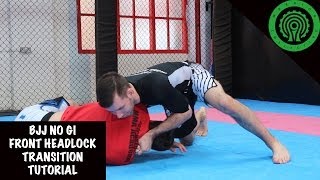
BJJ No Gi Front Headlock into 3/4 Nelson and D'arce Choke Tutorial
Stuart Tomlinson
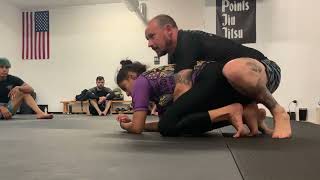
Breaking down the Turtle using the Power Half/half-Nelson
Five Points Jiu Jitsu
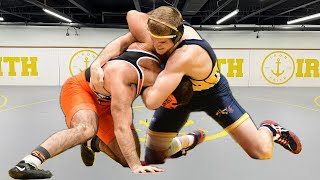
The Front Headlock | Wrestling Moves
Iron Faith Wrestling

BELT & NELSON BREAKDOWN TURNOVER
welcomematstevescott
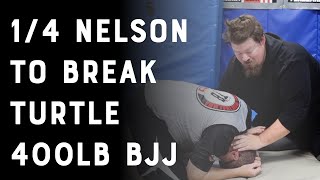
BJJ Turtle Soup 3 | 1/4 Quarter Nelson
BJJ Giant