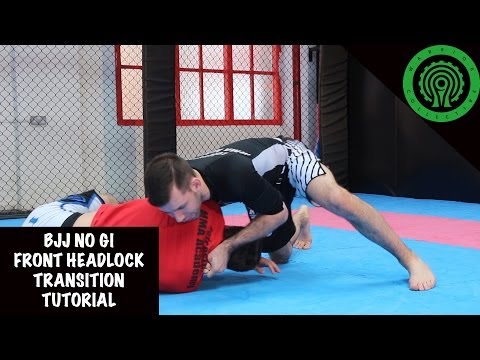
BJJ No Gi Front Headlock into 3/4 Nelson and D'arce Choke Tutorial
0
Nelson From Front Headlock·Stuart Tomlinson
Nathan Leverton, Head Coach of Leicester Shootfighters is filmed here by the Warrior Collective giving a step by step tu…
Translation: Nelson (katakana loanword); cervical extension neck crank
The nelson neck crank from front headlock is applied by threading one or both hands behind the opponent's neck from the front headlock position and driving the head downward into cervical flexion while controlling the upper body. [1],[2] From the front headlock, the attacker transitions to a half-nelson or full-nelson grip configuration and uses chest pressure combined with arm leverage to crank the neck forward and downward. [1] The front headlock provides initial head control that facilitates the transition to the nelson grip positioning. [1],[2]
The nelson holds — half nelson, full nelson, and three-quarter nelson — are among the oldest named techniques in Western wrestling, with documented use in professional wrestling dating to the nineteenth century. [1],[2] The cranking application from front headlock represents an adaptation of traditional wrestling control holds into submission grappling, where the nelson's neck pressure is used to force a tap rather than simply control the opponent. [1] The technique is widely known across wrestling traditions worldwide. [1],[2]
Effective neck crank that exploits front headlock control to apply cervical pressure; works well when combined with standard front headlock choke threats [1]
A catch wrestling technique that combines wrestling's Nelson control with front headlock positioning; systematized by Neil Melanson and other catch-influenced grapplers [1]
Occasionally seen in submission-only and MMA events; less common in IBJJF/ADCC where neck cranks without choke are often deprioritized [1]
No images yet for this technique.
Sign in to suggest an image.
Nathan Leverton, Head Coach of Leicester Shootfighters is filmed here by the Warrior Collective giving a step by step tu…
Iron Faith Merch ➡️ https://amptstudio.chipply.com/ifwc/ Join the #1 Online Wrestling Academy in the world ➡️ https://w…
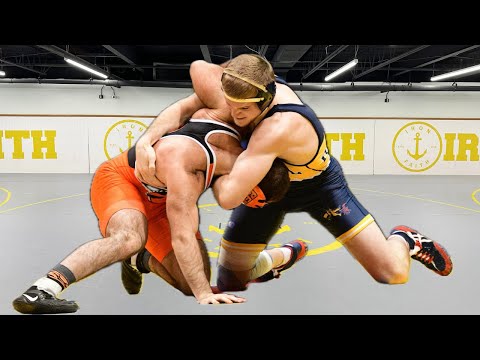
The Nelson from front headlock is a neck-crank submission that transitions from a front headlock control position into a three-quarter Nelson configuration before finishing with a choke. Both Iron Faith Wrestling and Stuart Tomlinson emphasize the critical importance of the initial front headlock setup: the attacking wrestler must drive their shoulder deeply into the back of the opponent's neck (not too high, to prevent the opponent escaping forward), grip the chin firmly, and use their opposite hand to control the arm, creating downward pressure as if driving the head between the knees. Iron Faith Wrestling details the foundational grips—chin and tricep, locked hands, and double armpits—and explains how to transition to this position from wrestling scenarios. Stuart Tomlinson, approaching from a BJJ no-gi perspective, demonstrates the transition from front headlock into a three-quarter Nelson by feeding the hand under the armpit and reaching across to the far shoulder, then locking tight by pinching the elbows. Both instructors stress maintaining pressure throughout: Iron Faith emphasizes keeping the head underneath the attacker's center of gravity, while Tomlinson notes the importance of rounding the body slightly toward the head during the final choke application. The finishing mechanism differs slightly between contexts—Iron Faith focuses on pinning applications in wrestling, while Tomlinson completes the sequence with a d'arce choke finish by applying bicep pressure to the front of the neck. Both agree that tight control and relentless pressure are essential to prevent escape.
Synthesized from 2 instructors
No instructional courses yet for this technique.
Sign in to suggest a course.
Risk of injury to the person this technique is applied to
Extension cranks force the head backward; risk of vertebral disc and ligament damage
Skill level needed to execute this technique reliably
Whether this technique is allowed under major competition rule sets
Japanese pro wrestling/catch wrestling standard terminology
Japanese pro wrestling/catch wrestling standard terminology
Standard katakana transliteration of Western martial arts terminology (外来語) — used in Japanese MMA, boxing, and BJJ communities
Japanese terminology sourced from Japanese pro wrestling/catch wrestling standard terminology
grip or squeeze strength, positional control
strong upper body for sustained compression
forearms, biceps, pectorals, core stabilisers
Every move, in any martial art, shares a few universal traits. Mix and match below to pinpoint the right tool — or compare equivalents across styles.
Iron Faith Wrestling emphasizes keeping your elbows pinched tight to your sides (T-Rex arms), grabbing the chin with one hand while controlling the tricep with the other. When locking your hands, the hand going around the armpit should go deep while the hand around the neck stays locked at the neck level—never reach deep with the neck-side hand, as your opponent can arm drag and take your back.
Iron Faith Wrestling explains that if the head comes up out of this position, your opponent can attack a double leg takedown and counter your front headlock, so maintaining this low head position is critical for control.
Iron Faith Wrestling recommends getting your opponent's elbows to hit the mat before spinning behind, as opponents are more mobile when on their hands and it's harder to complete the go-behind; snap them down to their elbows first using your chin and tricep grip.
Stuart Tomlinson emphasizes that your shoulder should dig right into the back of the neck, not too high—if your shoulder goes too high, your opponent can drive forward and access your leg. Your shoulder placement should stop forward pressure while your hands provide downward pressure as if pushing the head between the knees.
The nelson neck crank from front headlock is applied by threading one or both hands behind the opponent's neck from the front headlock position and driving the head downward into cervical flexion while controlling the upper body. From the front headlock, the attacker transitions to a half-nelson or full-nelson grip configuration and uses chest pressure combined with arm leverage to crank the neck forward and downward.
The nelson holds — half nelson, full nelson, and three-quarter nelson — are among the oldest named techniques in Western wrestling, with documented use in professional wrestling dating to the nineteenth century. The cranking application from front headlock represents an adaptation of traditional wrestling control holds into submission grappling, where the nelson's neck pressure is used to force a tap rather than simply control the opponent.
IBJJF: legal — Legal at all belt levels, gi and no-gi — chokes are the safest submission cat…; IJF: legal — Legal (shime-waza) — strangulation techniques are one of three permitted subm…; ADCC: legal — Legal; Unified MMA: legal — Legal — choke submissions are among the most common finishes in MMA; FIAS Sport Sambo: banned — All chokes prohibited in Sport Sambo; FIAS Combat Sambo: legal — Legal
Danger rating 9/10. Extension cranks force the head backward; risk of vertebral disc and ligament damage
The standard setup chain: Establish Position → Create the Threat → Secure the Hold → Finish.
Standard counters include: Early Recognition — identify the submission attempt early and begin defence immediately / Posture and Base — maintain strong posture and base to prevent submission setups / Grip Fight — deny the attacker their preferred gripping configuration.
Common variants: Standard grip variation (primary hand configuration for maximum choking pressure); Gi variation (uses the lapel or collar as an anchor for additional fric…); No-gi variation (adapted grip and positioning for submission grappling wit…); Transition finish (applied during a positional change to catch the opponent …).
Occasionally seen in submission-only and MMA events; less common in IBJJF/ADCC where neck cranks without choke are often deprioritized
Top errors to watch for: Threading the arm without maintaining head control — the head must be trapped before and during the threading; losing… / Not driving body weight forward — lean into the Nelson with chest and hip pressure; arm-only flexion is less effective / Attempting from a loose front headlock — the position must be secure before threading; a loose headlock allows escape… / Applying explosive flexion — cervical flexion cranks must be applied progressively.
The Nelson From Front Headlock is also known as Neruson, Front Headlock Nelson, Nelson Crank from Front Headlock.