BJJ Turtle Soup 3 | 1/4 Quarter Nelson
0
Nelson From Turtle·BJJ Giant
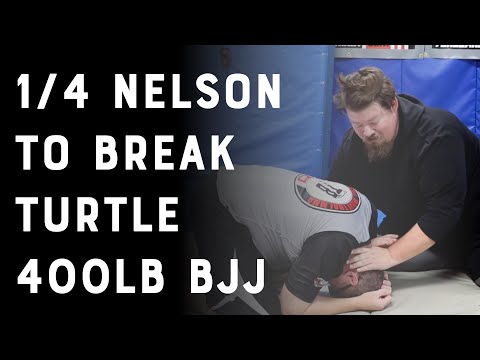
We're just built differently, that's ok! I recently went to a new gyms first class and the first sub they were building …
Translation: Nelson (katakana loanword); cervical extension neck crank
The nelson neck crank from turtle is applied against a turtled opponent by the attacker threading a half-nelson or full-nelson grip behind the opponent's neck and cranking the head forward while maintaining top control over the shell. [1],[2] The turtle position makes the back of the neck accessible, allowing the attacker to slide the arms under the chin or behind the head and apply downward cranking force. [1] The attacker uses chest pressure on the back to anchor the opponent while the nelson grip levers the cervical spine into flexion. [1],[2]
Nelson attacks from the turtle draw directly from amateur wrestling, where the half nelson is one of the most fundamental techniques for turning an opponent from the referee's position. [1],[2] In submission grappling, the wrestling nelson was adapted from a turning technique into a cranking submission, taking advantage of the turtled opponent's inability to use their hands for neck defense. [1] This turtle-to-nelson chain is one of the most intuitive wrestling-to-submission transitions for wrestlers entering grappling competition. [1],[2]
Effective against turtled opponents — the Nelson leverage against the back of the neck combined with hip pressure creates powerful cervical manipulation [1]
A classical wrestling turtle attack adapted to submission grappling; Nelson attacks from turtle are fundamental in catch wrestling, freestyle, and Greco-Roman wrestling [1]
Common control technique in wrestling-based MMA; occasionally produces submission finishes in catch wrestling and combat sambo events [1]
No images yet for this technique.
Sign in to suggest an image.
We're just built differently, that's ok! I recently went to a new gyms first class and the first sub they were building …
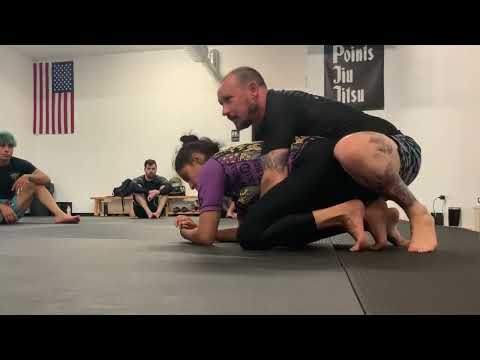
Using wrestling for jiu jitsu. The Power Half or half-Nelson is a very strong wrestling hold that is under utilized in j…
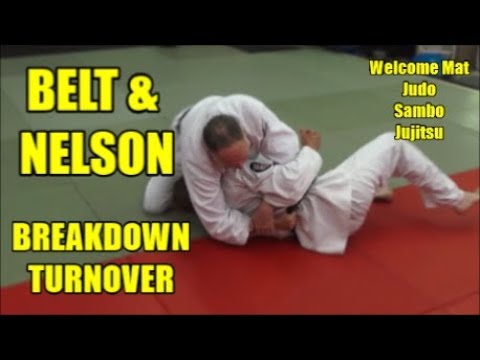
Here is an effective and simple breakdown/turnover that works at all levels of grappling. What we call the Belt & Nelson…
The Nelson from turtle is a neck-crank technique applied when an opponent assumes a defensive turtle position (hands and knees with head down). Five Points Jiu Jitsu emphasizes using the power half-nelson to open the opponent's hips and create space for hook placement, establishing superior control by transitioning from initial hooks to a body trap with a tight upper-body connection rather than relying on squeezing alone. BJJ Giant describes the quarter-nelson variant, where the attacker places one hand at the base of the neck for control while threading the opposite arm under the same-side armpit, then presses the head downward and through to roll the opponent into side control—a technique effective precisely because it surprises opponents expecting rear-naked choke attacks. Welcome Mat Steve Scott presents the "belt and nelson" breakdown, combining a palm-down belt grip along the spine with an underhook of the shoulder, executed from a slight angle to prevent the opponent from spinning out, culminating in a secure chest-hold (munigatami) position that yields points under judo, freestyle, and sambo rulesets. All three instructors agree the technique exploits the turtle's inherent vulnerability and emphasize positional angles and body pressure over pure grip strength; the key distinction lies in their varying endpoint focus—submission choke versus positional control versus time-based scoring.
Synthesized from 3 instructors
No instructional courses yet for this technique.
Sign in to suggest a course.
Risk of injury to the person this technique is applied to
Extension cranks force the head backward; risk of vertebral disc and ligament damage
Skill level needed to execute this technique reliably
Whether this technique is allowed under major competition rule sets
Japanese pro wrestling/catch wrestling standard terminology
Japanese pro wrestling/catch wrestling standard terminology
Standard katakana transliteration of Western martial arts terminology (外来語) — used in Japanese MMA, boxing, and BJJ communities
Japanese terminology sourced from Japanese pro wrestling/catch wrestling standard terminology
grip or squeeze strength, positional control
strong upper body for sustained compression
forearms, biceps, pectorals, core stabilisers
Every move, in any martial art, shares a few universal traits. Mix and match below to pinpoint the right tool — or compare equivalents across styles.
According to welcomematstevescott, you want to be slightly to an angle rather than straight ahead—position yourself to your left and to their right. This prevents them from spinning out and gives you control for the turnover.
Keep holding the belt grip and use an underhook under their shoulder, then drive with your chest to flip them over into a chest hold (munigatami). Don't let go of the belt throughout the transition.
Five Points Jiu Jitsu recommends that after taking the back, you get your hooks in, stay for a couple seconds to maintain control, and then switch to a body trap, as this is superior to rushing the flip.
According to BJJ Giant, the quarter Nelson alone won't flip someone if they actively resist it—you need proper positioning and grip control, but even if blocked, you can still advance to side control.
The nelson neck crank from turtle is applied against a turtled opponent by the attacker threading a half-nelson or full-nelson grip behind the opponent's neck and cranking the head forward while maintaining top control over the shell. The turtle position makes the back of the neck accessible, allowing the attacker to slide the arms under the chin or behind the head and apply downward cranking force.
Nelson attacks from the turtle draw directly from amateur wrestling, where the half nelson is one of the most fundamental techniques for turning an opponent from the referee's position. In submission grappling, the wrestling nelson was adapted from a turning technique into a cranking submission, taking advantage of the turtled opponent's inability to use their hands for neck defense.
IBJJF: legal — Legal at all belt levels, gi and no-gi — chokes are the safest submission cat…; IJF: legal — Legal (shime-waza) — strangulation techniques are one of three permitted subm…; ADCC: legal — Legal; Unified MMA: legal — Legal — choke submissions are among the most common finishes in MMA; FIAS Sport Sambo: banned — All chokes prohibited in Sport Sambo; FIAS Combat Sambo: legal — Legal
Danger rating 9/10. Extension cranks force the head backward; risk of vertebral disc and ligament damage
The standard setup chain: Establish Position → Create the Threat → Secure the Hold → Finish.
Standard counters include: Early Recognition — identify the submission attempt early and begin defence immediately / Posture and Base — maintain strong posture and base to prevent submission setups / Grip Fight — deny the attacker their preferred gripping configuration.
Common variants: Standard grip variation (primary hand configuration for maximum choking pressure); Gi variation (uses the lapel or collar as an anchor for additional fric…); No-gi variation (adapted grip and positioning for submission grappling wit…); Transition finish (applied during a positional change to catch the opponent …).
Common control technique in wrestling-based MMA; occasionally produces submission finishes in catch wrestling and combat sambo events
Top errors to watch for: Approaching from directly behind — the side approach provides better arm access to the head; from behind, the head is… / Not maintaining chest or hip pressure on the turtle — weight must stay on the opponent while the arm threads; lifting… / Threading too slowly — the turtled opponent will protect the head if given time; thread quickly and decisively / Not driving forward after threading — the Nelson requires forward hip pressure to create cervical flexion; threading ….
The Nelson From Turtle is also known as Neruson, Turtle Nelson Crank, Nelson from Turtle Ride.