Grip Foundation and Elbow Control
The instructor establishes the cross collar choke by securing a deep collar grip while pinning the elbow to the opponent's sternum to prevent re-pummeling. Maintaining tight knees and overall body compression forms the structural foundation for this technique. This grip placement strategy distinguishes the variation and ensures control throughout the execution.
Wrist Positioning for Optimal Pressure
Critical to finishing the choke is positioning the sharp bony part of the wrist—not the flat surface—to cut into the opponent's neck. The instructor achieves this angle through subtle body adjustments and lateral shrimping rather than forcing wrist flexibility. Proper positioning requires finding the correct body relationship relative to the opponent rather than relying on wrist strength alone.
First Grip Cinching Mechanics
The primary collar grip must be exceptionally tight, as it serves as the cornerstone of the choke's power. The instructor slowly cinches this grip deeper progressively, building pressure before adding the secondary grip. This methodical tightening sequence prevents premature tap-out and maximizes control.
Secondary Grip Placement
Rather than gripping deep inside the gi, the instructor uses a lighter grip on the opponent's shoulder with the second hand. Because the first grip is already extremely tight, the secondary grip requires minimal tension and primarily provides finishing leverage. This hand placement capitalizes on material bunching created by the primary grip's depth.
Finishing Position and Chest Compression
To complete the choke, the instructor brings chest-to-chest contact while keeping elbows tight and using wrist pressure to maintain constriction. The finishing mechanics mirror traditional posture-breaking sequences: drive upward while expanding the chest and pulling the opponent's shoulders down. This position creates maximum pressure on both carotid arteries simultaneously.
Threat Integration and Timing
The technique's true power emerges through layering complementary attacks—triangles, armbars, and high guard threats—that occupy the opponent's defensive attention. As the opponent focuses on defending multiple submissions, he inevitably leaves the shoulder accessible for the finishing grip. This strategic approach transforms the collar choke from primary attack to high-percentage finisher.
Energy Management and Commitment
Executing the choke prematurely without proper grip mechanics wastes significant energy and dulls the practitioner's sensitivity to submission timing. The instructor emphasizes developing fine-tuned tactile feedback to distinguish between partial and complete grip control. Commitment to the finish should only occur when the choke mechanics are fully engaged and submission is imminent.
Defending Posture Escapes
When the opponent attempts to posture upright to create distance, the tight first grip automatically tightens further due to the mechanical leverage created. The instructor responds by maintaining elbow control and continuously adjusting the collar grip pressure throughout the opponent's postural changes. Each escape attempt inadvertently strengthens the choke's efficacy until submission becomes inevitable.
How to Actually FINISH The Cross Collar Choke from Guard
Key Takeaways
- •Grip Foundation and Elbow Control
- •Wrist Positioning for Optimal Pressure
- •First Grip Cinching Mechanics
- •Secondary Grip Placement
How to actually successfully choke someone out with the cross collar choke from closed guard. Excerpt from https://www.grapplearts.com/closedguard The Closed Guard System, a step-by-step formula for developing a KILLER closed guard by Jon Thomas! Two of the keys that Jon demonstrates in this video include getting your first grip in at the right angle, and then genuinely attacking with other attacks (sweeps, armbars, triangle chokes, etc) so that he breaks his defensive arm structure and gives you that opening to sink your second grip into position. I think this approach will allow you to finish a LOT more people with this classic choke.
Related Techniques
Frequently Asked Questions
What does this video teach about cross collar choke from guard?
This video covers grip foundation and elbow control, wrist positioning for optimal pressure, first grip cinching mechanics. It provides detailed instruction from Stephan Kesting.
How long does it take to learn cross collar choke from guard?
The basic mechanics can be understood in a single session, but developing reliable execution requires consistent drilling over weeks of practice. This 8-part breakdown helps structure your training by isolating each phase of the technique.
What are the key details for finishing cross collar choke from guard?
Executing the choke prematurely without proper grip mechanics wastes significant energy and dulls the practitioner's sensitivity to submission timing. The instructor emphasizes developing fine-tuned tactile feedback to distinguish between partial and complete grip control. Commitment to the finish should only occur when the choke mechanics are fully engaged and submission is imminent.
Related videos

Closed Guard Cross Collar Choke Secrets I learned from Rickson Gracie
Henry Akins' Hidden Jiu-Jitsu
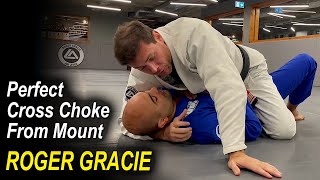
ROGER GRACIE Shows How To Do the Perfect Cross Choke From Mount
Bernardo Faria BJJ Fanatics

Cross Collar Choke - Fundamentals Made Easy
Jordan Teaches Jiujitsu
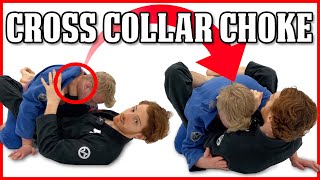
How to Actually FINISH The Cross Collar Choke from Guard
Stephan Kesting
Cross Collar Choke - Fundamentals Made Easy
Jordan Teaches Jiujitsu