Foundation: Guard Position and Hand Placement
Begin in a relaxed stance with one hand extended forward at shoulder height while the other hand positions near the elbow. This foundational guard creates the geometric base necessary for effective trapping and striking combinations. Proper hand positioning ensures seamless transitions between defensive and offensive movements.
The Check and Strike Sequence
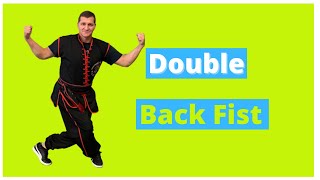
The leading hand executes a downward check to control the opponent's limb while simultaneously rolling the rear hand into a powerful backfist strike. This two-part motion—knock down, then strike—forms the core technique of Lama Pai backfist training. Practice this movement slowly and deliberately to develop muscle memory and precision.
Continuous Rolling: Circular Hand Motion
Execute a flowing circular pattern where both hands move in opposite rotations, creating continuous tracking and defensive coverage. Visualize two circles rotating in opposite directions, allowing for seamless transitions between checking and striking without interruption. This circular motion maintains defensive readiness while setting up offensive opportunities.
Partner Drills: Controlled Checking
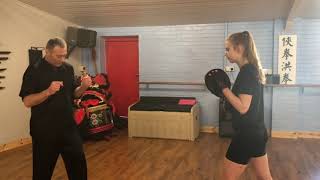
Have a training partner hold their arms in a neutral position while you practice the check movement, driving their arm to shoulder height before delivering the backfist to their midsection. This controlled environment prevents the opponent from immediately counter-attacking. Repeat the sequence until the motion becomes fluid and automatic.
Multiple Strike Variations
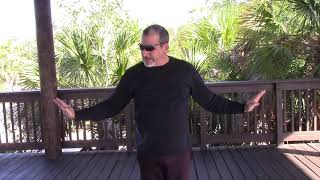
Progress beyond single backfist strikes by executing multiple strikes in succession or alternating between different hand positions and targets. Practice separating both arms before striking the centerline, then continue with push-down motions followed by palm strikes. These variations develop versatility and adaptability in close-range combat scenarios.
Reactive Blocking and Striking
When an opponent initiates with a punch, respond with a blocking check followed immediately by a palm stroke or backfist. This defensive-to-offensive transition demonstrates practical application in fighting scenarios. Keep movements relaxed and flowing to maintain speed and efficiency.
Solo Backfist Development
Practice the backfist strike in isolation while keeping the checking hand stationary near the guard position. This focused drill builds striking power, speed, and accuracy without the complexity of full combinations. Perform repetitions at varying speeds, from slow and controlled to maximum velocity.
Checking Fundamentals: Rapid Knockdowns
Execute multiple consecutive checking motions with the intent of controlling and redirecting incoming attacks. Practice sharp, snapping checks that drive the opponent's limb downward and away from center. Maintain relaxation throughout to preserve energy and response speed.
Bilateral Training and Speed Progression
Practice the entire combination on both sides of the body to develop balanced skill and adaptability. Begin with slow, deliberate repetitions to ensure proper mechanics, then gradually increase speed while maintaining form. Switch between sides frequently and vary the tempo to build comprehensive technical ability.
Application Sequence: Block, Block, Strike
Execute two consecutive blocking movements before delivering a strike, creating rhythm and timing patterns that translate to realistic fighting scenarios. This progression—block, block, strike—develops the ability to defend multiple angles before committing to offense. Practice against a target or partner to reinforce practical application and timing.
Backfist a devasting strike: Simple Trapping Techniques
Key Takeaways
- •Foundation: Guard Position and Hand Placement
- •The Check and Strike Sequence
- •Continuous Rolling: Circular Hand Motion
- •Partner Drills: Controlled Checking
Bruce Lee showed everyone what trapping was all about in his movies. We start off with check and back fist which are the most basic instances of close quarter fighting. Sifu Rafael breaks it down to show you every important detail so you can move on to more intermediate & advanced trapping techniques. No screaming like a cat in heat required, lol. Sifu Rafael will take you through a 30 day Kung-Fu Challenge so you can learn Kung-Fu and become motivated to study Kung-Fu and make it part of your life. today we are working on close-quarter fighting also know as trapping. Follow Sifu Rafael for the next 30 days and learn some simple and complicated Kung-Fu moves. . For more information or to take a group/private class go to http://www.maxfit.us
Related Techniques
Frequently Asked Questions
What does this video teach about lama pai backfist?
This video covers foundation: guard position and hand placement, the check and strike sequence, continuous rolling: circular hand motion. It provides detailed instruction from DaiLung.
How long does it take to learn lama pai backfist?
The basic mechanics can be understood in a single session, but developing reliable execution requires consistent drilling over weeks of practice. This 10-part breakdown helps structure your training by isolating each phase of the technique.
What are the key details for finishing lama pai backfist?
Practice the entire combination on both sides of the body to develop balanced skill and adaptability. Begin with slow, deliberate repetitions to ensure proper mechanics, then gradually increase speed while maintaining form. Switch between sides frequently and vary the tempo to build comprehensive technical ability.