Introduction and Context
Instructors Ramsey Dewey and Tien Tien Yew clarify common misconceptions about front kick striking surfaces at Animal MMA Gym in Shanghai. The discussion addresses confusion from a previous side kick video regarding proper contact points: heel, flat foot, or ball of the foot.
Ball of the Foot as Primary Contact Point
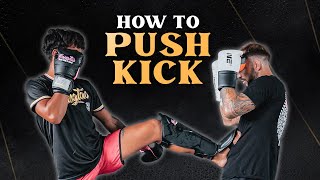
The ball of the foot is the optimal striking surface for front kicks, push kicks, and teeps in the vast majority of applications. Proper alignment creates a continuous line from the metatarsals through the heel bones, shin bones, and entire leg structure, maximizing force transfer.
Advantages of Ball of the Foot Striking
Striking with the ball of the foot provides superior reach, power, and extension compared to alternative contact points. This concentrated impact area allows practitioners to effectively control opponent positioning and movement while maintaining better defensive structure.
Trajectory Mechanics: Upward vs. Straight Angles
Elevating the teep upward rather than driving straight forward directs force into the opponent's torso and creates knockback momentum. A straight trajectory only pushes the hips downward, whereas an elevated angle forces the entire upper body backward, requiring the opponent to step back or lose balance.
Lead Leg vs. Back Leg Push Kicks
The lead leg teep is superior in approximately 80-85% of combat situations, despite requiring greater strength from the standing leg. The front leg's proximity to the opponent—half the distance of the rear leg—provides faster execution and superior control without telegraphing the technique.
Heel Kick Mechanics and Limitations
Heel kicks require significant posterior chain flexibility and the ability to fully dorsiflex the foot, creating a slower striking motion compared to ball-of-foot techniques. While viable for targeting the chin through guard openings, heel kicks sacrifice speed advantage for negligible benefit in most scenarios.
Range and Distance Considerations
Ball-of-foot striking extends reach significantly beyond heel kick distance, allowing practitioners to land effective strikes from ranges where heel contact becomes impossible. This reach advantage represents a fundamental tactical superiority in range management and offensive positioning.
Advanced Technique: Toe Curl Variation
Advanced practitioners may combine ball-of-foot contact with toe flexion to create a claw-like gripping effect, similar to Bagua Zhang methodology. This variation increases surface irritation and damage but sacrifices conventional teep effectiveness and friendly training partnerships.
Front kick, Push kick, Teep. Ball of the foot? Heel? Or Flat of the foot?
Key Takeaways
- •Introduction and Context
- •Ball of the Foot as Primary Contact Point
- •Advantages of Ball of the Foot Striking
- •Trajectory Mechanics: Upward vs. Straight Angles
What part of the foot should you use for a front kick, a push kick, or a teep? The ball of the foot? The heel? The flat of the foot? Or your toes like some kind of maniac? Regardless of the training traditions your martial art or fighting style, it is crucial that you understand how to articulate your feet for striking and pushing to maximize damage to your opponent and perhaps more importantly to MINIMIZE damage to yourself. commentator based in Shanghai, China. Thanks to my channel sponsor: Xmartial: catering to all kinds of combat sports athletes from BJJ, MMA, Muay Thai etc. find rash guards, fight shorts, grappling spats, boxing gloves and other training gear. Use my code RAMSEY10 for a 10% discount on everything at https://www.xmartial.com/?ref=AyJ_EjPCOXox This video features original music by Ramsey Dewey Follow me on Instagram at: https://www.instagram.com/ramseydewey/
Related Techniques
Frequently Asked Questions
What does this video teach about foot blade front kick?
This video covers introduction and context, ball of the foot as primary contact point, advantages of ball of the foot striking. It provides detailed instruction from Ramsey Dewey.
How long does it take to learn foot blade front kick?
The basic mechanics can be understood in a single session, but developing reliable execution requires consistent drilling over weeks of practice. This 8-part breakdown helps structure your training by isolating each phase of the technique.
What are the key details for finishing foot blade front kick?
Ball-of-foot striking extends reach significantly beyond heel kick distance, allowing practitioners to land effective strikes from ranges where heel contact becomes impossible. This reach advantage represents a fundamental tactical superiority in range management and offensive positioning.