Introduction to Inverted Guard Scenarios
Inversion occurs frequently in grappling when one player turns upside down, either offensively or defensively. While an inverted opponent may appear vulnerable, they can execute dangerous submissions if the top player reacts poorly. Developing flexibility and proper defensive mechanics against inverted positions is essential for safe training.
Recognizing the Inverted Guard Position
An opponent in inverted guard typically uses cross-grips and rotates their body upside down with legs extended. If the top player attempts to address the extended leg without proper technique, they risk being caught in a submission. The inverted guard requires specific defensive responses rather than aggressive advancement.
Establishing Control from Top Position
When an opponent inverts with cross-grips established, the top player should secure the opponent's legs by wrapping around them and holding the wrists or sleeves. This connection prevents the inverted player's legs from shooting through for submissions. Controlling the legs is the primary objective before attempting positional advancement.
Using the Knee to Prevent Leg Escapes
The defender uses their knee as a post against the opponent's leg to maintain control and prevent it from escaping. Once one leg is controlled, freeing it from the opponent's grip becomes easier. After securing one leg, the second leg typically becomes easier to control.
Executing the Leg Extraction Technique
The top player grabs the opponent's pants while using their knee to change the shape of the inverted guard. This positioning allows the defender to extract one leg at a time while maintaining downward pressure. After clearing both legs, the defender can transition to side control.
Defensive Mechanics and Alternative Methods
If the opponent achieves pants control during the inversion, the defender must keep their knees high and use their legs defensively. The opponent can use controlled leverage to reverse position if the defender loses proper mechanics. Maintaining proper positioning prevents the inverted player from sweeping or escaping.
360-Degree Footwork Drill for Preparation
A useful warm-up involves circling an inverted partner while keeping feet positioned toward them, simulating defensive footwork. The partner keeps their feet pointed at the defender as both players circle together. This drill builds awareness and positioning before executing live defense against inversion.
Solo Practice and Safety Considerations
Practitioners can develop flexibility with inverted guard positions through solo drills without a partner. Care must be taken to avoid injury during inversions, particularly regarding the neck and spine. Gradual practice builds the body conditioning necessary for safe inversion work.
Dealing With Inversion!
Key Takeaways
- •Introduction to Inverted Guard Scenarios
- •Recognizing the Inverted Guard Position
- •Establishing Control from Top Position
- •Using the Knee to Prevent Leg Escapes
SALE SALE SALE OVER 50% OFF – BOX SET – ALL 4 COURSES 50% OFF CLICK HERE – https://bit.ly/2lAOHmp • The Blue Belt Super Series • The Kimura Attack System • The Trap Door Series • 14 Days to Better BJJ CLICK HERE – https://bit.ly/2lAOHmp PURCHASE SINGLE COURSES • The Blue Belt Super Series - https://bit.ly/2PvbrCo • The Kimura Attack System - https://bit.ly/2m3a1kF • The Trap Door Series - https://bit.ly/2DdTbX0 • 14 Days to Better BJJ - https://bit.ly/2kaavFc TESTIMONIALS ‘Started hitting the moves laid out in these courses the very next class...extremely uplifting to have such a quick improvement in my game’ - Houston, TX ‘I’m the only white belt in the academy doing these moves…I’m suddenly competing at a blue belt and above level…thanks Coach Tom’ - LA, California ‘Some of the best strategies you are going to see for control and submission’ - London, UK ‘The detailed way Prof Tom breaks down his moves into the absolute essentials is just next level for me. This is absolute gold‘ - Sydney, Australia ‘Most of the guys at my Academy, have about 60lbs on me, but since purchasing your ‘Kimura Attack system’ and ’14 days’ everything has changed. I feel much more confident, roll better and the guys on the mat have commented on the same. Thanks, Coach Tom’ – Dallas, TX ‘I know you have your names for your courses, but I’ve renamed them the ‘Zero to hero’ courses, I went from getting constantly owned, to now being completely dominant on the mat in no time at all’ - San Diego, California ‘I use the course material heaps, and just recently put it into action at a local comp, walked away with double gold. No one was more surprised than me! - Miami, Florida ‘As a new white belt, these classes have helped me so much, Prof Tom’s technique, the details, and his attitude. I love how Prof. Tom shows the ‘mistakes people make’ and then shows the correct way of doing things. The only one I have ever seen do this’ – New York, New York Great videos, great instruction. I just watch them for hours…Melbourne, Australia ‘The instructional saved me big time at a recent comp, my opponent was def more experienced, but that was ok, coz I had Prof Tom’s video in my brain. Nailed it and scored gold’ - Colorado, Denver ‘All of it. Everything you show in your awesome videos are now my ‘go to techniques’. Thanks for your vids Prof, Tom’ - Houston, TX ‘You really have to watch every second of the video because Prof, Tom drops these little nuggets of gold throughout the course. And they make ALL the difference. The only one doing this. Keep them coming Professor’ - NY, New York ‘If I could only be taught from one person, Prof Tom would be it. I can’t wait to train in person one day’ – Dallas, TX ‘Went to a recent competition with these videos fresh in my mind. I knew I had an edge and the confidence this gave me was unreal. Got the gold. All submission wins! – LA, California
Related Techniques
Frequently Asked Questions
What does this video teach about inversion recovery?
This video covers introduction to inverted guard scenarios, recognizing the inverted guard position, establishing control from top position. It provides detailed instruction from The Grappling Academy.
How long does it take to learn inversion recovery?
The basic mechanics can be understood in a single session, but developing reliable execution requires consistent drilling over weeks of practice. This 8-part breakdown helps structure your training by isolating each phase of the technique.
What are the key details for finishing inversion recovery?
A useful warm-up involves circling an inverted partner while keeping feet positioned toward them, simulating defensive footwork. The partner keeps their feet pointed at the defender as both players circle together. This drill builds awareness and positioning before executing live defense against inversion.
Related videos
BJJ Fundamentals Warm Up - Reverse Shrimp
Otomi Martial Arts | Caio Terra Association
How To Shrimp In BJJ (A.K.A. Elbow Escape)
Michael Foley's Academy of Martial Arts
A SIMPLE tip for ADVANCED Guard Retention - BJJ Analysis
Less Impressed More Involved BJJ
3 Arm Positions // 3 Submissions from Cross-Side (No Gi BJJ)
Brian Glick
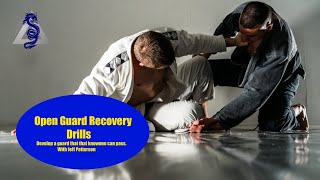
11 Guard Recovery Drills in Learn How to Make your Guard Unbeatable.
Northwest Fighting Arts